About Sliding Number Puzzle – Classic Brain Teaser
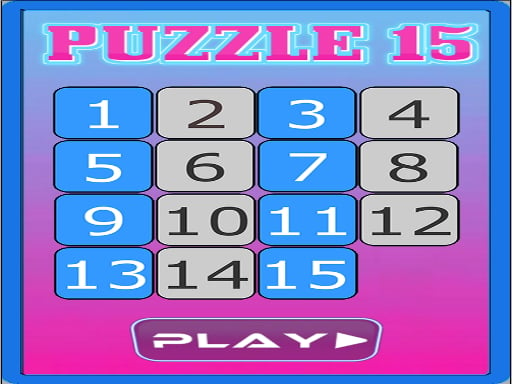
Sliding Number Puzzle – Classic Brain Teaser is a single-player logic puzzle that challenges you to reorganize a scrambled grid of numbered squares. Built for web browsers on desktop and mobile devices, the game requires you to slide individual tiles into an empty space until the entire sequence is restored in proper numerical order with the fewest moves possible.
Sliding Number Puzzle – Classic Brain Teaser presents a digital adaptation of the traditional sliding tile concept. Players are greeted with an arrangement of numbered tiles containing an open slot that permits adjacent pieces to shift. The core loop consists of assessing the scrambled layout, identifying which numerical values are out of place, and sliding tiles one by one into the vacant position to gradually assemble the full sequence.
Because the layout functions through pure HTML5, the puzzle runs directly inside web browsers without requiring external downloads. The visual presentation focuses on clean, readable tiles, allowing players to concentrate entirely on spatial reasoning, route planning, and sequential logic. Each session tests your ability to think ahead and maneuver pieces without undoing sections you have already organized.
Your goal
The primary objective is to rearrange all numbered tiles until they are sorted in their proper ascending sequence. To master the game, aim to solve the puzzle in the least number of moves, keeping your sliding paths compact and avoiding unnecessary back-and-forth shifts.
How to play Sliding Number Puzzle – Classic Brain Teaser
1. Inspect the initial scrambled grid to locate the positions of lower numbers and the empty space.
2. Click or tap a tile directly adjacent to the open gap to shift it into that position.
3. Work systematically by placing the top row or starting sequence into its correct position first.
4. Guide remaining numbers into place along subsequent rows while preserving already completed sequences.
5. Maneuver the final corner and edge tiles into place to complete the entire numerical order.
Controls and device support
Use a mouse click or screen tap on any tile adjacent to the open slot to slide it into that space.
- Controls: Mouse or touch
- Device support: Desktop + mobile
- Game frame: 800 x 600
Rules to keep in mind
- Numbered tiles can only shift into the directly adjacent empty space horizontally or vertically.
- The puzzle is solved once all numbered tiles are arranged in correct numerical order.
- Performance improves by completing the arrangement using the least number of tile moves.
What makes the challenge interesting
The core discipline of Sliding Number Puzzle – Classic Brain Teaser centers on spatial foresight and cyclic tile rotation. Unlike open grid puzzles where pieces can be placed freely, every movement here depends entirely on where the single blank space is positioned. Moving a target tile toward its destination inevitably displaces other numbers, creating a natural tension between short-term progress and long-term grid structure.
Successful problem solving requires players to plan multi-step rotations rather than making reactive shifts. By understanding how to cycle clusters of numbers around the vacant square, you avoid trapping needed values in locked corners. The satisfaction comes from discovering clean paths that solve entire sections without disrupting established rows.
Tips for Sliding Number Puzzle – Classic Brain Teaser
- Solve the grid row by row from top to bottom. Establishing the early sequence early reduces mental clutter and prevents you from constantly reshuffling the entire board.
- Pair the final two numbers of a row together before sliding them into their slots. Forcing the last tile in alone often breaks the preceding sequence and wastes moves.
- Track the empty space rather than focusing solely on the number you want to move. Guiding the blank square behind a tile allows you to steer it smoothly across the board.
- Avoid hasty clicks when pieces seem stuck. Take a brief pause to plan a small cyclic loop, which clears blocked pathways with far fewer total moves.
Stages and progression
Because Sliding Number Puzzle – Classic Brain Teaser emphasizes efficiency, personal progression revolves around refining your move count and mental strategy across repeat attempts. Beginning solvers usually focus on completing the board through trial and error, often moving tiles back and forth to clear immediate blockages.
As your familiarity with sliding mechanics grows, challenge yourself to visualize entire corner rotations before initiating inputs. Tracking how few shifts you need to position each row provides a clear, self-directed path toward mastering the puzzle's underlying mathematical logic.
Playing on different devices
Sliding Number Puzzle – Classic Brain Teaser is developed with HTML5 technology to run seamlessly across standard desktop monitors and mobile touchscreens. On desktop computers, mouse clicks offer crisp and deliberate tile selection. On mobile phones and tablets, direct taps make for intuitive handheld play, allowing puzzle enthusiasts to solve scrambles conveniently anywhere.
The skills behind the game
As part of the logic and memory puzzle genre, sliding number games hold a distinguished place in casual brain teasers. They strip away complicated control schemes and time-sensitive reflexes in favor of pure deductive reasoning and spatial manipulation. Players who appreciate orderly problem solving, pattern matching, and structured challenges will find the format easy to pick up and deeply engaging.
Who will enjoy this game
For players seeking a classic brain teaser or an accessible puzzle game online, Sliding Number Puzzle provides an uncluttered experience suitable for quick daily mental warm-ups. It appeals to casual solvers wanting a calm reasoning challenge as well as analytical players striving to find optimal move pathways.
Frequently asked questions
What is the main goal in Sliding Number Puzzle – Classic Brain Teaser? The goal is to rearrange all scrambled numbered tiles into their correct numerical sequence by sliding them into the open position using as few moves as possible.
How do you control and move tiles in the game? You interact with the board by clicking with a mouse on desktop or tapping on mobile screens. Only tiles located directly next to the empty space can be moved.
Can I play this game on mobile devices? Yes, the game is built in HTML5 and supports both desktop and mobile browser play with responsive touch and click controls.
Something not right?
Tell us if the game does not load, the information is wrong or the content needs review.
Report a problem ›