 Hex Triple Match
Puzzles
Hex Triple Match
Puzzles
Play by tag
Free Hex Games Online
In this browser gaming collection, the hex tag primarily represents games built around six-sided geometric boards and tiles. Rather than standard square grids, four out of five titles in this catalog fall squarely under the Puzzles category, where hexagonal boards unlock diagonal movement, multi-directional merging, and spatial stacking challenges.
5playable games
Hex Triple Match
Puzzles
 Hexa Sort 3D Puzzle
Puzzles
Hexa Sort 3D Puzzle
Puzzles
 Holiday Hex Sort
Puzzles
Holiday Hex Sort
Puzzles
 Obby: Tsunami +1 speed
Adventure
Obby: Tsunami +1 speed
Adventure
 TreasureBound
Puzzles
TreasureBound
Puzzles
Tag guide
Discover Hexagonal Grid Puzzles and Tile Mechanics
In this browser gaming collection, the hex tag primarily represents games built around six-sided geometric boards and tiles. Rather than standard square grids, four out of five titles in this catalog fall squarely under the Puzzles category, where hexagonal boards unlock diagonal movement, multi-directional merging, and spatial stacking challenges.
While the dominant focus centers on spatial sorting and turn-based deduction—such as organizing color stacks or excavating board tiles—the tag also hosts occasional action or obstacle entries like Obby: Tsunami +1 speed. This variety demonstrates how six-sided themes, level geometry, and tag associations intersect across casual browser play.
What to Expect from Browser Hex Games
Most hex games leverage the unique geometry of the six-sided polygon. Hexagonal boards provide six adjacent touchpoints instead of four, enabling fluid clustering, layered stacking, and varied movement routes. Whether reorganizing colorful layers or digging across an uncharted board, the hexagonal format tests spatial planning in distinctive ways.
- Six-way adjacency offering multi-angled matching lines
- Layered sorting mechanics utilizing stacked hexagonal chips
- Turn-based board exploration and tile-by-tile deduction
Tile Sorting and Stacking Mechanics
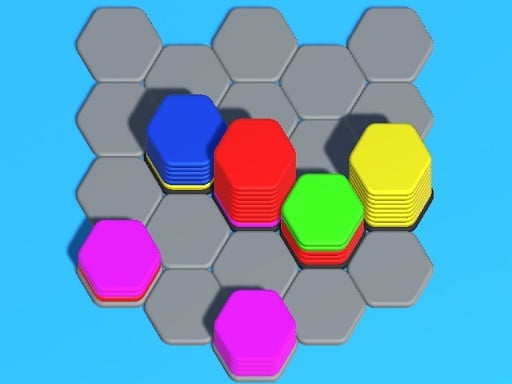
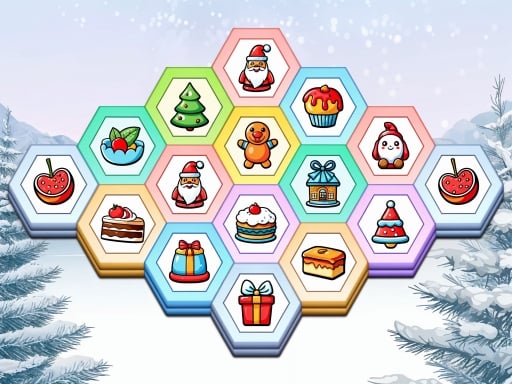
A prominent subgenre within the hex puzzle lineup is the sorting and merging mechanic. Games like Holiday Hex Sort challenge players to drag and drop stacks of hex tiles onto the board, consolidating matching colors until a stack reaches ten and clears. Similarly, Hexa Sort 3D Puzzle tasks players with placing hexagonal tiles to build ascending structures, demanding both precision and placement speed.
- Drag-and-drop mouse and touch controls for moving tile stacks
- Clear conditions based on reaching specific stack heights or matching thresholds
- Timed round challenges that test planning under ticking clocks
Deduction and Turn-Based Hex Grid Exploration
Beyond stack sorting, hexagonal grids serve as tactical maps for exploration and deduction. TreasureBound demonstrates this approach by placing players on a six-sided grid where every tile hides gold or empty ground. With limited shovel charges, players read the terrain across solo adventure stages or participate in three-round duels against opponents, deploying power-ups and managing resources turn by turn.
- Resource management with finite action points or shovels
- Duel modes offering head-to-head turn-based scoring
- Solo stage progression with board-clearing objectives
Matching and Color Merging Challenges
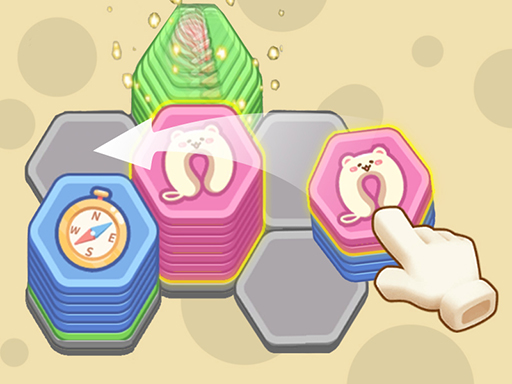
Logical maneuvering takes center stage in match-oriented hex titles like Hex Triple Match. Here, colored items are mapped to hexagonal slots, requiring players to plan positions carefully to eliminate clusters and free up board real estate. The six-directional layout adds complexity compared to conventional grid matchers, rewarding methodical foresight.
- Color-coordinated item management across six-sided slots
- Strategic placement to trigger cascading eliminations
- Compact puzzle layouts suited for quick mental workouts
Action and Running Outliers in the Catalog
Not every game carrying the hex tag adheres strictly to geometric puzzle grids. For instance, Obby: Tsunami +1 speed is classified under Adventure, presenting a 3D obstacle course where players use WASD keyboard controls or touch swipes to sprint, jump, and outrun a surging tidal wave while upgrading hero speed. Checking each title's category and controls ensures you know whether you are launching a calm puzzle or a fast-paced obstacle run.
- Varying control schemes from single-click puzzles to WASD 3D navigation
- Category distinctions between calm logic boards and high-speed obstacle courses
How to Choose the Right Hex Game
Selecting a hex game depends on your preferred pace and control style. If you want relaxing yet tactile drag-and-drop gameplay, stack-sorting titles provide immediate satisfaction. If you prefer deliberate deduction with competitive options, grid exploration titles offer deeper tactical layers. Always review the on-screen instructions to check whether your chosen game uses simple taps or full keyboard inputs.
- Choose sorting puzzles for quick, satisfying color coordination
- Choose grid exploration for turn-based strategy and duels
- Check control requirements before playing on mobile or desktop devices
hex games FAQ
What makes hex puzzle games different from traditional square grid puzzles?
Hex games use six-sided tiles, meaning each position connects to six neighbors rather than four. This allows for diagonal clustering, unique matching angles, and specialized sorting mechanics that are not possible on standard rectangular grids.
How do hex sorting games like Holiday Hex Sort work?
In games like Holiday Hex Sort, players drag and drop stacks of hexagonal tiles onto open board spaces. When stacks of the same color or pattern reach a designated threshold, such as ten tiles, they merge, clear from the board, and award score.
Are hex games playable on mobile phones and tablets?
Many hex games in this collection, such as Hexa Sort 3D Puzzle and TreasureBound, include touch-friendly controls like tapping to dig or dragging stacks across the screen. Always check each game's control instructions to verify touch support.
Do all games with the hex tag feature board puzzles?
No. While the majority of games tagged hex are board puzzles and color sorters, occasional titles like Obby: Tsunami +1 speed belong to the adventure category and focus on running, jumping, and 3D obstacle avoidance.