About Slider Block Puzzle
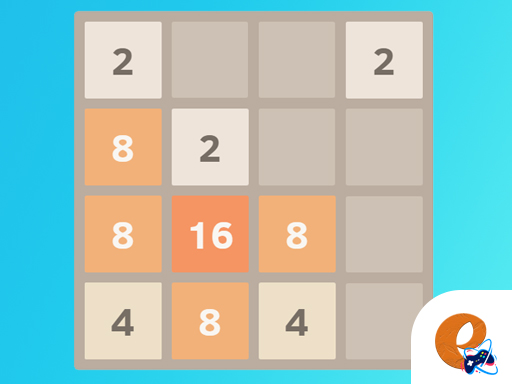
Slider Block Puzzle is a 2D number-merging puzzle game where you connect matching numerical tiles across multiple directions to form higher values. By sliding identical numbers together horizontally, vertically, or diagonally, you clear space on the board and synthesize larger values. The core experience centers on spatial planning and continuous combination, challenging you to scan lines across eight pathways to keep your board active and reach the highest number possible.
Presented in a minimalist 2D layout, Slider Block Puzzle asks players to link identical numbers that sit adjacent to one another. Rather than limiting movement to standard cardinal axes, the game permits sliding numbers in any of eight directions: up, down, left, right, and all four diagonal angles. When you connect several matching blocks in one sequence, they merge into a single higher-numbered block, creating fresh board arrangements and opening new routing options.
Every move you make reshapes the numerical landscape. Sliding longer chains of the same value consolidates smaller numbers and prevents the board from becoming cluttered with fragmented denominations. The session invites deliberate observation, encouraging players to spot diagonal overlaps and multi-tile runs that might not be obvious at first glance. The steady loop of scanning, connecting, and watching numbers combine delivers a focused analytical rhythm.
Your goal
Your primary goal is to merge matching numbers repeatedly to generate the highest number possible. Accomplishing this requires continuous consolidation of equal values into larger denominations while preserving open lanes across the board. By identifying clusters and sliding multiple identical blocks together in unbroken runs, you aim to build massive numbers without isolating valuable high-tier tiles.
How to play Slider Block Puzzle
1. Survey the numerical grid to identify clusters or chains of identical numbers situated next to one another.
2. Select a starting block and slide through neighboring matching values horizontally, vertically, or diagonally.
3. Extend your connection across as many identical adjacent blocks as you can trace in a continuous sequence.
4. Release the connection to trigger the merge, consolidating the chain into a single block with a higher number.
5. Evaluate the altered board state and repeat the process to keep building toward greater numerical values.
Controls and device support
Slide matching numbers across any of the eight directions—up, down, left, right, or diagonally—to connect and merge them into higher values.
- Controls: See in-game controls
- Device support: Browser
- Game frame: 750 x 1334
Rules to keep in mind
- Connections are only valid between blocks sharing the same numerical value.
- Slides can travel along eight directions, including horizontal, vertical, and diagonal paths.
- Merging multiple identical numbers together in a single action yields higher-value replacement blocks.
- Play proceeds continuously by combining smaller numbers into progressively larger denominations.
What makes the challenge interesting
The core discipline of Slider Block Puzzle lies in visual routing across diagonal and orthogonal planes. In conventional sliding puzzles, movement is frequently restricted to four perpendicular directions, which limits how tiles interact. By opening connections to eight distinct angles, this game shifts the challenge toward finding continuous pathways through crowded fields. You must train your vision to identify diagonal connections that weave between mismatched numbers.
A fundamental strategic tradeoff involves immediate two-block merges versus patient setup for longer multi-block runs. Merging pairs right away clears immediate space, but taking time to string together three, four, or more matching numbers accelerates numerical growth much faster. Because every merge alters adjacent coordinates, hasty combinations can strand high-value tiles away from future matching candidates.
Tips for Slider Block Puzzle
- Scan diagonally whenever horizontal and vertical lines seem blocked. Utilizing diagonal connections often links isolated matching numbers that appear trapped behind dissimilar tiles.
- Prioritize long chains over rapid two-tile pairings. Merging multiple blocks in one sweep creates significantly larger values and prevents premature board crowding.
- Observe where your final merged block lands. If you merge toward a corner or edge near other large values, you avoid stranding top-tier numbers in unreachable positions.
- Avoid hasty swipes when several valid combinations exist. Take a moment to compare which chain leaves the surrounding tiles in the most flexible arrangement for subsequent turns.
Stages and progression
Rather than relying on explicit stage completions or linear mission objectives, progression in Slider Block Puzzle is defined by reaching ever-higher numerical thresholds. As you successfully merge lower digits into greater denominations, the composition of the grid gradually diversifies, introducing higher values that demand deliberate management.
A disciplined practice routine involves focusing on board balance during early combinations. By methodically guiding your largest numbers toward a unified section of the board, you ensure that future mid-tier merges can easily link up with them, sustaining your run toward new high-water marks.
Playing on different devices
Designed with a vertical 750 by 1334 resolution, the game fits naturally on mobile screens and portrait-oriented browser displays. The eight-way sliding mechanic translates smoothly to touchscreens, where dragging a finger diagonally across blocks feels intuitive and direct.
On desktop monitors, playing inside a portrait window using mouse click-and-drag interactions works reliably. Take care when tracing tight diagonal angles with a cursor to ensure your pointer does not slip off the intended chain before completing the slide.
The skills behind the game
As part of the puzzle genre, Slider Block Puzzle emphasizes logical observation, spatial forecasting, and chain construction. Unlike fast-paced arcade puzzles that demand instant twitch reactions, number-linking games reward players who pause to consider board geometry and potential cascading reactions.
The combination of block manipulation and numerical synthesis provides a calm, reflective mental exercise. Fans of 2D logic puzzles appreciate the balance between immediate tactical matching and broader board maintenance, making it an engaging option for short break sessions or sustained focus.
Who will enjoy this game
Players exploring merge puzzle game titles online often look for clean mechanics centered on progressive synthesis and spatial reasoning. Slider block puzzle game designs meet this interest by turning arithmetic progression into a tactile navigation challenge across a modular grid.
Whether you are looking for a casual puzzle game online to unwind or seeking to practice multi-directional pattern recognition, sliding matching blocks provides an accessible format. The simplicity of tracing identical digits combined with the depth of planning high-number merges offers rewarding casual gameplay.
Games with a similar feel
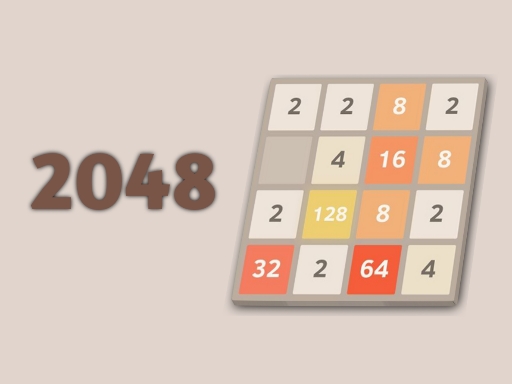
2048: Both games center on combining matching numbers into higher values. However, while 2048 shifts entire rows and columns across four cardinal directions, Slider Block Puzzle lets players actively trace and link identical blocks along eight directions, offering a more direct, path-drawing approach to number synthesis.
Frequently asked questions
In which directions can you connect numbers in Slider Block Puzzle? You can slide and link matching numbers in eight distinct directions: horizontally left and right, vertically up and down, and along all four diagonal paths.
What happens when you connect multiple identical blocks? Connecting multiple blocks of the same number merges them together into a single block carrying a higher value, clearing up grid space for subsequent moves.
Can you merge two different numbers together? No. Merging requires connecting blocks that share the exact same number before they combine into a greater numerical value.
What is the primary objective of a play session? The overarching goal is to continually merge matching numbers across the board to create the highest number possible while keeping paths open for new combinations.
Something not right?
Tell us if the game does not load, the information is wrong or the content needs review.
Report a problem ›