About Simple Nonogram
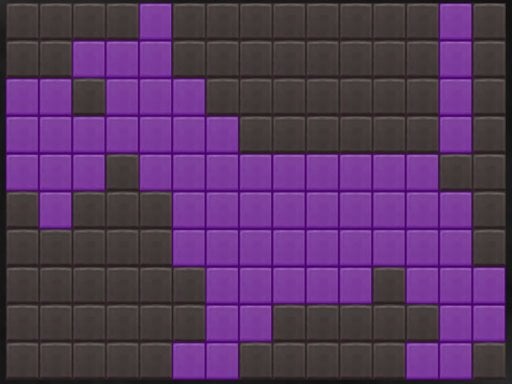
Simple Nonogram presents a pure grid deduction challenge where your task is to evaluate row and column number clues to determine which squares to fill and which to leave blank. Because there is no active countdown running down the clock, you can focus entirely on methodical reasoning, checking intersections carefully, and solving the logic board at your own pace.
In Simple Nonogram, players engage with a classic picture logic format set upon a clean board. The primary gameplay loop revolves around analyzing numerical indicators placed beside every row and above every column. These numbers explain the exact groups of filled cells required along that line, giving you the necessary data to deduce the layout step by step.
Instead of demanding quick reflexes or rushed inputs, the experience highlights contemplative puzzle solving. Because time is not limited, you are free to deliberate over tricky intersections, verify uncertain spaces, and eliminate invalid possibilities without feeling pressured by an aggressive countdown. Every confirmed square helps narrow down adjacent lines until the complete pattern emerges.
Your goal
The primary objective in Simple Nonogram is to correctly determine which cells need to be painted over and which ones must stay empty across the entire grid. To succeed, you aim to satisfy every row and column clue through careful deduction rather than random guessing, steadily working through each line until the full arrangement is completely resolved.
How to play Simple Nonogram
1. Inspect the numbers displayed along the outer edge of each row and above each column to understand line requirements.
2. Identify obvious lines first, such as long clue sequences that fill entire spans or leave minimal empty room.
3. Use your mouse cursor or touch screen tap to paint over the cells you are confident must be filled.
4. Cross-reference filled squares against perpendicular columns or rows to deduce which adjacent cells should remain empty.
5. Continue checking remaining clues without rushing, steadily resolving lines until every row and column matches its target values.
Controls and device support
The game supports direct interaction via mouse clicks on desktop browsers or touch inputs on touchscreen displays to select and paint grid squares.
- Controls: Mouse or touch
- Device support: Desktop + mobile
- Game frame: 800 x 480
Rules to keep in mind
- Number clues placed along the rows and columns dictate the exact cell groups that must be painted across that specific line.
- Cells must be divided accurately between those that need to be painted over and those intended to remain blank.
- Time is not limited, meaning there is no active countdown forcing rapid input before a round expires.
What makes the challenge interesting
The heart of Simple Nonogram lies in logical cross-referencing and patience. Every individual cell sits at the crossroads of two separate conditions: its horizontal row clue and its vertical column clue. Because of this intersection, confirming even a single square yields reliable secondary information for the perpendicular axis.
The core tradeoff revolves around cautious certainty versus hasty assumptions. Guessing can easily introduce contradictions across several adjoining lines that are tedious to trace back. By taking advantage of the untimed format, thoughtful players prioritize rock-solid deductions—such as overlapping range blocks—over speculative clicks, keeping the puzzle state clear and manageable.
Tips for Simple Nonogram
- Scan for the largest numbers right away. High values narrow down placement ranges quickly and generate guaranteed anchor cells near the center of the line.
- Always verify perpendicular lines whenever you fill a cell. That single mark often completes a short column clue or marks an exact boundary for another sequence.
- Avoid wild guessing when facing an uncertain row. Instead, move your focus to other intersecting columns that still offer definite, verifiable placements.
- Take advantage of the relaxed pacing. Rushing increases accidental misclicks on adjacent tiles, so double-check each line total before committing your moves.
Playing on different devices
Simple Nonogram operates with mouse and touch inputs within an 800 by 480 canvas format. On desktop setups, a physical mouse offers precise pointing when targeting small, individual grid tiles. For mobile and tablet users, tapping directly on touch screens delivers an intuitive way to mark cells, though maintaining a stable grip prevents unintended selections on compact displays.
The skills behind the game
Belonging to the logic puzzle space, Simple Nonogram appeals to players who enjoy methodical thinking, spatial memory, and strategic deduction. Unlike action-heavy titles requiring twitch reflexes, picture logic games prioritize quiet contemplation where every input stems from clear, verifiable evidence.
Brain and hypercasual puzzle enthusiasts appreciate this framework because it distills analytical problem-solving into straightforward visual interactions. By challenging your ability to coordinate simultaneous row and column constraints, it provides an engaging mental workout that can be enjoyed in short, relaxing sessions.
Who will enjoy this game
Anyone searching for a simple nonogram game will find a minimalist, accessible environment focused directly on core grid mechanics. It offers newcomers an easy entry point into Japanese picture puzzles without confusing rule additions or overwhelming layouts.
For casual players browsing for a puzzle game online, this title delivers a straightforward brain break. The absence of a timer allows you to pause whenever needed, making it suitable for casual daily practice, unwinding after work, or developing deductive logic skills in your web browser.
Frequently asked questions
Is there a time limit in Simple Nonogram? No, time is not limited. You can examine row clues, verify column requirements, and plan each move at whatever pace suits you without a ticking countdown.
What do the numbers along the grid represent? The numbers in each row and column serve as clues indicating which cells must be painted over. They outline how many squares belong in each continuous group along that specific line.
Can I play Simple Nonogram on both desktop and mobile devices? Yes. The game provides both mouse and touch input support, allowing you to click squares on a computer monitor or tap directly on mobile touchscreens.
Something not right?
Tell us if the game does not load, the information is wrong or the content needs review.
Report a problem ›