About Power Link
Power Link is a 2D puzzle game set in a futuristic neon world where your goal is to route energy from source plugs into waiting extensions. Each puzzle presents an arrangement of electrical components and bulbs that must be powered using a limited supply of moves. By planning clean connections, you solve increasingly intricate spatial challenges and ensure every circuit lights up completely.
In Power Link, players enter a glowing electronic environment filled with unpowered terminals, energy nodes, and light bulbs. The core loop revolves around examining the layout of plugs and extensions on the board, identifying direct or intersecting pathways, and dragging connections to establish active power flow. Success requires careful consideration of each action because every level allocates only a finite number of allowed moves.
As puzzles grow in complexity across levels, the board demands sharper spatial reasoning and disciplined resource management. Rather than rushing to bridge the nearest components, players must visualize the entire network to make sure no extension or bulb is left stranded without an available move. This creates a focused, brain-teasing experience that rewards deliberate logic and foresight.
Your goal
The primary objective in Power Link is to connect every plug to its corresponding extension so that all light bulbs on the board are fully illuminated. Players must accomplish this complete circuit setup before exhausting their allotted move count, aiming to solve each level with optimal efficiency and zero wasted connections.
How to play Power Link
1. Scan the puzzle board to identify all active energy plugs, unpowered extensions, and dark bulbs before making your first move.
2. Check your available move limit to understand how many connection actions you have to complete the entire board.
3. Tap or click on an energy plug and drag a line directly to an extension to form a closed connection.
4. Observe which bulbs illuminate and assess the remaining unpowered terminals across the neon grid.
5. Link all remaining extensions systematically until every bulb is lit before your move counter hits zero.
Controls and device support
Interact with the game by tapping or clicking and dragging from plugs to extensions to create circuit links. Ensure all extensions are connected before running out of moves.
- Controls: Mouse or touch
- Device support: Desktop + mobile
- Game frame: 1920 x 1080
Rules to keep in mind
- All extensions must be properly connected to energy sources to light up every bulb on the level.
- Connections must be completed within the specific number of available moves allocated for that puzzle.
- Running out of available moves before all extensions are connected prevents successful completion of the stage.
What makes the challenge interesting
The defining dynamic of Power Link lies in route optimization under strict move constraints. Unlike open-ended connection puzzles where players can freely experiment without consequence, the limited move budget forces a thoughtful pause before every drag. Players must weigh whether a direct link leaves enough remaining actions to power isolated extensions located on distant corners of the grid.
This creates a measured, analytical rhythm where mental pathfinding precedes physical interaction. Balancing the order of connections prevents accidental dead ends, encouraging players to look at the entire circuit topology as an interdependent system rather than a series of isolated pairs.
Tips for Power Link
- Survey the entire board before dragging any wires. Rushing into the first obvious link often consumes an essential move needed for awkward outer terminals.
- Count total extensions against your available move allowance. Knowing your exact margin for error prevents wasteful experimental connections.
- Prioritize extensions that have the fewest viable routing paths. Connecting restrictive endpoints first ensures they are not blocked by subsequent wiring.
- Work backward from dark bulbs to find their nearest potential energy sources, which clarifies the required sequence of moves.
Stages and progression
Power Link advances through increasingly complex puzzle stages that introduce denser terminal layouts and tighter move limits. As you clear each level by powering all target bulbs, subsequent boards require greater foresight and multi-step routing logic.
When facing tougher stages, adopt a structured practice approach. If a particular level depletes your move allowance, review which extensions consumed multiple attempts and restart with a cleaner, prioritized order of connections.
The skills behind the game
As a logic puzzle and strategy title, Power Link builds upon classic spatial connection gameplay. Rather than demanding rapid reflexes or high-speed input, the genre emphasizes deliberate problem-solving, pattern recognition, and careful resource management.
In a 2D layout, circuit-building puzzles challenge players to manage geometric constraints and coordinate interdependent nodes. Fans of brain teasers and spatial grid challenges will appreciate how cleanly the neon aesthetic pairs with deductive pathfinding.
Who will enjoy this game
Players searching for a satisfying power link game online often seek clean, focused puzzle sessions that can be played casually in short intervals. Power Link delivers an approachable browser experience that suits both quick mental warm-ups and longer problem-solving sessions.
Whether you want a relaxing puzzle game online to unwind or a strategic challenge to test your logical deduction under move limits, the clear objective of powering glowing circuits provides immediate feedback and rewarding progression.
Games with a similar feel
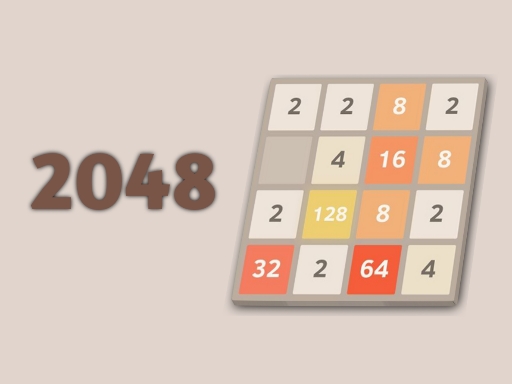
2048: While 2048 focuses on sliding and merging matching number tiles across a tight grid, Power Link shares the core puzzle appeal of managing limited space and anticipating future states. Players who enjoy the calculating foresight of tile mergers will appreciate Power Link's direct pathfinding challenge of wiring neon plugs within finite move limits.
Frequently asked questions
What is the main goal in Power Link? Your goal is to connect all plugs to extensions using tap-and-drag mechanics so that every light bulb illuminates before you run out of moves.
How do controls work in Power Link? You simply tap or click on an available energy plug and drag a line across the board to connect it to an unpowered extension.
What happens if I run out of moves? The level requires all extensions to be powered within the available move allowance. Running out of moves before finishing means you must rethink your wiring order and try again.
Something not right?
Tell us if the game does not load, the information is wrong or the content needs review.
Report a problem ›