About Poler Match
Poler Match is a neon-styled 2D puzzle game that challenges players to link magnetic terminals and complete electrical circuits. By connecting north and south poles across the board, your goal is to energize all the light bulbs while staying strictly within a limited move budget. It offers a clean, brain-teasing test of spatial planning and move conservation.
Set against a futuristic neon backdrop, Poler Match presents a series of circuit-building logic puzzles designed to test player problem-solving skills. Each puzzle board contains power elements, unlit bulbs, and designated terminals labeled as N and S poles. Players interact directly with the board by dragging connection lines between opposite poles to form viable electrical pathways.
The core experience revolves around spatial analysis and deliberate pathfinding. Because every stage provides only a limited allotment of moves, haphazard dragging quickly depletes your turns before the circuit network is complete. As puzzle layouts expand in complexity, finding optimal routes between complementary terminals requires looking ahead and anticipating how each connection impacts remaining endpoints. The minimalist visual presentation keeps attention centered on line paths and active connections, offering an accessible yet engaging logic challenge that players can enjoy directly in a web browser.
Your goal
The primary objective in Poler Match is to light up every bulb across the board by successfully connecting all the N and S terminals before your available moves run out. Achieving this requires linking every designated terminal into a working circuit without wasting interactions on redundant or misplaced lines. Players aim to solve each level with clean, deliberate path choices, ensuring complete circuit connectivity while preserving as many moves as possible.
How to play Poler Match
1. Examine the board layout to locate all unlit bulbs and identify the positions of the N and S poles.
2. Plan your connection paths mentally to ensure every terminal can reach its counterpart without blocking other routes.
3. Tap and drag from an N or S terminal toward the matching opposite pole to establish an active circuit line.
4. Monitor your remaining move count after each drag to ensure you do not run out of turns prematurely.
5. Verify that all bulbs are powered and every required terminal is linked to successfully complete the level.
Controls and device support
Tap and drag on a touchscreen or click and drag with a mouse cursor to connect the N and S poles across the board.
- Controls: Mouse or touch
- Device support: Desktop + mobile
- Game frame: 1920 x 1080
Rules to keep in mind
- Connections must link complementary N and S terminals to energize the board's circuits.
- All N terminals must be fully connected to successfully finish the puzzle stage.
- Every puzzle stage operates under a limited budget of allowed moves.
- Players must light up all bulbs on the board using their available energy connections.
What makes the challenge interesting
At its heart, Poler Match tests route planning and resource conservation. Unlike action titles that require rapid physical reflexes, success here depends on calm spatial deduction. The central tradeoff lies in immediate local connections versus overall board balance: joining the two closest terminals might seem convenient, but it can leave distant poles isolated or require excessive extra moves to rectify later. Players must evaluate the whole grid as a unified network, tracing where energy flows before executing an input. Balancing move limits against intricate layouts creates an engaging rhythm of observation, projection, and precise execution.
Tips for Poler Match
- Scan all terminal positions before dragging your first line. Rushing the easiest pair often strands distant poles, forcing you to waste precious moves fixing routing conflicts later.
- Work from the outside edges inward when possible. Corner and perimeter poles typically have fewer routing options, making their valid connection paths much easier to determine reliably.
- Track your remaining move counter continuously. If a puzzle appears tight on turns, reconsider long winding paths and look for direct connections that conserve your limited actions.
- Double-check circuit continuity to every bulb. Energizing all light sources requires complete links across the board, so confirm no stray N or S terminal is left unlinked.
Stages and progression
Poler Match introduces players to circuit fundamentals before presenting increasingly complex puzzles on subsequent stages. As layouts advance, the spatial arrangement of bulbs and polar terminals demands greater foresight and tighter route optimization. While specific stage counts and unlock criteria remain unstated in the game data, players can structure their personal progression by aiming for cleaner solutions, reducing accidental moves, and solving complex circuit layouts with fewer trial-and-error resets on each successive attempt.
Playing on different devices
Rendered in a crisp 1920x1080 resolution, Poler Match adapts smoothly across desktop monitors and mobile screens. On touch devices like Android phones, direct tap-and-drag gestures make drawing circuit lines feel natural and tactile. Desktop players can use precise mouse clicks and drags to map connections without obscuring the neon board layout with fingers.
The skills behind the game
Belonging to the puzzle and strategy genres, Poler Match emphasizes logical deduction, spatial awareness, and turn management. Grid-based connector games have long been popular because they remove hectic timing pressures in favor of deliberate analytical thinking. By pairing circuit-closing themes with strict move limits, the game delivers the satisfying cerebral payoff characteristic of classic browser logic games.
Who will enjoy this game
Players looking for a relaxing puzzle game online often seek brain teasers that offer immediate accessibility alongside genuine intellectual challenge. Poler Match game sessions fit smoothly into brief study breaks or daily mental warmups, providing self-contained logic boards that reward careful observation. Because the rules focus straightforwardly on connecting terminals and lighting bulbs, puzzle enthusiasts can dive straight into solving boards without managing complex secondary mechanics.
Games with a similar feel
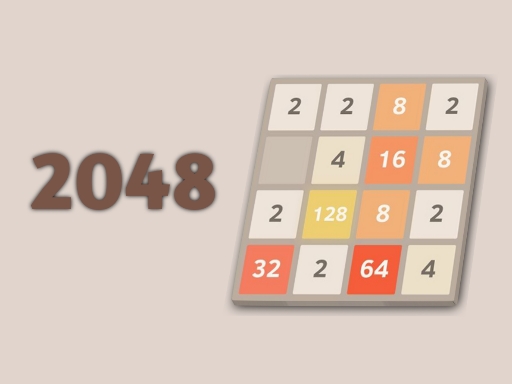
2048: While 2048 focuses on sliding and combining matching numerical tiles within a confined grid, Poler Match centers on directional path connections between complementary magnetic poles. Both games share an emphasis on careful move conservation and spatial foresight, yet 2048 creates an evolving arithmetic puzzle through shifting tiles, whereas Poler Match offers structured circuit routing challenges. Players who enjoy the analytical calculation of 2048 will appreciate Poler Match's thoughtful, line-drawing logic.
Frequently asked questions
How do you complete a level in Poler Match? You complete a level by using tap-and-drag inputs to connect all the N and S poles, completing the circuits to light up every bulb before running out of moves.
What happens if I run out of moves? Running out of moves before all N terminals and bulbs are properly connected prevents stage completion, requiring you to retry the puzzle with a more efficient routing strategy.
Can Poler Match be played on mobile devices? Yes, Poler Match supports touch controls on mobile devices, allowing you to tap and drag connections directly on touchscreen displays as well as in desktop web browsers.
Is Poler Match played against a timer? The game focuses on a move limit rather than a countdown clock, giving players time to study terminal placements and plan out each circuit connection carefully.
Something not right?
Tell us if the game does not load, the information is wrong or the content needs review.
Report a problem ›