About Ping Pong Table Tennis
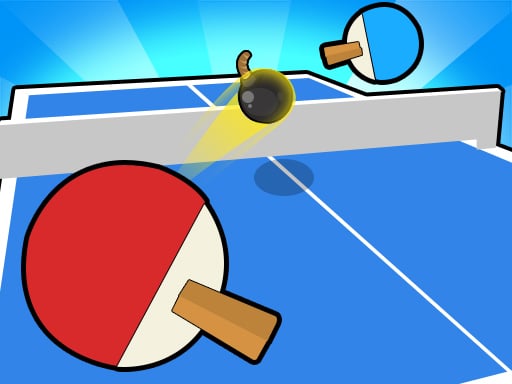
Ping Pong Table Tennis delivers fast-paced browser sports action focused on sharp reflexes and tactical shot placement. Players take direct control of a table tennis racket across competitive rallies, working to return incoming serves, strike the ball accurately, and score points against rival players. As each match unfolds, opposing competitors present tougher defensive patterns, requiring quick hand-eye coordination, steady timing, and strategic adjustments to secure victory across every round.
Ping Pong Table Tennis places players in quick table tennis duels designed around accessible mechanics and responsive rally exchanges. Operating as a casual sports title, the game centers on guiding the paddle to meet the ball cleanly before sending it back across the net. The core gameplay loop revolves around anticipating ball trajectory, striking accurately on return, and keeping up with the tempo of the opposing player. Success depends on maintaining composure during rapid exchanges while actively looking for defensive openings.
Each point tests both immediate reaction speed and long-term tactical thinking. Rather than relying on complicated setups, the title emphasizes clean contact and deliberate shot selection. As matches progress, opponents become noticeably more challenging, forcing players to adapt their return angles, exploit opponent tendencies, and defend against aggressive returns to maintain winning momentum.
Your goal
The primary objective in Ping Pong Table Tennis is to outscore and defeat your opponent across each table tennis match. To win points consistently, players must react quickly to incoming balls, make accurate racket contact, and place returns into areas where the opposing player struggles to recover. Achieving high performance involves identifying opponent weaknesses, minimizing unforced return errors, and adapting shot strategies against increasingly skilled rivals.
How to play Ping Pong Table Tennis
1. Start the match and observe your opponent's initial serve and positioning across the table.
2. Position your paddle toward the incoming ball path using your mouse cursor or touchscreen touch.
3. Time your swing carefully to make clean, accurate contact as the ball bounces into reach.
4. Direct returns away from your opponent's paddle position to create difficult recovery angles.
5. Sustain the rally through quick reflexes until your opponent fails to return the shot.
6. Adapt your hitting style as subsequent opponents demonstrate faster returns and tougher defense.
Controls and device support
Ping Pong Table Tennis uses simple mouse click inputs on desktop browsers and direct screen taps on mobile devices to control racket movement and execute shots.
- Controls: Mouse or touch
- Device support: Desktop + mobile
- Game frame: 750 x 1624
Rules to keep in mind
- Players must strike the incoming ball accurately to return it across the net and stay active in the rally.
- Points are earned when the opponent is unable to make a valid return shot.
- Match victory requires beating the current opponent before facing more challenging challengers.
What makes the challenge interesting
The defining appeal of Ping Pong Table Tennis lies in its clean focus on rhythm, precision, and quick decision-making under pressure. Table tennis naturally demands micro-second adjustments: mistiming a swing or misjudging a bounce immediately leaves the table open for a counter-attack. Players must balance steady, reliable baseline defense against ambitious placement shots that push opponents off-center.
This tradeoff shapes every rally. Playing too passively allows tough opponents to dictate tempo and pin your racket into defensive corners, while rushing high-risk angles can lead to mishits. Mastering the game involves developing a calm visual tracking habit, recognizing return patterns, and shifting tactically between safe containment shots and sharp offensive placement.
Tips for Ping Pong Table Tennis
- Track the ball from the moment it leaves the opponent's paddle. Early tracking gives you more time to align your racket cleanly rather than scrambling at the last second.
- Aim returns toward the outer table edges to force your opponent into wide lateral movement, making their next return much harder to control.
- Avoid committing your paddle too early to one side. Stay centered when waiting for a return so you can react equally well to left and right shots.
- Observe which side your rival struggles to defend. Adjusting your strategy to repeatedly target that weakness creates reliable scoring opportunities.
- Maintain a steady hitting cadence during extended rallies instead of overhitting, which frequently leads to mistimed swings against tougher challengers.
Stages and progression
Progression in Ping Pong Table Tennis is defined by facing progressively tougher opponents across consecutive matches. Early games allow players to establish basic timing and rally confidence against standard defensive returns. As you defeat opponents and advance, later challengers present sharper counterplay, demanding faster reaction times and fewer unforced errors.
To handle this escalating challenge, players should focus on refining their tactical versatility. Practicing varied return angles and developing consistency against unpredictable shots will prepare you for the stiffer opposition found deeper in your play session.
Playing on different devices
Ping Pong Table Tennis is built with a vertical aspect ratio of 750 by 1624, making it naturally suited for portrait viewing on mobile smartphones as well as centered window play on desktop monitors. Touch controls allow for quick, intuitive finger taps directly along the ball trajectory.
Desktop players using a mouse gain precise cursor-guided paddle placement, which can assist in fine angle control during extended rallies. Both control methods offer responsive input without requiring keyboard navigation.
The skills behind the game
Sports games in the browser space prioritize immediate playability, distilling real-world athletic competition into straightforward, reflex-driven interactions. Ping Pong Table Tennis exemplifies this casual sports approach by focusing entirely on the core exchange of table tennis duels. By stripping away heavy simulation menus, the title allows players of all experience levels to jump straight into active rallies and test their timing against virtual opponents.
Who will enjoy this game
Players looking for a dedicated ping pong table tennis game often want quick, engaging sessions that exercise hand-eye coordination without demanding complex setups. As a casual sports game online, Ping Pong Table Tennis satisfies that desire by delivering accessible one-on-one matches directly in the web browser. Whether you are looking for a brief reaction-speed warmup or an entertaining virtual rally, the game offers immediate competitive sports fun.
Frequently asked questions
How do I control the racket in Ping Pong Table Tennis? You can steer and swing your racket using standard mouse clicks on a computer or direct taps on a touchscreen device. Both inputs allow you to position the paddle and return incoming balls.
Does the game get more difficult as you win matches? Yes, opponents become tougher as you advance through games. Later opponents require quicker reaction speeds, better accuracy, and tactical adjustments to defeat.
Can I play Ping Pong Table Tennis on both mobile and desktop browsers? Yes, the game is built in HTML5 with portrait dimensions, allowing smooth play in modern web browsers across desktop computers, tablets, and mobile smartphones.
Something not right?
Tell us if the game does not load, the information is wrong or the content needs review.
Report a problem ›