Official listing
Game description
Welcome to the exciting world of Physical Balls 2048! In this game, your goal is to merge balls with the same numbers and get a bigger ball. This physics-based puzzle will keep you occupied for hours on end.
Puzzles game
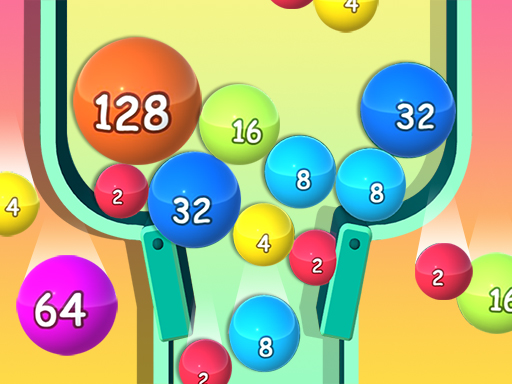
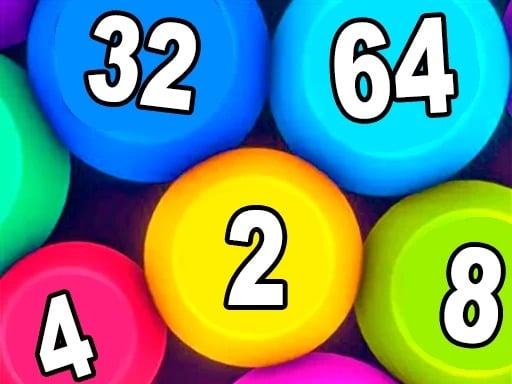
Physical Balls 2048 brings the classic number-combining puzzle into a three-dimensional physics arena. Players position numbered balls across the top of the board, aim their drops, and release them into the playing area. When two spheres carrying the exact same number collide, they merge into a single, higher-value ball. Your primary challenge is navigating rolling trajectories and bouncing collisions to continuously build bigger numbers without cluttering the play space.
Choose Play now to load the game.
Official listing
Welcome to the exciting world of Physical Balls 2048! In this game, your goal is to merge balls with the same numbers and get a bigger ball. This physics-based puzzle will keep you occupied for hours on end.
From the game listing
To move the ball mdash swipe your finger mouse cursor left or right Aim and release the ball Merge physical balls with the same numbers to get a bigger ball You need to get a ball with the same number as the ball at the bottom and when they merge
Open this card to load the gameplay video.
Physical Balls 2048 brings the classic number-combining puzzle into a three-dimensional physics arena. Players position numbered balls across the top of the board, aim their drops, and release them into the playing area. When two spheres carrying the exact same number collide, they merge into a single, higher-value ball. Your primary challenge is navigating rolling trajectories and bouncing collisions to continuously build bigger numbers without cluttering the play space.
Physical Balls 2048 adapts familiar merge mechanics into an active, physics-based environment. Instead of shifting static tiles along a rigid grid, you drop physical spheres into an open container. Each turn begins with an active ball at the drop point. By sliding your cursor or finger horizontally, you choose where along the upper axis to release the sphere.
Once released, gravity and momentum take over. The sphere falls, bounces off walls, and rolls across previously dropped pieces. When it contacts another sphere displaying the identical numerical value, the two combine into a larger ball with the next tier of number. Because physical objects roll and settle dynamically, careful placement and anticipation of movement are essential to keeping the board organized as larger spheres accumulate.
The core objective in Physical Balls 2048 is to systematically merge matching numbered balls to synthesize increasingly larger values. Success requires aiming each drop so that matching pieces make direct physical contact, triggering instant combinations. As your combined spheres grow in size and numerical value, space management becomes crucial, challenging you to maintain clear paths for future drops and achieve the highest possible merged values during your session.
1. Observe the number shown on your current ready ball and check the values of the settled spheres at the bottom of the arena.
2. Swipe or drag your mouse cursor left or right across the upper screen to adjust your drop position.
3. Release your hold to drop the ball down toward your intended target sphere.
4. Watch the physical bounce and roll as matching numbers collide and merge into a single larger ball.
5. Repeat the dropping process to chain sequential mergers and build up higher numbers across the board.
To move the ball, swipe your finger or mouse cursor left or right, then aim and release to drop it into the playing area.
The primary gameplay loop balances calculated spatial planning against fluid physics interactions. Unlike standard tile puzzles where items move strictly in cardinal directions, Physical Balls 2048 requires players to judge slopes, momentum, and glancing impacts. When a dropped ball strikes an uneven stack, it naturally rolls into adjacent valleys, meaning direct vertical alignment does not always guarantee a clean landing.
This creates an engaging risk-reward dynamic on every release. You must decide whether to aim directly atop a matching number or bounce along a sidewall to roll into a tight pocket. Because newly created larger spheres alter the surface contours below, maintaining a steady, structured layout prevents stray spheres from obstructing valuable merge targets.
Progression in Physical Balls 2048 is driven by escalating board complexity as you produce larger numbers. In the early stages of a round, the arena is relatively open, allowing straightforward vertical drops and direct collisions. As matches accumulate, higher-value spheres occupy significant volume, altering how subsequent pieces bounce and settle.
To improve over successive sessions, focus on maintaining an organized gradient of numbers across the arena floor. Developing a disciplined dropping rhythm helps keep match pathways unobstructed, enabling you to consistently construct larger values without crowding out incoming pieces.
Physical Balls 2048 operates cleanly across desktop and mobile web browsers with an 800 by 600 display format. Desktop players benefit from precise horizontal mouse adjustments, allowing pixel-perfect alignment before releasing the drop. On touchscreens, intuitive swiping provides fluid one-handed control, letting you slide and release anywhere across the upper playing boundary.
As a member of the puzzle and hypercasual genres, Physical Balls 2048 blends arithmetic matching with tactile spatial problem-solving. While pure logic puzzles emphasize deterministic step-by-step calculations, physics-infused titles add kinetic unpredictability. Players must evaluate not only mathematical combinations but also the weight, curvature, and settling patterns of rounded objects.
This hybrid design makes the experience approachable for quick casual sessions while rewarding players who study rebound angles and structural balance. Managing an evolving stack of round pieces provides an engaging twist on standard merge mechanics, offering immediate visual feedback whenever a successful combination clears space.
Casual players looking for an engaging merge puzzle game online often seek experiences that require both strategic foresight and relaxing interactions. Physical Balls 2048 serves this audience by providing accessible drag-and-drop gameplay that can be enjoyed in short bursts or longer puzzle sessions without complex setup.
Whether you are practicing spatial anticipation or simply enjoying the rhythmic satisfaction of watching identical numbers merge into bigger spheres, the game delivers intuitive mechanics. Its combination of clear number goals and dynamic rolling physics provides an enjoyable routine for puzzle enthusiasts looking to sharpen their placement precision.
2048: 2048 is a classic grid-based slider where all tiles shift simultaneously across four cardinal directions on a flat board. Physical Balls 2048 takes the core concept of merging equal numbers into higher values but translates it into a dynamic 3D drop chamber. Players who prefer tactile bouncing trajectories and gravity-based positioning over strict deterministic grid sliding will appreciate this physics-driven format.
How do you combine balls in Physical Balls 2048? You combine balls by dropping a sphere onto another ball that shares the exact same number. When the two physical spheres make contact, they instantly merge into a single larger ball with an upgraded value.
How do the controls work on mobile and desktop? Controls use horizontal drag mechanics on all platforms. On desktop, hold and slide your mouse cursor left or right before releasing. On mobile devices, swipe your finger along the top area and lift to drop the ball.
What role does physics play during merges? Rather than moving along fixed grid tiles, all spheres roll, bounce, and displace neighbors dynamically. Angles and momentum determine where a ball settles, making physical trajectories an essential consideration for every drop.
Tell us if the game does not load, the information is wrong or the content needs review.
Report a problemExplore popular games by category, shared tags and site-wide activity.