About Match the Blocks
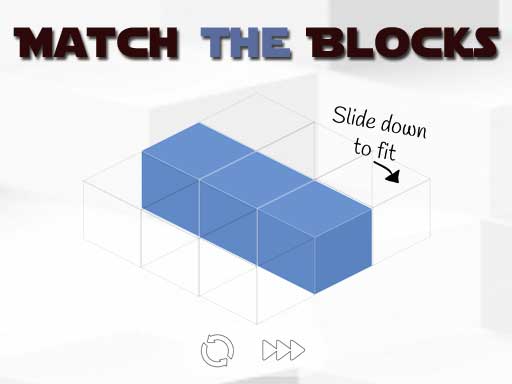
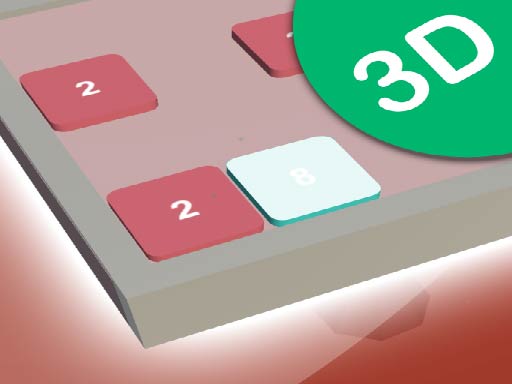
Match the Blocks is a single-player logic puzzle that challenges spatial awareness through an isometric point of view. Players inspect a target pattern displayed on a base layer and reposition or align corresponding pieces on an upper tier until the layouts mirror each other completely. Spanning 75 structured levels, the game transitions from compact 3×3 grids to intricate 5×5 boards, delivering clean visual problem-solving without cluttered distractions.
In Match the Blocks, the gameplay revolves around two distinct vertical tiers viewed from an isometric perspective. The lower layer establishes the required pattern, while the upper layer holds the movable or adjustable blocks that must be arranged to recreate that exact design. Succeeding on each stage requires careful observation of spatial relationships, angles, and alignments across the grid.
The game provides a focused solitary puzzle experience where logical deduction and visual comparison drive every decision. As you move forward through the 75 available stages, board dimensions expand from straightforward 3×3 layouts to broader 5×5 configurations. This expansion steadily introduces greater visual complexity, demanding sharper focus and deliberate adjustments to ensure every upper block aligns seamlessly with its lower counterpart.
Your goal
The primary objective in Match the Blocks is to clear each stage by making the upper layer of blocks match the pattern shown on the lower layer with complete precision. Players work through a continuous sequence of 75 stages, aiming to solve increasingly spacious grids up to 5×5 by applying logical reasoning and keen visual alignment to conquer the entire level catalog.
How to play Match the Blocks
1. Examine the layout shown on the lower layer to understand the target pattern and color or tile requirements.
2. Compare the current arrangement of blocks in the upper layer against the lower template from the isometric viewpoint.
3. Use mouse clicks or touchscreen taps to interact with the upper blocks and adjust their placement.
4. Systematically align each section of the upper layer until the structure matches the base layer perfectly.
5. Complete all 75 levels ranging from 3×3 grids up to 5×5 boards to finish the full puzzle journey.
Controls and device support
Match the Blocks is played using mouse clicks on desktop browsers and tap gestures on mobile touchscreen displays.
- Controls: Mouse or touch
- Device support: Desktop + mobile
- Game frame: 720 x 1280
Rules to keep in mind
- The upper block arrangement must match the lower layer pattern perfectly to successfully conquer the level.
- Puzzles take place on isometric grid boards that range in scale from 3×3 up to 5×5.
- The complete game consists of 75 sequential puzzle levels.
What makes the challenge interesting
The core skill in Match the Blocks is decoding three-dimensional spatial relationships depicted on a two-dimensional isometric plane. Because isometric projections present objects at an angle without true vanishing points, players must actively train their eyes to translate top-layer positions directly over the bottom template. A common hurdle involves misjudging depth or diagonal offsets between the upper and lower tiers.
The strategic tradeoff centers on impulsive guessing versus methodical verification. Rushing moves without cross-referencing row and column indices often results in misplaced blocks. Taking a calm, quadrant-by-quadrant approach ensures every block placement is validated against the base pattern before moving to the next section.
Tips for Match the Blocks
- Anchor your perspective by matching one corner block first. Establishing a fixed corner reference helps you verify surrounding coordinates accurately and avoids confusing diagonal rows.
- Scan the grid row by row rather than placing blocks randomly across the board. Systematic scanning prevents overlooked tiles and speeds up pattern verification on larger 4×4 and 5×5 boards.
- Double-check depth alignment by looking straight along the isometric diagonals. Viewing lines diagonally ensures upper layer blocks sit exactly above their intended target positions.
- Break down large 5×5 configurations into smaller visual clusters. Solving distinct 2×2 or 3×3 subsections makes high-density stages feel manageable and reduces mental fatigue.
Stages and progression
Progression in Match the Blocks is organized across 75 distinct levels that scale in dimension and complexity. Early puzzles start on compact 3×3 grids, providing a gentle introduction to reading isometric angles and aligning upper pieces with the base pattern. As you advance through the campaign, the boards expand toward intermediate sizes and culminate in spacious 5×5 grids.
With the jump from 9 tiles in a 3×3 grid to 25 tiles in a 5×5 layout, pattern density increases substantially. Conquering the later stages demands structured observation and disciplined verification, rewarding players who adopt consistent analytical routines as they work toward completing all 75 levels.
Playing on different devices
Match the Blocks runs with a portrait-oriented native display aspect of 720×1280, making it well suited for mobile screens while functioning smoothly within desktop browser windows. On desktop setups, the mouse offers accurate point-and-click input for targeting specific grid tiles. On mobile devices, direct tap gestures allow quick, responsive block manipulation across the isometric playfield.
The skills behind the game
As a logic puzzle, Match the Blocks belongs to the tradition of spatial alignment and pattern reconstruction games. Rather than relying on fast reflexes or dexterity, the genre prioritizes analytical thinking, visual scanning, and deliberate decision-making. Players who enjoy block-based brainteasers appreciate how isometric perspectives transform basic grid matching into engaging exercises in three-dimensional visualization.
Who will enjoy this game
Players looking for a relaxing puzzle game online will find that Match the Blocks provides an accessible mental workout suitable for quick daily practice sessions. Exploring match the blocks game mechanics offers a satisfying loop of visual deduction as you compare layered patterns and solve grid layouts at your own pace. Whether seeking casual downtime or a focused sequence of logic challenges, the structured 75-stage progression delivers straightforward, distraction-free puzzle solving.
Frequently asked questions
How many levels are included in Match the Blocks? Match the Blocks contains a total of 75 levels, offering a complete sequence of puzzles that progress from 3×3 grids to 5×5 boards.
What is the core goal on each stage? The goal is to align and arrange the blocks located in the upper layer so that they match the reference pattern displayed on the lower layer in isometric view.
Can I play Match the Blocks on both desktop and mobile devices? Yes. The game supports mouse controls on desktop computers and tap interactions on mobile touchscreens, accommodating varied browser setups.
How large do the puzzle grids become as you advance? Grid sizes range from starter 3×3 configurations up to 5×5 boards, which contain up to 25 tile positions to inspect and match.
Something not right?
Tell us if the game does not load, the information is wrong or the content needs review.
Report a problem ›