About Crunch Lock
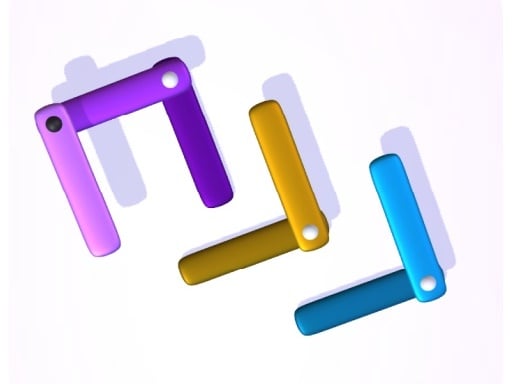
Crunch Lock is a browser-based mechanical puzzle game centered around unscrewing challenges and tool coordination. Players interact with a complex arrangement of wrenches and screws, requiring deliberate sequencing and agile coordination to dismantle each setup across successive phases.
In Crunch Lock, each layout presents an interconnected cluster of hardware components where wrenches and screws interact in a synchronized mechanical performance. Your primary activity involves evaluating the board to determine which pieces can be manipulated or unscrewed cleanly without obstruction.
The game blends spatial awareness with logical order of operations. Rather than demanding frantic physical speed, success depends on recognizing how various wrenches overlap and sequencing your clicks or taps to loosen screws in a smooth, methodical progression.
Your goal
The primary goal is to successfully resolve each phase by unscrewing and clearing the assembled hardware. Players aim to improve their overall efficiency, visual parsing speed, and sequencing accuracy as they tackle increasingly intricate trial layouts.
How to play Crunch Lock
1. Observe the starting mechanical layout to identify which screws and wrenches are unblocked and ready for immediate interaction.
2. Click with your mouse or tap on your touch screen to activate tools and unscrew the accessible components.
3. Track how removing one screw frees up space or unlatches neighboring wrenches across the assembly.
4. Continue working through the remaining hardware in a coordinated sequence until the entire structure is dismantled.
5. Advance into subsequent challenge phases, applying learned sequencing patterns to tackle fresh mechanical arrangements.
Controls and device support
Use a standard mouse click on desktop or tap directly on the screen on mobile devices to select and interact with screws and wrenches.
- Controls: Mouse or touch
- Device support: Desktop + mobile
- Game frame: 800 x 600
What makes the challenge interesting
The core appeal of Crunch Lock rests on spatial reasoning and step-by-step logic. Players must mentally map out dependencies before committing to an action, deciding which wrench must shift before a particular screw can turn freely.
A central tradeoff involves taking time to analyze the full structure versus acting quickly on obvious moves. Rushing into immediate clicks can cause clogs or awkward bottlenecks, whereas patient planning creates a rhythmic, satisfying dismantling process across each phase.
Tips for Crunch Lock
- Survey the entire board before making your first tap. Identifying which wrench holds the top layer prevents you from picking locked components prematurely.
- Look for isolated screws on outer edges that have zero overlap. Clearing free components early creates clear visual space to analyze more congested central areas.
- Trace tool movement paths backwards from the final piece to the initial layer. Reverse planning helps uncover the exact sequence needed to loosen tricky parts.
- Maintain a calm and steady rhythm rather than rapid multi-tapping. Deliberate inputs reduce the risk of misclicking adjacent hardware or losing track of your planned sequence.
Stages and progression
The game is organized as a succession of trial phases that test your coordination with larger numbers of screws and wrenches. As you progress, layouts introduce more complex interlocks requiring deeper advance planning.
To build consistency across sessions, focus on refining your inspection habits during early stages so you can approach dense, multi-layer mechanical arrangements with a structured problem-solving mindset.
Playing on different devices
Crunch Lock runs directly in web browsers via HTML5 and WebGL technology, making it accessible on desktop systems, Android smartphones, iPhones, and iPads.
On mobile screens, direct finger taps provide intuitive unscrewing interactions, while desktop players benefit from precise cursor placement during closely grouped screw clusters within the 800x600 display canvas.
The skills behind the game
Crunch Lock fits naturally within the hypercasual puzzle space, offering instant accessibility alongside tactile problem-solving. It strips away complex setup menus in favor of immediate, pick-up-and-play mechanical interactions.
Unlike fast-paced reflex clickers, this title emphasizes spatial logic, where success depends on parsing layers of physical obstacles. Fans of single-screen logic teasers will appreciate the bite-sized mental challenge of untangling synchronized mechanical parts.
Who will enjoy this game
Players looking for a quick brain teaser can jump into Crunch Lock for short, focused sessions. The core loop of coordinating wrenches and unlocking pins provides an engaging mental exercise during casual study breaks or daily downtime.
Searching for a dedicated crunch lock game offers casual puzzle enthusiasts a straightforward platform to practice sequential reasoning, visual filtering, and step-by-step logic in any modern browser.
Frequently asked questions
What is the primary objective in Crunch Lock? The main objective is to unscrew and clear all mechanical components by carefully ordering your moves to unblock wrenches and loosen screws across each stage.
What controls are needed to play the game? You only need basic pointing inputs. Click with a mouse on desktop browsers or tap the screen on mobile devices to interact with individual tools and fasteners.
Can I play Crunch Lock on mobile phones and tablets? Yes, the game is built with web standards compatible with Android, iPhone, and iPad browsers, allowing direct tap-to-play interaction without separate downloads.
How can I improve my sequencing when layouts get crowded? Take a moment to visually trace which wrenches overlap. Disassembling outer, unblocked pieces first helps untangle dense clusters without guessing.
Something not right?
Tell us if the game does not load, the information is wrong or the content needs review.
Report a problem ›