About Winnie Pooh
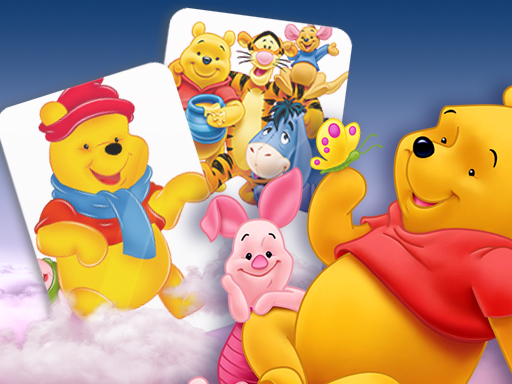
Winnie Pooh is a browser puzzle game themed around the beloved anthropomorphic teddy bear character originally created by author A. A. Milne. Combining brain-teasing puzzle elements with card activities, the game invites players to engage in lighthearted problem solving using standard mouse controls directly in their web browser.
Winnie Pooh presents casual puzzle and card-based challenges set within an 800 by 600 display frame. Inspired by the legendary character first introduced in the 1926 story collection Winnie-the-Pooh and later illustrated by E. H. Shepard, the title provides a gentle digital environment focused on brain exercises. Players navigate the on-screen elements entirely through point-and-click mouse inputs. Because the game emphasizes puzzle and card mechanics, the gameplay loop centers on observing the layout, interacting with puzzle components, and working through each board at an accessible pace.
Your goal
The primary objective in Winnie Pooh is to solve each puzzle and card challenge presented on the screen. Players aim to analyze the layout, make deliberate selections with the mouse, and successfully complete the board's logical requirements. Achieving completion involves attentive observation and steady problem-solving as you interact with each puzzle element to reach the solution.
How to play Winnie Pooh
1. Load the game in your web browser within the standard 800 by 600 display frame.
2. Examine the active puzzle or card arrangement displayed on the screen.
3. Use your mouse cursor to point at and click interactive puzzle elements.
4. Work through the logical steps to complete the board challenge.
Controls and device support
Mouse: Navigate and interact with the puzzle interface
- Controls: Mouse or touch
- Device support: Browser
- Game frame: 800 x 600
What makes the challenge interesting
Gameplay in Winnie Pooh centers on steady logical deduction and card-based puzzle interactions. Designed for casual accessibility, the experience avoids complicated multi-button inputs in favor of direct mouse controls. Players can concentrate entirely on scanning the board layout, recognizing patterns, and testing possible moves without dealing with complex key bindings or fast reflexes. The gentle thematic atmosphere drawn from A. A. Milne's classic literary universe pairs naturally with puzzle solving, encouraging methodical thinking and careful observation during each session.
Tips for Winnie Pooh
- Take time to scan the entire 800 by 600 play area before making clicks so you understand the layout.
- Focus on identifying matching patterns or logical connections among visible card and puzzle elements before committing to your next move.
- Maintain steady and deliberate mouse clicks to avoid accidental selections when navigating through compact puzzle items on screen.
The skills behind the game
As a member of the puzzle and brain game category, Winnie Pooh focuses on thoughtful interaction rather than high-speed action. Digital puzzle games of this style provide accessible mental exercises where players use simple mouse inputs to solve self-contained board challenges. The inclusion of card and logic elements offers a structured yet relaxing experience suitable for casual puzzle enthusiasts.
Who will enjoy this game
Players looking for a winnie pooh game or a classic puzzle game online will find a focused point-and-click experience here. Centered on the famous bear created in A. A. Milne's stories, the game combines brain and card puzzle activities into an approachable browser format that requires no complex setup.
Frequently asked questions
What controls are used to play Winnie Pooh? Winnie Pooh is operated entirely using your mouse. You can point and click on the on-screen puzzle and card elements to interact with the game.
What type of game is Winnie Pooh? Winnie Pooh is a casual browser puzzle game that incorporates brain and card elements, inspired by the classic storybook character created by A. A. Milne.
Something not right?
Tell us if the game does not load, the information is wrong or the content needs review.
Report a problem ›