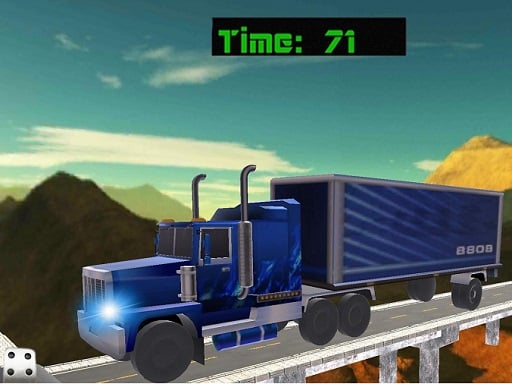
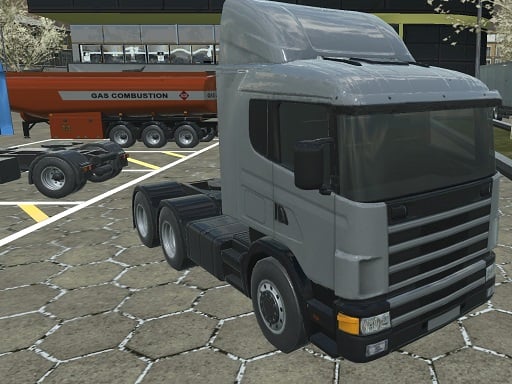
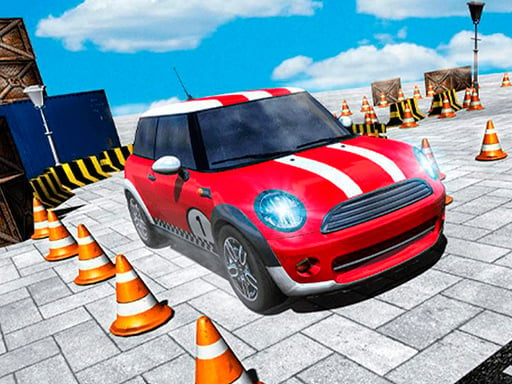
About US - Police Bus Parking
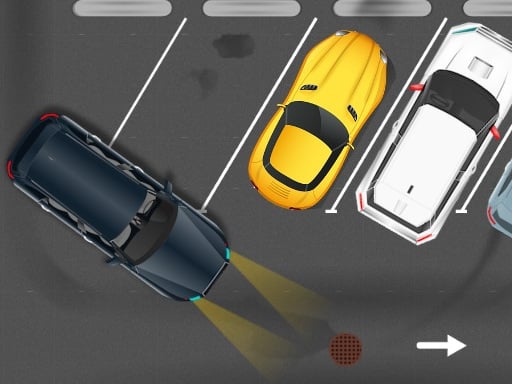
US - Police Bus Parking places players behind the wheel of a heavy law enforcement transport vehicle rather than a nimble patrol cruiser. Instead of chasing high-speed suspects down open highways, the core task focuses on navigating tight spatial corridors and executing steady parking maneuvers. Successfully steering a long bus requires measured acceleration and careful path planning to fit inside assigned parking areas without clipping surrounding structures.
In US - Police Bus Parking, the driving experience shifts away from conventional pursuit racing to center entirely on precision bus maneuvering. Operating a large municipal vehicle introduces distinct handling dynamics, demanding wider turns and cautious speed adjustments. Players guide their designated police transport through simulated operational areas where spatial awareness and steady lines matter far more than reckless speed.
Each driving attempt challenges the operator to assess entry angles, manage turning radii, and bring the heavy chassis to a halt inside designated parking boundaries. Because long vehicles exhibit wider swing arcs when cornering, every movement requires deliberate forethought to prevent misalignment as you approach final parking positions.
Your goal
The primary objective is to steer the police bus through navigational layouts and bring the vehicle to a secure, aligned stop inside marked parking zones. Players aim to refine their steering trajectory, avoid rushed acceleration, and execute clean positioning without colliding with perimeter barriers or miscalculating clearance space.
How to play US - Police Bus Parking
1. Launch the game and inspect the starting orientation of your police bus within the 800 by 600 gameplay display window.
2. Locate your assigned parking stall and observe any tight corridors or turns along the approaching path.
3. Engage your keyboard controls to initiate smooth forward acceleration toward the target area.
4. Swing wide ahead of corners to account for the extended wheelbase and avoid clipping interior lane edges.
5. Straighten the bus as you enter the final parking bay, braking steadily until the entire body rests safely within the lines.
Controls and device support
Official game instructions specify keyboard controls for handling the bus on desktop browsers. Individual key bindings are not enumerated in the source feed, but standard driving conventions generally employ arrow keys or WASD inputs for steering, throttle, and braking.
- Controls: Keyboard
- Device support: Browser
- Game frame: 800 x 600
What makes the challenge interesting
The defining appeal of US - Police Bus Parking is its deliberate departure from standard arcade racing velocity in favor of heavy vehicle management. Operating a bus introduces a pronounced tradeoff between rapid transit and turning accuracy. Carrying excessive momentum into tight corridors frequently forces difficult corrections, while measured, incremental throttle inputs preserve full steering control. Mastering this rhythm requires patience and an understanding of vehicle length, transforming simple parking into an engaging puzzle of spatial geometry.
Tips for US - Police Bus Parking
- Tap acceleration keys lightly instead of holding them down continuously. Gentle throttle taps maintain manageable velocity and prevent runaway momentum when approaching narrow parking bays.
- Take wide approach lines when turning through intersections. Bus axles require substantial turning clearance, and turning too early often causes the rear wheels to clip inner boundaries.
- Straighten your steering before making final braking adjustments in the parking slot. Misaligned wheels make reversing and realigning significantly more cumbersome.
- Use brief pauses to survey upcoming clearances rather than rushing. Halting in open stretches provides clear vantage points to plan subsequent steering maneuvers safely.
Playing on different devices
US - Police Bus Parking is configured for desktop play using dedicated keyboard controls within a fixed 800 by 600 viewport. Running the game on a computer ensures responsive key presses for delicate steering corrections, while maintaining clear visual oversight of parking markers across the standard screen resolution.
The skills behind the game
Though cataloged broadly under racing games, US - Police Bus Parking belongs firmly to the specialized driving simulator subgenre. Where traditional racing titles reward raw speed and reflexive overtaking, parking simulations emphasize patience, low-speed vehicle handling, and acute spatial orientation. The inclusion of commercial and emergency fleet vehicles like police buses adds distinct weight and handling considerations, offering casual drivers an analytical test of control rather than a simple sprint to the finish line.
Who will enjoy this game
Players looking for an engaging car parking game or casual driving challenge will appreciate the methodical pacing of US - Police Bus Parking. Navigating a massive public safety vehicle through tight spots serves as enjoyable coordination practice for fans of technical driving titles. By swapping reckless drifting for deliberate wheel positioning, the title accommodates players seeking a relaxed yet engaging test of desktop precision.
Games with a similar feel
Car Parking Multiplayer: Like Car Parking Multiplayer, this title centers on the technical art of vehicle maneuvering and aligning wheels inside tight spaces. While Car Parking Multiplayer offers expansive environments, US - Police Bus Parking delivers a streamlined, web-based experience tailored specifically for immediate keyboard parking practice with large law enforcement vehicles.
Asphalt: Asphalt emphasizes high-octane arcade racing with dramatic speed boosts and fast cornering. In contrast, US - Police Bus Parking trades competitive track speeds for methodical low-speed placement, appealing directly to drivers who prefer careful spatial navigation over rapid reflex racing.
Frequently asked questions
What type of gameplay does US - Police Bus Parking offer? The game provides a focused precision driving experience centered on maneuvering and parking a long law enforcement bus, prioritizing spatial judgment and steady control over aggressive high-speed racing.
How do I control the police bus? The game utilizes standard keyboard controls on desktop browsers to manage steering, acceleration, and braking, allowing players to make subtle directional adjustments through narrow parking channels.
How does bus parking differ from standard car parking games? Buses possess significantly longer wheelbases and wider turning circles than ordinary passenger cars. Drivers must initiate steering later and sweep wider around corners to keep the chassis clear of obstacles.
Something not right?
Tell us if the game does not load, the information is wrong or the content needs review.
Report a problem ›