About Unroll Ball Slide Puzzle
Unroll Ball Slide Puzzle is a casual browser puzzle game where players rearrange sliding tiles to form a clear path from a starting point to an exit. By sliding segmented blocks across the grid, your goal is to align the channels so the ball can roll smoothly through the entire circuit. It blends traditional sliding-block spatial mechanics with accessible, single-screen pathfinding challenges.
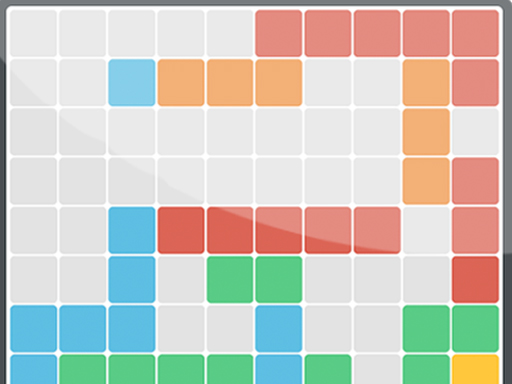
In Unroll Ball Slide Puzzle, each board presents a jumbled grid containing an initial ball position, an exit point, and various movable tiles etched with pipe grooves. The core experience revolves around spatial manipulation: players slide individual blocks into open spaces to construct an unobstructed route. Once the groove segments align from start to finish, the ball travels across the completed track to reach the goal.
The game focuses on visual reasoning and step-by-step problem-solving rather than high-speed reflexes. Because each layout functions as a self-contained logic puzzle, players can take their time surveying tile orientations, planning sliding sequences, and testing alternative connections until the final channel clicks into place.
Your goal
The primary objective is to unblock a continuous path between the starting position and the exit tile so the ball rolls seamlessly to the finish. Players aim to decipher the correct sequence of sliding movements, navigate around blocked or misaligned tiles, and successfully complete each puzzle layout with clear spatial logic.
How to play Unroll Ball Slide Puzzle
1. Examine the board to identify the start point where the ball rests and the target exit tile.
2. Scan the available carved tiles on the grid to see which groove shapes can link the two endpoints.
3. Click on movable tiles to slide them into adjacent empty spaces on the board.
4. Reorder the blocks systematically until all pipe segments form an unbroken channel.
5. Watch the ball roll through the newly connected path into the exit to complete the puzzle.
Controls and device support
The game operates via mouse click controls to select and slide tiles across the board.
- Controls: Mouse or touch
- Device support: Browser
- Game frame: 800 x 600
Rules to keep in mind
- Tiles must be slid across the board to create an open, connecting path.
- The puzzle is solved when the groove segments link the starting position directly to the exit.
- The ball rolls along the completed track to reach the end point.
What makes the challenge interesting
The core appeal of Unroll Ball Slide Puzzle lies in modular spatial visualization. Players must mentally reverse-engineer the required path, determining which curves, straight segments, and intersections are essential to bridge the gap between endpoints. A common tradeoff involves shifting tiles away from their intuitive positions to make temporary maneuvering room for key connector pieces.
Because the sliding format restricts piece movement to neighboring open slots, players balance direct route-building with mechanical clearance. Successfully resolving a board requires anticipating how moving one block frees up or confines another, encouraging deliberate spatial experimentation.
Tips for Unroll Ball Slide Puzzle
- Trace backward from the exit tile to see which channel curve must enter the final slot. Working in reverse often clarifies the final segment and narrows down which pieces must go where.
- Identify corner and curve pieces early. Placing crucial turning blocks near the grid edges prevents getting stuck trying to force straight paths through tight corners.
- Do not hesitate to shuffle an already aligned piece if it blocks a necessary transit lane. Temporarily breaking a partial route is often essential to slide the final tile into position.
- Take time to visualize the open space before clicking rapidly. Randomly sliding blocks can clutter open maneuvering slots, whereas deliberate movements keep pathways flexible.
Stages and progression
While the game is easy to learn initially, subsequent puzzle layouts present increasingly intricate path requirements and tighter sliding constraints. As you progress through new configurations, practice building cleaner visualization routines: mentally map the needed track pieces before making your initial slide, and evaluate whether your route minimizes unnecessary tile shuffling.
The skills behind the game
Tile sliding games occupy a venerable niche within puzzle and casual gaming, descending from classic sliding number blocks and physical mechanical brainteasers. By combining shifting grid constraints with conduit-building mechanics, sliding pipe puzzles challenge players to think several steps ahead while managing tight physical clearances.
As a hypercasual browser title, Unroll Ball Slide Puzzle offers self-paced problem solving suited for quick cognitive breaks. Players who enjoy spatial deduction, path creation, and methodical block manipulation will find familiar, accessible mechanics that reward steady observation over frantic action.
Who will enjoy this game
Anyone seeking an unroll ball slide puzzle game online will find that this genre emphasizes clean visual logic and low-stress problem solving. The tactile appeal of sliding tiles until a route clicks into place makes it a popular choice for players looking to unwind with light mental challenges during a short break.
For players interested in general online puzzle games, sliding path puzzles offer an approachable way to practice spatial geometry and sequencing. Engaging with varied tile arrangements helps develop deliberate planning habits that translate across many grid-based logic titles.
Frequently asked questions
What is the main goal in Unroll Ball Slide Puzzle? The main goal is to slide the puzzle tiles until you construct an unbroken track that lets the ball roll from the start point directly to the exit.
How do you control the tiles in the game? You interact with the board using mouse clicks to shift sliding blocks into adjacent open spaces.
Do you need fast reflexes to complete levels? No. The game is a logic and spatial puzzle where success comes from planning routes and analyzing tile positions rather than high-speed inputs.
Something not right?
Tell us if the game does not load, the information is wrong or the content needs review.
Report a problem ›