About Traffic.io Control
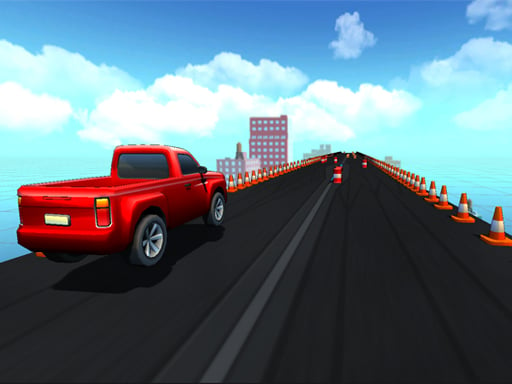
Traffic.io Control places you in charge of a bustling intersection where steady vehicle flow is the central challenge. As vehicles approach the crossing from opposing directions, your duty is to decide which side proceeds and which line must wait. Through timely inputs, you start and stop cars to maintain order and keep roads moving without causing accidents.
Set against a busy city road network, Traffic.io Control tests your situational awareness in a dynamic transit simulation. Vehicles approach a central crossroad from multiple angles, creating constant bottlenecks that demand quick decisions. The player acts as an active traffic conductor, balancing two incoming streams of cars to prevent gridlock and catastrophic collisions.
The core gameplay loop centers on scanning the roadway, gauging gaps between moving vehicles, and issuing start or stop commands. Because cars approach from both sides, halting one column too long creates heavy backlogs, while letting traffic flow unchecked risks direct intersection crashes. Success depends on maintaining an alternating rhythm that keeps vehicles moving cleanly through the junction.
Your goal
Your main objective in Traffic.io Control is to maintain smooth, continuous traffic flow across the intersection while actively preventing vehicle collisions. Achieving this requires assessing arrival rates from both incoming lanes, releasing vehicles in measured bursts, and halting conflicting lanes before they cross paths. The goal is to sustain clean crossroads management under continuous vehicular pressure.
How to play Traffic.io Control
1. Survey the crossroad to spot approaching cars arriving from opposing directions.
2. Identify which lane has a clear crossing window and which lane must yield.
3. Left-click or tap on target vehicles to halt them before entering the active junction.
4. Allow moving vehicles to pass completely through the intersection safely.
5. Click or tap stopped vehicles to start their engines once the crossroad clears.
6. Alternate release cycles smoothly between competing approaches to prevent collisions.
Controls and device support
Use the left mouse click to start and stop cars on desktop, or tap the screen when playing on mobile devices.
- Controls: Mouse or touch
- Device support: Desktop + mobile
- Game frame: 800 x 600
Rules to keep in mind
- Vehicles approach the crossroad from opposing directions and require manual intervention.
- Players must actively decide which lane is cleared to advance and which line must wait.
- A left mouse click or screen tap alternates a vehicle between stopped and moving states.
- Accidents occur if crossing paths overlap; players are required to prevent all vehicle collisions.
What makes the challenge interesting
The defining skill in Traffic.io Control is anticipation combined with disciplined interval management. Rather than reacting at the exact collision point, players must read vehicle spacing well ahead of the intersection. The central tradeoff pits throughput against safety: letting multiple cars stream together clears long lines quickly, but narrows the margin of error when opposing cars draw near.
Rhythm is essential to effective regulation. Releasing cars in steady, predictable clusters prevents erratic stopping that leads to driver overlap. Players who balance attention evenly across incoming sides avoid the common pitfall of hyper-focusing on one queue while an unnoticed vehicle barrels through from the opposite direction.
Tips for Traffic.io Control
- Batch vehicles into small groups of two or three rather than alternating every single car. This maintains steady road momentum while avoiding sudden stops that create close calls.
- Halt vehicles well before they enter the intersection box. Waiting until the bumper touches the cross lane leaves zero reaction buffer if an incoming vehicle speeds past.
- Scan both approaches equally instead of tracking a single car through the junction. A frequent mistake is watching one vehicle exit while ignoring an oncoming arrival on the flank.
- Clear the longer queue first whenever gaps permit. Leaving one line backed up indefinitely increases visual clutter and forces rushed click decisions later.
- Double-check vehicle states after clicking. Tapping too quickly can restart a car you intended to keep stationary, causing an avoidable collision in the intersection center.
Stages and progression
Traffic management sessions typically demand increasingly refined pacing as traffic density builds over time. When starting out, practice establishing a steady cadence with sparse vehicle arrivals, learning exactly how long it takes a car to clear the central crossroad box. As incoming vehicles arrive in tighter succession from both approaches, your practice routine should shift toward predicting arrival conflicts several seconds ahead.
Refining your performance centers on reducing erratic halts and maintaining consistent throughput. Track your own endurance across repeated attempts by aiming for longer streaks without near-misses, treating each session as an exercise in deliberate observation, balanced queue management, and calm decision-making.
Playing on different devices
Traffic.io Control accommodates both desktop mouse play and mobile touch interaction. On desktop setups, the left mouse button provides crisp, precise targeting when selecting specific cars in dense traffic queues. The default 800 by 600 display area gives an expansive view of both road approaches, making it straightforward to keep both lanes within your central field of vision.
When playing on touch-enabled screens, direct tapping provides immediate control over car movement. Be mindful of hand placement to ensure your fingers do not obstruct approaching vehicles at the screen edges.
The skills behind the game
Traffic management titles bridge the gap between logical puzzle-solving and real-time strategy. Rather than presenting static riddles with predetermined solutions, games in this space require dynamic triage where timing dictates success. Players must process spatial relationships under steady motion, evaluating arrival velocity and pathing conflicts in real time.
Within the broader realm of browser casual titles, road conductors test player attention through micro-management loops. The appeal lies in transforming chaotic, converging vehicle lanes into smooth, organized transit channels through minimal, high-impact clicks.
Who will enjoy this game
Players searching for a traffic.io control game or engaging puzzle games online often seek accessible challenges that test reaction speed alongside spatial planning. Traffic.io Control fits this niche well by stripping away complex driving controls in favor of pure intersection oversight.
Because sessions can be enjoyed in short bursts, the title functions effectively as a quick mental warmup. Players looking to sharpen divided attention and visual tracking can use the crossroad simulation to practice sustained focus and methodical queue balancing.
Frequently asked questions
How do you control vehicles in Traffic.io Control? You regulate traffic by clicking the left mouse button on desktop or tapping the screen on mobile devices to start and stop approaching cars before they enter the intersection.
What is the primary objective during gameplay? The main objective is to direct traffic flow smoothly through the crossroad while preventing collisions between vehicles arriving from conflicting directions.
Can cars be stopped at any time on the road? Yes, clicking or tapping a vehicle toggles its movement between moving and stationary, allowing you to halt approaching cars until the crossing lane is completely clear.
What strategy works best for managing crowded intersections? Release vehicles in small batches of two or three from one side while keeping the opposing side stopped. Alternate sides systematically to keep queues manageable and avoid sudden intersection gridlock.
Something not right?
Tell us if the game does not load, the information is wrong or the content needs review.
Report a problem ›