Official listing
Game description
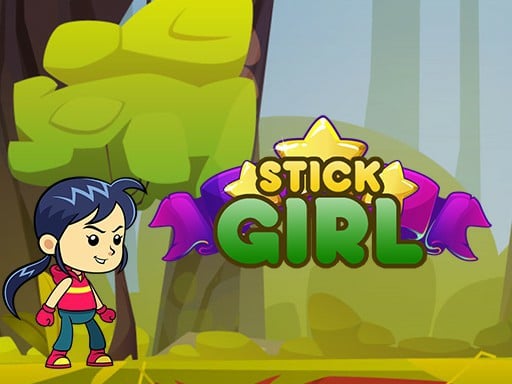
Stick Girl is a popular HTML5 game. Hold your finger on the screen to make the stick grow. Stretch the stick to reach and walk on the platforms. Be careful not to make the stick too short or too long.
Hypercasual game
Stick Girl is a timing-based casual game where players build bridges between isolated platforms. By holding down an input to stretch an expanding stick, you must estimate the exact gap across empty air before releasing. Reaching the next rooftop allows your character to walk across safely, but judging the distance requires careful attention to avoid creating a bridge that is either too short or too long.
Choose Play now to load the game.
Official listing
Stick Girl is a popular HTML5 game. Hold your finger on the screen to make the stick grow. Stretch the stick to reach and walk on the platforms. Be careful not to make the stick too short or too long.
From the game listing
Mouse or Touch
Open this card to load the gameplay video.
Stick Girl is a timing-based casual game where players build bridges between isolated platforms. By holding down an input to stretch an expanding stick, you must estimate the exact gap across empty air before releasing. Reaching the next rooftop allows your character to walk across safely, but judging the distance requires careful attention to avoid creating a bridge that is either too short or too long.
Stick Girl puts players in control of an expanding pole mechanic across separated ground segments. The core experience centers entirely on spatial estimation and release timing. Standing on the edge of a platform, your character faces an open gap leading to the next pillar. Pressing and holding your touch or mouse button initiates growth, extending the stick upward into the air until you choose to let go, at which point it pivots down into a horizontal bridge.
Because each gap presents a distinct span, every crossing demands fresh visual evaluation. If the fallen stick reaches the surface of the destination platform, your stick runner automatically steps forward to complete the transit. The experience strips away complex controls and narrative distractions, focusing purely on steady concentration and rhythmic pacing. Each successful traversal sets up the next platform, challenging you to maintain visual consistency over continuous attempts.
The primary objective in Stick Girl is to traverse between platforms by creating bridges of appropriate length. You aim to judge the distance across each gap accurately so the stretched stick lands squarely on the opposite ledge. Success depends on refining your release timing, avoiding both undershooting and overshooting, and extending your run across as many successive platforms as possible without misjudging the span.
1. Examine the distance separating your current platform from the target pillar across the gap.
2. Press and hold your finger or mouse button on the screen to begin stretching the stick upward.
3. Track the continuous growth of the stick until its length matches your estimated distance to the destination.
4. Release your input to let the stick fall forward and form a bridge spanning the opening.
5. Watch your character walk across the placed stick onto the next platform if the length was measured correctly.
6. Pause briefly on the new platform to reset your focus before beginning the next bridge measurement.
Stick Girl accepts mouse clicks on desktop browsers and direct screen touches on mobile devices to hold and grow the stick.
The defining appeal of Stick Girl lies in its single-input risk assessment and spatial judgment. Rather than testing dexterity or multi-button coordination, the game isolates one core challenge: translating visual distance into duration of hold time. The core tradeoff revolves around patience versus anticipation. Holding the input too briefly leaves the bridge dangling short of safety, while hesitating even a fraction of a second too long causes the pole to overshoot the landing zone entirely. Because platform widths and gap distances vary, players cannot rely on an identical internal count. Instead, you must develop an adaptable sense of visual pacing, learning to correlate the stick's growth speed with the negative space between ledges. This creates a focused, meditative rhythm where every crossing demands your complete visual engagement.
Stick Girl focuses on continuous play across successive gaps rather than unlocking separate themed stages or tiered campaigns. Because the environment presents varied gaps between platforms, your progression is measured through personal consistency and endurance. A practical practice plan starts with building confidence on average-width platforms, focusing on clean releases that land near the center. Once you establish a dependable visual rhythm, challenge yourself to handle narrow landing platforms with equal composure. When a misjudged stick length ends a run, reset your focus and aim for a steadier internal count on subsequent attempts rather than rushing to match previous distances.
Stick Girl runs in standard browser viewports with an 800 x 600 canvas layout, accommodating both mouse clicks on computers and direct touch input on mobile screens. On a smartphone or tablet, holding your finger directly on the glass provides immediate tactile feedback, though you should position your hand near the bottom edge so your palm does not obstruct the view of oncoming platforms. On desktop setups, a standard mouse click offers crisp, responsive release timing without visual obstruction.
Belonging to the hypercasual and arcade genres, Stick Girl exemplifies single-mechanic design built for immediate accessibility. Hypercasual titles emphasize minimal barriers to entry, dispensing with complex inventories or multi-button combos in favor of an intuitive central action that anyone can grasp within seconds. The stick-stretching format combines classic arcade timing tests with casual platforming elements, giving players a focused challenge of spatial estimation. In this style of game, entertainment comes from the tension between simple execution and unforgiving margins of error. By keeping the interface streamlined to holding and releasing a single point of input, the experience highlights pure distance judgment, making it an engaging choice for quick casual gaming sessions during breaks.
Players looking for stick girl or seeking a straightforward stick girl game often want an uncomplicated test of visual estimation and patience. This type of platform bridge experience is well suited for gamers who enjoy quick, reflexive skill challenges that can be picked up without a lengthy tutorial. It also serves as an effective casual practice tool for sharpening hand-eye release timing and fine motor control. Whether you have five minutes to spare between tasks or want to practice maintaining steady focus under pressure, the core loop offers instant engagement. Its clean mechanics make it accessible for younger players while still presenting a rewarding challenge for anyone practicing precise distance estimation.
How do you control the length of the bridge in Stick Girl? You control bridge length by pressing and holding your finger or mouse button on the screen. The stick grows taller the longer you hold down the input. When you release your hold, the stick falls horizontally to bridge the space between platforms.
What happens if the stick bridge is too short or too long? If your stick is too short, it will not reach the destination ledge. If it is stretched too long, it overshoots the platform surface. In both situations, the bridge fails to create a safe path, preventing your character from walking successfully to the next platform.
Can you play Stick Girl on both desktop and mobile devices? Yes, Stick Girl is built with HTML5 technology and supports both mouse clicks on desktop computers and touch controls on mobile devices. You can hold and release your input using whichever control method matches your preferred screen setup.
What is the best way to practice distance estimation in Stick Girl? Practice by focusing on the midpoint of the receiving platform rather than just the front edge. Maintaining a steady mental count while the stick grows helps build consistent muscle memory, making it easier to calibrate your releases across varying gaps.
Tell us if the game does not load, the information is wrong or the content needs review.
Report a problemExplore popular games by category, shared tags and site-wide activity.