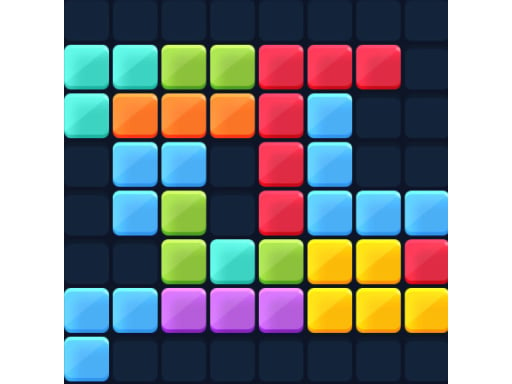
About Sliding puzzle. Get the pattern
Sliding puzzle. Get the pattern offers a creative spin on the classic sliding puzzle mechanic known as Pyatnashki or 15-puzzle. Instead of arranging numbered tiles in sequential order, your objective is to slide the board pieces until they form a designated visual pattern. This logic challenge tests your spatial awareness and problem-solving skills across every move.
Sliding puzzle. Get the pattern reimagines traditional sliding tile games by shifting the objective from numerical order to visual pattern construction. Inspired by the famous Pyatnashki puzzle, this HTML5 game presents players with a scrambled grid of tiles that must be shifted carefully into place. Rather than looking for numbered sequences, you analyze shapes, colors, and layout relationships to determine the correct placement for each piece. This subtle variation introduces a fresh logical challenge for puzzle enthusiasts of all ages, requiring methodical planning and careful spatial reasoning to complete the target formation.
Your goal
The main goal in Sliding puzzle. Get the pattern is to successfully reconstruct the required target pattern by maneuvering the movable tiles into their correct positions. Instead of organizing numerical values into a standard sequence, you must evaluate the visual configuration and manipulate the scrambled board until every segment aligns with the intended overall design.
How to play Sliding puzzle. Get the pattern
1. Examine the starting board layout and determine the visual pattern you need to assemble.
2. Locate the open empty slot on the grid that allows adjacent tiles to move.
3. Shift neighboring tiles into the vacant space to gradually position matching pattern segments.
4. Plan multi-step routes to guide corner and edge tiles into place without undoing solved areas.
5. Complete the entire visual configuration to successfully finish the puzzle.
Controls and device support
- Controls: See in-game controls
- Device support: Browser
- Game frame: 800 x 600
Rules to keep in mind
- Tiles move strictly into the adjacent empty space on the puzzle board.
- The puzzle is completed by forming a designated visual pattern rather than a numerical sequence.
What makes the challenge interesting
Gameplay in Sliding puzzle. Get the pattern centers on spatial organization and tactical tile manipulation. Because sliding puzzles restrict piece movement to the single open space, every single shift impacts adjacent options. Players must think several moves ahead, managing how to cycle pieces into position without scrambling already aligned segments. Recognizing visual patterns rather than straightforward number sequences demands careful attention to visual details and color relationships, making the experience an engaging exercise in logic, planning, and patient problem-solving.
Tips for Sliding puzzle. Get the pattern
- Work from the outer edges and corners inward, securing fixed sections first so you have fewer active pieces to organize later.
- Identify unique visual features or distinct color blocks early on to pinpoint exactly where specific tiles belong within the overall pattern.
- Use circular shifting paths around the empty slot when maneuvering a piece without undoing already completed segments.
The skills behind the game
As a member of the puzzle and logic category, Sliding puzzle. Get the pattern builds on the rich tradition of mechanical tile rearrangement games. Puzzle games in this genre emphasize deliberate thinking, methodical step-by-step planning, and spatial problem-solving rather than quick reflexes, providing an intellectual challenge suitable for players of all skill levels.
Who will enjoy this game
Players searching for a distinct puzzle game online will appreciate how Sliding puzzle. Get the pattern game adapts the classic sliding mechanics. By replacing traditional numbering with visual pattern assembly, it provides an engaging logic challenge that tests spatial reasoning directly within standard modern web browsers.
Frequently asked questions
How does this game differ from classic Pyatnashki sliding puzzles? While traditional Pyatnashki requires arranging sequential numbers from one onward, this game challenges you to assemble a specific visual pattern using the sliding tiles.
What is the primary skill needed to solve the puzzle? Spatial reasoning and visual pattern recognition are essential, as you must plan ahead and manipulate tiles through the open space to form the correct image.
Something not right?
Tell us if the game does not load, the information is wrong or the content needs review.
Report a problem ›