About Real Bus Parking Oick and Drop
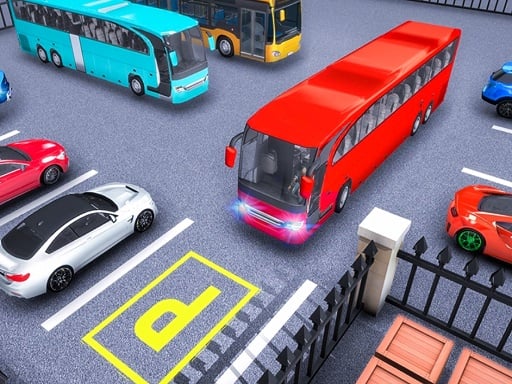
Real Bus Parking Oick and Drop is a 3D urban driving simulation where you take the wheel of a commercial passenger bus. Your mission centers on steering through detailed city layouts, pulling into designated stops to pick up commuters, and navigating toward delivery zones to complete clean, accurate drop-offs.
In Real Bus Parking Oick and Drop, players navigate realistic urban environments built with Unity3D technology. As a transit driver, you guide a large vehicle across street layouts while managing spacing around corners, intersections, and roadside curbs. The core loop revolves around moving between marked passenger zones, bringing the bus to a steady stop for passenger pickup, and transporting them safely across town to their designated drop-off points.
The game emphasizes controlled maneuvers rather than reckless speed. Operating a long-wheelbase vehicle in tight urban quarters requires deliberate throttle management and smooth steering. Each consecutive stage introduces fresh navigation challenges that test your spatial awareness and alignment precision.
Your goal
The primary objective is to successfully complete each route by collecting passengers at designated pickup stations and safely parking at final drop-off destinations. Advancing through the levels requires consistent vehicle control and accurate positioning at every stop.
How to play Real Bus Parking Oick and Drop
1. Start the route and use the directional steering keys to accelerate and steer your bus along city roadways.
2. Follow street corridors to locate the designated passenger pickup areas.
3. Bring the vehicle to a full, controlled stop within the boarding area to collect waiting passengers.
4. Navigate through remaining urban obstacles toward the scheduled destination point.
5. Align the bus squarely inside the destination parking spot to complete the drop-off and finish the stage.
Controls and device support
Control your bus using the standard WASD keyboard keys to accelerate, steer left, reverse, and steer right.
- Controls: See in-game controls
- Device support: Browser
- Game frame: 800 x 600
Rules to keep in mind
- You must collect passengers from their marked pickup spots along the route.
- Passengers must be delivered and safely dropped off at their specified destination stops.
- Accurate parking within the target zones is required to successfully progress to subsequent levels.
What makes the challenge interesting
The primary gameplay appeal lies in the measured pacing and physical weight of bus handling. Unlike high-speed racing titles, transit simulation challenges you to manage large turning radiuses, plan braking distances early, and avoid clipping street boundaries while carrying passengers.
Balancing travel speed with cautious parking alignment creates a satisfying rhythm. Rushing into a designated stop often leads to overshooting the bay, while overly hesitant driving delays your route. Developing a consistent balance of gradual braking and early corner alignment makes each trip smooth.
Tips for Real Bus Parking Oick and Drop
- Brake well ahead of marked stops rather than slamming the brakes at the line, preventing overshoot and ensuring the bus halts smoothly inside the boarding perimeter.
- Take wide cornering lines around tight city street intersections so the rear wheels clear the curb without catching street corners or barriers.
- Straighten your steering before making final adjustments inside parking bays to ensure the bus aligns evenly within designated drop-off lines.
- Maintain a steady driving pace rather than making erratic bursts of acceleration, allowing more reaction time to spot designated pickup locations.
Stages and progression
The game features a staged progression structure where each completed route leads directly into a more demanding level. As you advance through urban courses, navigation paths require sharper spatial judgment and tighter parking maneuvers.
To build consistency across advancing stages, focus on establishing a steady rhythm. Treat early levels as an opportunity to master the turning radius and braking distances of the vehicle so that later city layouts feel manageable and predictable.
The skills behind the game
Although classified broadly within online action games, Real Bus Parking Oick and Drop leans heavily into the vehicle simulation and precision parking genre. Driving simulation titles emphasize spatial orientation, vehicle inertia, and fine adjustments over chaotic combat or twitch reflexes.
Players who appreciate realistic vehicle movement will find familiar satisfaction in steering oversized buses through narrow city lanes. The combination of route following and terminal parking provides a grounded, goal-oriented experience suited for casual driving enthusiasts.
Who will enjoy this game
Players looking for a car parking game or bus transit simulator will find that Real Bus Parking Oick and Drop provides an accessible way to practice vehicle maneuvers directly in a web browser. Navigating larger commercial vehicles requires planning corners wider than typical passenger car games, adding distinct mechanical depth.
Whether playing for a brief session or working through successive route challenges, the game offers focused practice on braking smoothly, tracking vehicle boundaries, and centering wheels within tight urban parking zones.
Frequently asked questions
What is the primary goal in Real Bus Parking Oick and Drop? Your goal is to pilot a city bus across street layouts, stop at designated pickup locations to board commuters, and drive accurately into parking bays to complete safe passenger drop-offs.
What controls are used to drive the bus? The game utilizes the standard WASD keys on your computer keyboard to steer, accelerate, reverse, and maneuver through urban traffic routes.
How does progression work across different levels? Completing successful passenger pickups and accurate destination parking unlocks subsequent levels, each offering increasingly challenging street navigation scenarios.
Something not right?
Tell us if the game does not load, the information is wrong or the content needs review.
Report a problem ›