About Raft Evolution
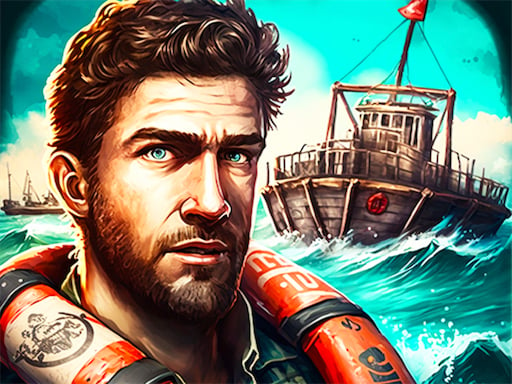
Raft Evolution is an open ocean sandbox survival game where players find themselves stranded far from civilization, surrounded only by open water and untamed wildlife. Survival requires quick reflexes and careful planning as you cast a grappling hook to snag drifting flotsam, salvage lost chests, and secure timber. By balancing routine chores like cooking and fishing against base expansion and island exploration, you strive to endure against unpredictable ocean hazards for as long as possible.
Set in a vast marine wilderness devoid of modern towns or rescue fleets, Raft Evolution challenges players to build an enduring sanctuary directly upon the open water. You start on a humble wooden platform with minimal gear, watching the waves for salvageable materials that drift across your path. Utilizing a handheld grappling hook, you reel in stray planks, barrels, and supply chests that provide the basic raw ingredients needed to construct vital utilities.
The daily loop revolves around steady expansion and self-reliance. As raw timber accumulates, you can broaden your deck, assemble a crafting workbench, set up a bed, and craft clothing such as a bowler hat while unlocking advanced items. Beyond construction, you must fish and cook to stay nourished while keeping a watchful eye on sea wildlife. A steady day and night cycle introduces shifting visibility and demands, requiring survivors to balance heavy salvage operations during daylight with maintenance or rest when darkness falls.
Your goal
The primary objective in Raft Evolution is to stay alive for as long as possible while overcoming environmental obstacles and wildlife hazards. To accomplish this, players work to transform a fragile raft into a fully functional floating outpost by retrieving drifting chests and boards, fabricating workbenches, creating cooking stations, unlocking new survival equipment, and eventually embarking on expeditions to explore remote islands.
How to play Raft Evolution
1. Observe the surrounding water currents from your raft to spot floating wooden boards, crates, and lost chests drifting nearby.
2. Select your grappling hook and aim toward distant salvage, pulling raw lumber and supplies directly onto your deck.
3. Open your crafting menu to assemble foundational structures, starting with a basic workbench to access higher-tier item recipes.
4. Expand your platform surface and place essential survival furniture, such as a bed and utility stations, using the building interface.
5. Catch fish and prepare cooked meals to keep your character sustained across long stretches on the open sea.
6. Equip weapons to guard against wildlife and navigate toward distant islands to discover new terrain and gather additional supplies.
Controls and device support
The game uses keyboard and mouse inputs on desktop: WASD for character movement, Spacebar to jump, Left Mouse Button to use weapons, Right Mouse Button to select the grappling hook or cancel building placement, T to open inventory, Y to open crafting, and Q to rotate structural pieces during construction.
- Controls: Mouse or touch
- Device support: Browser
- Game frame: 960 x 600
Rules to keep in mind
- Endurance is the core standard: you must keep your survivor alive for as many days as possible against persistent ocean hazards.
- Materials floating past your perimeter must be retrieved using the grappling hook before ocean currents wash them out of reach.
- Advanced crafting recipes require dedicated processing stations, such as a workbench, before new tools and furniture can be constructed.
- Daily tasks must be scheduled around day and night cycles, balancing active outdoor gathering with nocturnal maintenance.
What makes the challenge interesting
The rhythm of Raft Evolution centers on resource efficiency and spatial awareness. Because flotsam drifts continuously past your position, timing your grappling hook throws is a critical skill. Casting prematurely or mistiming a retrieval means letting valuable chests slip by, while overcommitting to salvage can leave you vulnerable to prowling wildlife or falling behind on food preparation.
Another central dynamic is balancing short-term sustenance with long-term infrastructure. Spending all your gathered wood on raft expansion without securing cooking equipment or shelter leaves you poorly prepared for nighttime hazards. Successful players adopt a steady cadence: secure floating timber early, establish crafting stations at the center of the raft, and slowly build outward toward island exploration.
Tips for Raft Evolution
- Aim hook throws slightly ahead of drifting chests to let the current carry them into your line of retrieval, preventing wasted casts on fast-moving flotsam.
- Prioritize crafting a workbench as soon as basic timber is secured; delaying your crafting bench locks you out of advanced tools and essential survival gear.
- Keep fresh food stocks ready by fishing regularly during calm stretches rather than waiting until starvation forces hurried, dangerous gathering.
- Rotate structural components carefully with Q before placement to ensure clean deck layout, avoiding awkward gaps that make navigating during wildlife attacks clumsy.
- Reserve daylight hours for ocean scouting and hook salvaging, shifting inventory sorting and interior raft upgrades to the night phase when visibility drops.
Stages and progression
Progression in Raft Evolution is driven by craft milestones and expanding horizons rather than fixed linear levels. At the start, survivors operate on a narrow wooden platform with limited tools, relying entirely on ocean salvage. Constructing a workbench marks the first major leap, opening access to items such as a bed, a bowler hat, and sturdier building materials that reinforce your floating habitat.
As your raft evolves into a multi-station floating vessel, the scope of play widens from passive salvage to active exploration. Players can chart trips toward visible islands, confronting wildlife while seeking rare resources absent in the open sea. By continuously upgrading equipment and maintaining reliable food supplies, you gradually stretch your survival duration across multiple day and night cycles.
Playing on different devices
Designed for desktop browser play at a canvas resolution of 960 by 600 pixels, Raft Evolution relies on dedicated mouse and keyboard inputs. The mouse allows smooth targeting for casting the hook and swinging weapons, while secondary mouse clicks let you quickly swap tools or cancel misaligned structural placements.
Having dedicated hotkeys for inventory (T), crafting (Y), and structural rotation (Q) ensures that players can construct and organize without wading through bulky overlay menus. Keeping one hand positioned on the WASD keys and another on the mouse ensures prompt defensive reactions whenever wildlife nears your vessel.
The skills behind the game
Raft Evolution sits comfortably in the sandbox adventure and survival simulator genre. Rather than guiding players down a rigid, scripted corridor, sandbox survival titles emphasize personal agency, resource management, and environmental adaptation. The player begins with minimal equipment in an unforgiving natural space, creating their own safety through steady gathering and intelligent construction.
By shifting the conventional terrestrial sandbox formula out onto open ocean waters, the adventure gains an immediate sense of urgency. Timber is not gathered from dense forests at leisure; it must be hooked as it drifts past. Combining crafting benches, day-night pacing, wildlife threats, and island exploration provides fans of open-world adventure with a satisfying loop of continuous self-improvement.
Who will enjoy this game
Players searching for raft evolution or a raft evolution game are typically looking for an accessible, browser-based maritime survival experience. They want a game that captures the fantasy of starting with nothing on open water, using hook mechanics to gather debris, and expanding a bare wooden plank into a flourishing floating fortress complete with living quarters and specialized gear.
As an adventure game online, Raft Evolution serves both casual players wanting a quick session of relaxing salvage and tactical survivors aiming to build durable, self-sufficient raft setups. The combination of hook precision, menu-based crafting, and island exploration offers a rewarding practice ground for players who enjoy balancing steady expansion with environmental survival challenges.
Games with a similar feel
Minecraft: Both Raft Evolution and Minecraft center around resource gathering and progressive crafting to shape an open sandbox world. While Minecraft focuses on terrestrial exploration and block-by-block voxel excavation across limitless biomes, Raft Evolution concentrates your survival around an ocean raft, relying on hook retrieval for drift materials rather than underground mining.
Terraria: Terraria and Raft Evolution both emphasize crafting essential tools, constructing workstations, and surviving against natural wildlife. However, Terraria unfolds in a vast two-dimensional subterranean sandbox with heavy mining and boss battles, whereas Raft Evolution presents a three-dimensional open ocean environment focused on raft expansion and maritime navigation.
Frequently asked questions
How do you gather building materials in Raft Evolution? You collect resources by equipping your grappling hook with the right mouse button and launching it toward floating wooden planks, supply chests, and other drift items carried along by the ocean waves.
What is the primary goal of the game? The core objective is to survive for as long as possible on the open water. To achieve this, you upgrade your raft, craft essential stations like workbenches and beds, cook meals, and explore islands.
How do day and night cycles affect your survival routine? Day and night cycles require deliberate activity balancing. Daylight is ideal for spotting distant flotsam and scouting islands, whereas nighttime is best utilized for indoor crafting, resting in a bed, and organizing supplies.
Can you visit land in Raft Evolution? Yes, while the core loop takes place aboard your floating platform, the game features islands across the open sea that players can explore to encounter wildlife and gather additional resources.
Something not right?
Tell us if the game does not load, the information is wrong or the content needs review.
Report a problem ›