About Parking
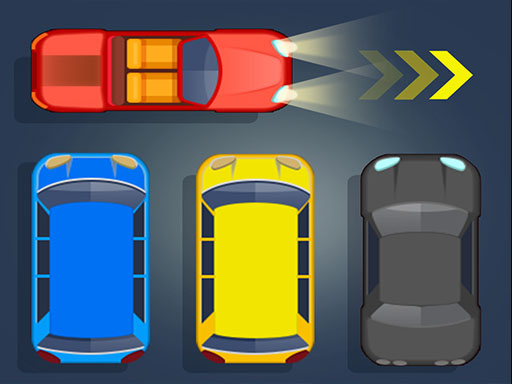
Parking is a spatial logic puzzle where players untangle crowded traffic jams to free their trapped vehicle. By sliding surrounding cars, buses, and trailers out of the way, you must create a clear escape corridor toward the lot exit. The game tests planning and sequential problem-solving across a hundred increasingly complex grid configurations.
Set within tightly packed parking grounds, Parking presents players with a classic grid-clearing dilemma. Each level begins with your primary vehicle hemmed in by a dense cluster of other transport types, including longer buses and bulky trailers. Because these obstacles occupy critical lanes, clearing an exit route requires methodical spatial reasoning rather than raw speed.
The core gameplay loop centers on evaluating the layout, identifying which vehicle blocks your escape lane, and tracing back the sequence of moves needed to shift that blocker away. As you advance through the hundred available stages, the vehicle arrangements become progressively tighter, demanding deeper foresight and multi-step repositioning to open up working room in the congested lot.
Your goal
The primary goal is to guide your designated vehicle out of the jammed parking area. To accomplish this, you must analyze the surrounding board, manipulate the positions of obstructing cars, buses, and trailers, and open an unhindered path directly to the exit point. Successfully completing a layout allows you to tackle progressively harder traffic arrangements.
How to play Parking
1. Scan the lot layout to identify the starting position of your vehicle and the target exit opening.
2. Locate which specific cars, buses, or trailers directly obstruct the main pathway toward that exit.
3. Select and slide secondary vehicles into available open spaces to free up room along the primary lane.
4. Shift larger obstacles like buses and trailers into cleared staging lanes to unblock your designated transport.
5. Move your vehicle smoothly through the newly opened corridor to complete the level and proceed to the next puzzle.
Controls and device support
The game instructions outline shifting cars, buses, and trailers to free your trapped vehicle, typically performed by selecting and dragging vehicles across the grid layout.
- Controls: See in-game controls
- Device support: Browser
- Game frame: 800 x 600
Rules to keep in mind
- Your target vehicle must have a fully unobstructed path to the exit boundary in order to successfully clear the stage.
- Obstacle vehicles, including standard cars, extended buses, and trailers, must be shifted into existing empty tiles within the lot boundaries.
- Levels become progressively more intricate as you advance through the series of one hundred puzzle stages.
What makes the challenge interesting
At its heart, Parking emphasizes reverse engineering and sequential planning. Instead of moving pieces impulsively, effective problem solving requires looking at the final hurdle—the vehicle directly in front of the exit—and asking what must shift first to liberate that tile. Longer vehicles such as trailers and buses introduce tight spatial friction because their larger footprints require extended open lanes to move out of your way.
This creates a measured, deliberate puzzle rhythm where each maneuver alters the entire board's geometry. Managing available empty space becomes the core tactical trade-off: moving an obstacle into a temporary opening can unblock your main lane, but doing so might seal off secondary repositioning corridors if planned carelessly.
Tips for Parking
- Work backward from the exit gate. Identify the direct blocker in your escape lane, then focus exclusively on clearing the space required to relocate that specific obstacle.
- Account for vehicle size differences early. Longer buses and trailers need multiple consecutive empty tiles to shift, so prepare their relocation lanes before committing smaller cars.
- Avoid shuffling cars aimlessly without a concrete plan. Random movements frequently crowd corner tiles and unintentionally close off the maneuvering room needed for subsequent steps.
- Use temporary holding pockets on the grid edges. Staging smaller vehicles out of central thoroughfares keeps middle lanes flexible for shifting large multi-tile obstacles.
Stages and progression
Parking features a progression path structured across a hundred distinct puzzle levels that steadily increase in complexity. Initial stages present modest vehicle counts and direct exit paths, allowing players to build familiarity with spatial management.
As players move deeper into the campaign, later layouts introduce tighter bottlenecks and a higher density of long vehicles like buses and trailers. These later stages demand longer move chains and meticulous spatial planning to untangle the increasingly crowded parking grid.
The skills behind the game
Within the online brain teaser and puzzle category, traffic-clearing challenges represent a staple of spatial reasoning. Unlike action-oriented driving simulators that prioritize reflexes and vehicular control, grid-based parking puzzles focus purely on geometric logic and sequential deduction.
By constraining movement to tight corridors populated by varied vehicle profiles, Parking delivers the classic appeal of sliding-tile brain teasers, challenging players of all ages to visualize solutions several steps ahead.
Who will enjoy this game
Players looking for an engaging parking game online often seek accessible logic sessions that fit neatly into daily downtime or quick breaks. The premise of navigating a trapped car out of rush-hour congestion offers an intuitive, relatable puzzle setup.
Whether played as a relaxing casual exercise or a focused mental workout, this car parking game structure provides clear visual goals and satisfying problem-solving milestones across its extended stage lineup.
Frequently asked questions
What is the primary objective in Parking? Your goal is to clear a path through a congested lot by sliding blocking cars, buses, and trailers out of the way so your vehicle can reach the exit.
How many puzzle stages are included in the game? The game features a sequence of one hundred logic levels that become increasingly challenging as vehicle density and board complexity rise.
What kinds of vehicles must be moved during puzzles? Puzzles require rearranging various transport types of differing lengths, specifically standard cars, larger buses, and extended trailers.
Something not right?
Tell us if the game does not load, the information is wrong or the content needs review.
Report a problem ›