About Mini Games Puzzle Collection
Mini Games Puzzle Collection brings together three distinct puzzle challenges centered on quick physics-based problem solving and careful path planning. Players tackle varied scenarios that include placing limited wooden planks across river gaps so a doge character can reach bones, alongside drawing paths to guide rolling donuts directly to their goal. It provides an accessible, casual suite of brainteasers designed to test spatial judgment and structural placement in short play sessions.
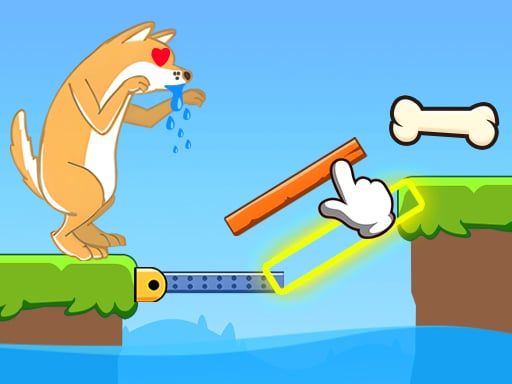
Mini Games Puzzle Collection presents a lighthearted package containing three popular puzzle concepts within a single browser title. Rather than locking players into one continuous puzzle format, the collection shifts between distinct mechanics that test construction and drawing skills. In the bridge activity, you work with a limited supply of wooden planks, arranging them carefully across a river so the doge character can safely walk over to collect bones on the far bank. In the line-drawing activity, your focus moves to creating custom ramps and barriers that channel loose donuts smoothly toward the doge.
The atmosphere across each activity is playful and straightforward, relying on recognizable physics-style interactions rather than complex control setups. You interact directly with the stage using basic click or tap gestures, creating an immediate feedback loop where each placed plank or drawn stroke directly influences the outcome. The shifting objectives keep individual puzzle rounds feeling fresh, making it simple to jump in for a quick mental workout or spend time refining path designs across each included activity.
Your goal
The primary objective across the collection is to complete each puzzle scenario by delivering items or clearing safe passage for the doge character. In bridge levels, this means constructing a stable crossing over the water using only the provided quota of wooden planks so the doge can claim bones on the opposite shore. In drawing puzzles, the goal is to sketch reliable trajectories that steer loose donuts right into doge without letting them roll out of reach.
How to play Mini Games Puzzle Collection
1. Select an available puzzle activity from the main menu to begin.
2. Examine the stage layout, noting where the doge stands and where targets like bones or donuts are positioned.
3. In bridge challenges, click or tap to position your limited wooden planks across the river gap to form a secure pathway.
4. In drawing challenges, click or tap and drag across the screen to create custom guiding lines that channel donuts to doge.
5. Observe how the character and physics objects move across your structures, adjusting your placements if an attempt fails.
Controls and device support
Interact with all mini-games using mouse clicks or direct screen taps to place planks, sketch lines, and navigate through stages.
- Controls: Mouse or touch
- Device support: Desktop + mobile
- Game frame: 1334 x 750
Rules to keep in mind
- Plank supplies are limited in bridge puzzles, requiring each wooden beam to span meaningful distance without running out of materials.
- Bridge paths must support the doge safely from one side of the river to the other so the character can reach the waiting bones.
- Drawn lines must successfully redirect and deliver donuts into contact with doge to satisfy the drawing puzzle conditions.
What makes the challenge interesting
The core appeal of Mini Games Puzzle Collection lies in managing structural resource limits and understanding movement angles. In the bridge construction mini-game, every plank matters because your building inventory is restricted. A common tactical tradeoff involves choosing between laying flat, simple spans that may fall short across wider river banks or overlapping planks at angles to gain extra reach at the risk of steep inclines that the doge might struggle to traverse. Careful planning before placing each board prevents wasteful construction.
Line-drawing puzzles introduce a different rhythmic demand focused on gravity and momentum. Instead of assembling rigid pieces, you must predict how round donuts will roll and bounce along slopes you draw on the fly. Drawing too steep of an angle might propel the treat past the doge entirely, while drawing too flat may cause the donut to lose momentum and stall midway. Balancing smooth curves with precise stops forms the key skill set.
Tips for Mini Games Puzzle Collection
- Survey the gap before placing your first wooden plank. Counting the relative distance between riverbanks helps you budget your limited boards evenly rather than running out of supplies right near the opposite edge.
- Keep bridge inclines gentle whenever possible. Laying planks at excessively steep angles often creates awkward ledges that prevent the doge from walking smoothly across to reach the target bones.
- Draw funnel shapes to catch falling donuts reliably. Sketching a wide opening that tapers toward the doge prevents errant bounces and ensures the treat rolls straight into the target zone.
- Test gentle slopes instead of vertical drops in drawing puzzles. High-speed drops make donuts unpredictable, whereas gradual ramps provide steady roll speeds that are easier to steer into the waiting doge.
Stages and progression
As you navigate through the challenges in Mini Games Puzzle Collection, the demands on your spatial efficiency naturally increase. Early setups offer straightforward layouts where basic bridges and simple chutes easily guide characters and items to their destinations. As puzzles evolve, obstacles such as wider river crossings and awkward donut spawn positions force you to think more critically about angle management and resource preservation.
To build consistency across sessions, approach each new puzzle with an iterative practice mindset. If a plank bridge collapses or runs short on pieces, inspect which joint took the most strain or where materials were squandered. Similarly, if a drawn line fails to channel a donut into doge, adjust the line's curvature by a small margin on your next attempt rather than redrawing the entire screen from scratch.
Playing on different devices
The game is configured with a wide 1334 by 750 display layout, presenting puzzle stages with clear lateral perspective across rivers and playing fields. On desktop browsers, using a mouse offers pinpoint precision when clicking to drop individual bridge planks or sketching straight, steady ink lines for rolling donuts.
On mobile devices or touchscreens, tapping and dragging feels intuitive and direct, especially during line-drawing stages where quick finger gestures let you shape ramps naturally. Make sure your browser window is set to landscape orientation to comfortably view the entire width of the bridge gaps.
The skills behind the game
Puzzle games thrive on presenting straightforward constraints that invite creative, open-ended solutions. In physical construction and pathing games, satisfaction comes from turning abstract ideas into tangible pathways that obey clear rules of balance and momentum. By grouping multiple micro-puzzle styles into a unified format, these games cater to casual thinkers who enjoy switching between structural thinking and real-time kinetic problem solving.
Within the broader puzzle genre, physics-based mini games remain popular because experimentation is fast and immediate. When a plank falters or a rolling treat takes an unexpected bounce, players instantly understand what needs fixing. That cycle of quick visual assessment, small adjustments, and immediate reward makes browser puzzle compilations engaging for both brief breaks and longer analytical play sessions.
Who will enjoy this game
Players looking for an accessible puzzle game online often value variety over sprawling, complex campaign rules. Mini Games Puzzle Collection addresses that preference by delivering self-contained challenges that require zero setup or intricate tutorial reading. You can dive straight into guiding treats or bridging river chasms within seconds of loading the screen.
Whether you want to test spatial reasoning through careful plank placement or train your hand-eye coordination by sketching rolling ramps, this mini games puzzle collection game offers a pleasant, low-friction practice ground. It suits students, casual players, or puzzle enthusiasts wanting bite-sized mechanics they can return to anytime.
Frequently asked questions
What types of puzzles are included in Mini Games Puzzle Collection? The collection includes three popular puzzle concepts, prominently featuring bridge-building puzzles where you span rivers with limited wooden planks to help doge get bones, and line-drawing puzzles where you sketch custom tracks to direct donuts to doge.
How do you control the tools in the mini games puzzle collection game? You control everything via mouse clicks or touch taps. In bridge levels, click or tap to set planks in place across water gaps. In drawing levels, tap or click and drag across the screen to draw guiding paths.
What should I do if my bridge runs out of wooden planks? Because planks are strictly limited, try spreading each beam across a wider distance or avoiding overlapping boards unnecessarily. A flatter, continuous line of planks will span wider gaps using fewer pieces.
Something not right?
Tell us if the game does not load, the information is wrong or the content needs review.
Report a problem ›