Official listing
Game description
A classic solitaire game where you draw cards 3 by 3. You must rebuild the 4 suits to win the game.
Puzzles game
Klondike Solitaire Turn 3 delivers a traditional card layout where players draw cards from the stockpile in groups of three. Your primary mission is to reconstruct all four suits from the available tableau and stock. Navigating the tighter access of a three-card draw requires careful sequencing and foresight on every turn.
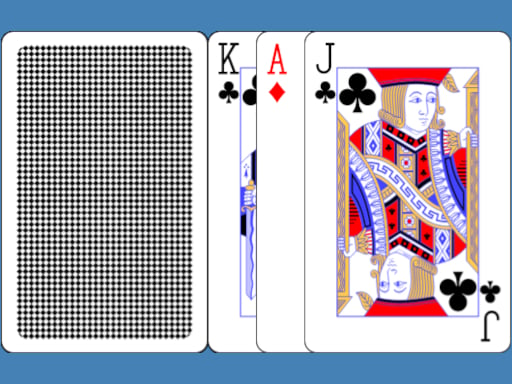
Choose Play now to load the game.
Official listing
A classic solitaire game where you draw cards 3 by 3. You must rebuild the 4 suits to win the game.
From the game listing
Use mouse to drag cards
Open this card to load the gameplay video.
Klondike Solitaire Turn 3 delivers a traditional card layout where players draw cards from the stockpile in groups of three. Your primary mission is to reconstruct all four suits from the available tableau and stock. Navigating the tighter access of a three-card draw requires careful sequencing and foresight on every turn.
In Klondike Solitaire Turn 3, the classic tabletop card setup challenges you to sort a full deck back into four completed suit piles. Rather than revealing cards individually, the stockpile flips three cards at a time, making table management and order of operations crucial to success.
Players use the mouse to drag cards across the board, shifting movable cards between columns or transferring built cards up toward the four suits. Because only the exposed top card of each three-card draw is immediately playable, careful planning around column availability determines whether you can clear blocked sequences.
The main objective is to rebuild the 4 suits to win the game. Achieving this requires systematically moving cards through the layout, uncovering hidden cards, and routing each suit sequentially into foundation piles until the entire deck is restored.
1. Review the starting tableau to identify immediate card transfers between columns before drawing from the stockpile.
2. Click and drag available cards with your mouse to organize columns and expose face-down cards underneath.
3. Draw cards 3 by 3 from the stockpile when no productive moves remain on the active tableau.
4. Play accessible cards from the waste pile onto columns or directly into suit piles where eligible.
5. Continue shifting columns and drawing from the stock until all 4 suits are fully rebuilt to claim victory.
Use mouse to drag cards across the playing area.
The defining dynamic of Klondike Solitaire Turn 3 is managing restricted access to the draw pile. In single-card variants, every draw card is readily reachable, but turning three cards creates an internal cadence where taking a card shifts which buried cards become accessible on the next pass through the deck.
Players must balance moving cards immediately onto foundation piles against keeping options flexible within tableau columns. Emptying spaces carelessly can leave vital cards trapped in the draw pile, making patience and column preservation essential throughout a deal.
Each deal of Klondike Solitaire Turn 3 presents a distinct shuffle that tests your patience and tactical discipline. Because the primary challenge centers on uncovering trapped cards and working through the three-card draw, consistent play comes from developing a systematic approach to reading the board. Players can build their skill over multiple deals by aiming to identify column openings faster, monitoring card counts in the waste pile, and resisting impulsive moves that prematurely lock the stock.
The game operates with mouse-based drag controls within an 800 x 600 display resolution. A standard desktop pointer gives precise control when dragging individual cards or stacks between tight columns. Players using touch displays or trackpads should ensure steady contact while dragging cards to make sure placements register reliably.
Belonging to the classic puzzle and card tradition, solitaire games focus on pattern recognition, spatial rearrangement, and sequential logic. Rather than demanding fast reflexes, solitaire rewards thoughtful inspection of the board, encouraging players to weigh every placement before making irreversible decisions.
Klondike remains one of the most recognizable card formats, appealing to puzzle enthusiasts who enjoy solo mental challenges. The three-card draw variation adds a layer of depth that suits players looking for deliberate, methodical card puzzle sessions.
Players looking for a classic solitaire game online often seek straightforward card layouts that recreate authentic physical rules in a quick browser format. Klondike Solitaire Turn 3 provides that exact experience, offering an uncluttered environment to practice card sorting without unnecessary distractions.
For casual daily practice, running through a puzzle game online built around a three-card draw helps develop foresight and card tracking habits. It serves as an accessible mental warm-up for fans of traditional tabletop card mechanics.
Microsoft Solitaire Collection: Both Klondike Solitaire Turn 3 and Microsoft Solitaire Collection share the core objective of arranging cards according to strict rules to complete each suit. While Microsoft Solitaire Collection houses a broad suite of diverse card variants within one package, this browser title delivers a focused, standalone Klondike experience emphasizing the three-card draw mechanic. Players seeking immediate, single-purpose access to traditional turn-three solitaire will appreciate this direct format.
How do cards draw from the stock pile? Cards draw in sets of three at a time from the stock deck. Only the uppermost exposed card of the three is immediately available to play into the tableau or suit piles.
What is required to win a round? You win by completely rebuilding all four suits. Cards must be gathered and placed into their respective suit foundations until the layout is fully resolved.
How do you control cards on the board? Use your mouse to drag cards between tableau columns or move them upward into the four suit piles as opportunities appear.
Tell us if the game does not load, the information is wrong or the content needs review.
Report a problemExplore popular games by category, shared tags and site-wide activity.