About Kids Geometry
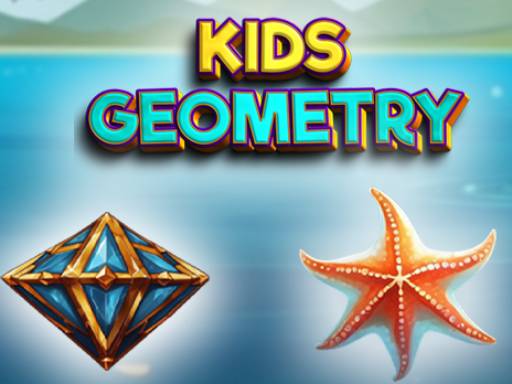
Kids Geometry is an educational browser game designed to introduce young players to geometric shapes through interactive visual exercises. Children engage directly with colorful figures and on-screen buttons to explore basic properties and strengthen spatial awareness. Featuring bright graphics, playful audio effects, and progressive stages, the game offers a welcoming learning environment where players can practice recognizing shapes at their own pace.
Kids Geometry provides an accessible digital activity focused on early childhood geometry and visual recognition. The core experience centers on presenting young learners with colorful geometric figures and inviting direct interaction through mouse clicks or touchscreen taps. As children engage with each scene, they observe the distinct contours, boundaries, and visual characteristics of different shapes, reinforcing spatial memory and observational skills.
To keep learners engaged, the title combines clean visuals with responsive, playful sound effects that acknowledge user actions. Rather than imposing high-pressure timers or complex menus, the game organizes its content into sequential levels with increasing complexity. This gradual curve allows children to build familiarity with geometric concepts in an inviting, low-stress format suitable for home practice or early educational settings.
Your goal
The primary objective in Kids Geometry is to identify and interact with target geometric shapes accurately across each stage. Players work to advance through multiple levels of growing complexity by observing visual properties and making correct selections. Success involves building steady recognition habits, improving spatial awareness, and developing confidence with fundamental geometric forms.
How to play Kids Geometry
1. Launch the game in your web browser on a desktop or touchscreen mobile device.
2. Examine the geometric shapes and prompts presented on the screen.
3. Click with your mouse or tap with your finger on the corresponding shapes or buttons.
4. Listen for audio cues and observe visual reactions confirming your interaction.
5. Continue through subsequent levels to tackle more complex shape recognition challenges.
Controls and device support
Interact by clicking shapes and buttons with a desktop mouse, or tapping them on touchscreen devices.
- Controls: Mouse or touch
- Device support: Desktop + mobile
- Game frame: 1280 x 720
Rules to keep in mind
- Players interact with exercises by clicking or tapping designated shapes and interface buttons.
- Each level presents geometric challenges that increase in complexity as players advance.
- Correct player inputs trigger visual responses and playful sound effects throughout the session.
What makes the challenge interesting
The core gameplay focus of Kids Geometry is deliberate visual discrimination rather than fast-paced action. Young players are encouraged to inspect individual shape properties—such as curves, corners, and side counts—before committing to an interaction. Because the presentation incorporates vibrant graphics and cheerful audio, it fosters a supportive rhythm that rewards curiosity and thoughtful observation.
The central cognitive tradeoff involves balancing quick tapping against careful inspection. Rushing through selections can cause children to confuse similar geometric forms, so taking an extra moment to scan the entire display produces more consistent success and stronger spatial reasoning.
Tips for Kids Geometry
- Count edges and corners carefully before tapping an unfamiliar figure, which prevents confusing shapes with similar outlines.
- Keep device audio enabled so learners can hear the playful sound effects confirming their interactions.
- Encourage young children to say the shape name out loud when clicking, reinforcing visual memory with spoken language.
- Aim for consistent accuracy rather than speed across stages to build solid spatial awareness naturally.
Stages and progression
Kids Geometry is structured across multiple levels that introduce increasing visual and spatial complexity as players progress. While specific stage totals and exact advancement criteria are not detailed in supplier records, each level builds on foundational shape identification. To navigate the progression smoothly, players should establish a steady observation routine, taking time to examine new visual configurations carefully. If a later stage proves challenging, pausing to review basic shapes can help learners regain their rhythm before advancing further.
Playing on different devices
Designed with a 1280x720 widescreen aspect ratio, Kids Geometry adapts well to both desktop computers and mobile browsers. On desktop setups, players use standard mouse clicks to select shapes and navigate menus, which offers excellent practice for early cursor control. On smartphones and tablets, direct touchscreen tapping provides an intuitive, tactile experience that is especially accessible for younger children who are still mastering mouse coordination.
The skills behind the game
Although listed under broad gaming categories in some feeds, Kids Geometry operates primarily as an educational clicker and puzzle game. Titles in this genre focus on foundational cognitive skills, such as pattern recognition, visual comparison, and spatial awareness, rather than high-stakes reflexes. By blending interactive point-and-click mechanics with cheerful audiovisual feedback, the game provides a gentle introduction to early mathematics.
Who will enjoy this game
Players searching for a kids geometry game are generally looking for straightforward, browser-based activities that reinforce shape identification without complicated rules. Kids Geometry addresses this need with bite-sized interactive exercises that fit naturally into short practice sessions at home or in the classroom, helping children build visual confidence through direct interaction.
Games with a similar feel
Geometry Dash: While Geometry Dash uses geometric themes to test players with demanding rhythm jumps and fast reflex timing, Kids Geometry takes a calm, educational approach. Instead of dodging obstacles along a rapid track, young learners focus on identifying shape properties through relaxed clicking and tapping. Choose Geometry Dash for intense platforming, and Kids Geometry for early childhood shape exploration.
Cookie Clicker: Like Cookie Clicker, Kids Geometry relies on simple point-and-click inputs to drive on-screen interaction. However, while Cookie Clicker centers on endless resource accumulation and production upgrades, Kids Geometry applies clicking mechanics exclusively to educational shape identification across progressive levels. Players wanting deep incremental mechanics will choose Cookie Clicker, while young learners benefit from Kids Geometry.
Frequently asked questions
What age group is Kids Geometry designed for? Kids Geometry is created for young children, toddlers, and early elementary learners who are beginning to explore basic shapes and spatial relationships. The simple click-and-tap interface makes it accessible for beginners.
Can Kids Geometry be played on touchscreen mobile devices? Yes, the game fully supports touchscreen devices. Players can directly tap on shapes and interactive buttons, making it convenient to play on tablets and smartphones.
Does the game require fast reflexes or quick timing? No, Kids Geometry focuses on educational shape recognition and spatial learning rather than rapid reaction times. Children can take all the time they need to study on-screen figures before interacting.
How do the challenges change across levels? The game features multiple levels that gradually increase in complexity, introducing more challenging shape configurations to keep young learners motivated and engaged as they advance.
Something not right?
Tell us if the game does not load, the information is wrong or the content needs review.
Report a problem ›