About Italian Brainrot Drag Merge Puzzle
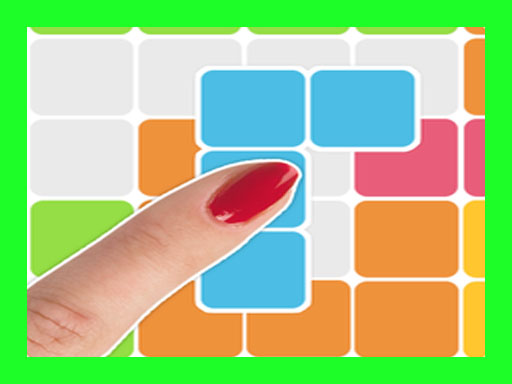
Italian Brainrot Drag Merge Puzzle is a tile-swapping jigsaw game where players rebuild scrambled images across variable grid formats. Each stage selects an artwork and breaks it into scattered square pieces. Rather than placing loose fragments into open slots one by one, dragging one tile onto another swaps their board locations, while matching adjacent pieces fuse into movable multi-tile groups.
Every level in Italian Brainrot Drag Merge Puzzle begins with a randomly chosen image divided into a grid of 3×3, 4×4, 5×5, or 6×6 sections. The full board is completely shuffled from the start, requiring players to visually inspect line continuity, character silhouettes, background colors, and edge alignments across the entire active layout.
The core mechanic revolves around dynamic grouping. When you drag a piece over another, they instantly trade positions. Whenever two neighboring segments that belong next to each other in the original image meet, they automatically lock together into a single cluster. As these clusters grow larger, moving them relocates every connected piece simultaneously, allowing you to organize large portions of the board in single swap actions. The game also supports custom image uploads for personalized puzzle sessions.
Your goal
The primary objective is to fully restore the scrambled artwork by navigating every piece back to its correct relative position. To accomplish this efficiently, players aim to identify adjacent pairs early, build solid merged blocks, and shift consolidated tile groups across the board until the complete illustration matches the source image.
How to play Italian Brainrot Drag Merge Puzzle
1. Examine the scrambled board to identify prominent visual landmarks, unique character outlines, or distinct color patterns.
2. Click or touch a piece and drag it onto an adjacent or distant tile to swap their positions on the board.
3. Position naturally adjacent pieces beside one another to trigger an automatic merge into a shared cluster.
4. Drag the newly formed cluster to swap multi-tile blocks across the grid without breaking their internal connection.
5. Continue connecting individual tiles and expanding existing groups until the entire image is fully reassembled.
Controls and device support
Drag pieces across the board to swap positions with target tiles. Correct neighboring pieces automatically merge into movable clusters, and players can also upload custom images.
- Controls: See in-game controls
- Device support: Browser
- Game frame: 1280 x 720
Rules to keep in mind
- Dragging any individual tile or merged cluster onto another tile location instantly swaps their positions on the board.
- When two neighboring pieces that belong beside each other in the source image align correctly, they combine into a unified cluster.
- Merged clusters move as single units, allowing multiple connected segments to be repositioned in a single swap.
- Puzzle layouts scale across multiple predetermined dimensions, including 3×3, 4×4, 5×5, and 6×6 grid configurations.
What makes the challenge interesting
The central appeal of the game lies in its cluster-merging mechanic, which transforms standard spatial jigsaw assembly into a fluid organizational exercise. In traditional jigsaws, misplaced pieces sit isolated in trays or loose board slots. Here, every movement is a direct swap within a confined grid, meaning an intentional move not only advances the piece you are holding but also displaces another segment elsewhere.
This creates an interesting visual tradeoff: focusing purely on single-tile corrections can unintentionally scatter surrounding tiles, whereas prioritizing adjacent merges quickly simplifies the remaining board complexity. As clusters grow, navigating large blocks requires deliberate path planning to avoid disrupting partly organized perimeter sections.
Tips for Italian Brainrot Drag Merge Puzzle
- Look for high-contrast edges and continuous lines first. Pairing obvious graphic details early forms quick two-piece anchors that reduce visual clutter across the board.
- Avoid swapping tiles randomly across long distances. Swapping aimlessly can displace organized segments, so plan each swap around a specific neighboring connection.
- Build outward from your largest cluster. Once a solid three- or four-piece group is established, bring isolated peripheral pieces directly to the perimeter of that cluster.
- Track the swapped destination piece before releasing your drag. Remember that moving a cluster will shift the recipient tile into the cluster's previous location.
Stages and progression
Level complexity varies based on board dimensions, ranging from compact 3×3 puzzles containing nine pieces up to dense 6×6 grids containing thirty-six segments. A smaller 3×3 grid allows for rapid visual inspection and fast grouping, making it straightforward to track piece positions.
On higher density 5×5 and 6×6 grids, the sheer volume of shuffled pieces increases board complexity significantly. Players must practice patience on larger layouts, systematically consolidating smaller two-piece pairings into intermediate blocks before attempting full board alignment.
The skills behind the game
As part of the puzzle genre, this title bridges the gap between classic image reconstruction and interactive sliding-tile mechanics. While conventional picture puzzles test passive pattern recognition, drag-swap formats introduce active board management where every placement reshapes adjacent spaces.
The addition of meme-themed visuals under popular brainrot cultural tags gives the experience a contemporary, casual flair suitable for quick browser sessions or deliberate visual problem-solving.
Who will enjoy this game
Players looking for an engaging jigsaw puzzle online or a distinct merge puzzle game will find a hybrid structure here that blends picture assembly with tactile group movements. The drag-swap mechanism ensures fast-paced manipulation without the friction of loose piece sorting.
For casual puzzle enthusiasts wanting flexible practice, the ability to tackle varying grid sizes or upload personal images makes it an adaptable choice for both quick mental warmups and longer puzzle sessions.
Frequently asked questions
How do pieces merge together on the puzzle board? Pieces merge automatically whenever two neighboring parts that belong adjacent to each other in the original artwork are positioned side by side. Once merged, they form a unified cluster that moves together during subsequent swaps.
What grid sizes are available in the game? Puzzles are generated with random image selections split into 3×3, 4×4, 5×5, or 6×6 piece layouts, offering a range of board complexities from nine up to thirty-six individual pieces.
Can I play with my own pictures? Yes, the game includes a feature that allows players to upload custom images to generate personalized drag-and-merge jigsaw puzzles.
What happens when I drag a merged cluster onto another tile? Dragging a merged cluster onto a target location swaps the entire cluster with the piece or group occupying that target spot, repositioning multiple pieces in a single motion.
Something not right?
Tell us if the game does not load, the information is wrong or the content needs review.
Report a problem ›