About Gem Drop
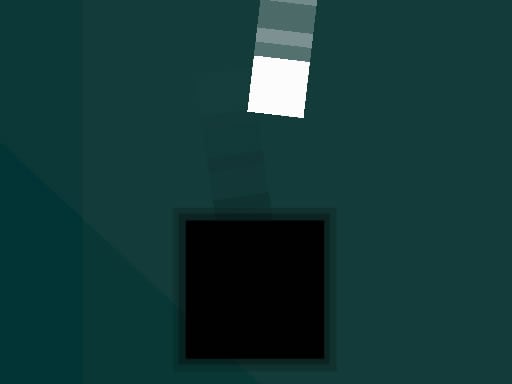
Gem Drop is a single-player 2D physics puzzle game where you take direct charge of a gem suspended above a cavernous obstacle course. Your core mission is to align your position, calculate a viable falling path, and drop the stone cleanly into a waiting crate. By reading surrounding walls, anticipating rebounds, and navigating hazards, you work to complete clean drops and advance past tricky subterranean layouts.
Set against the backdrop of dangerous underground caverns, Gem Drop challenges players to solve spatial puzzles using momentum and geometric angles. Rather than managing a paddle or an external launcher, you steer the gem along the horizontal plane before committing to a release. Once dropped, gravity takes over, sending the stone down through hazardous cave structures, moving or fixed traps, and angled barriers designed to deflect your shot away from the target container.
Every stage presents a fresh layout demanding careful observation before you initiate movement. A successful round hinges on planning how the gem interacts with solid surfaces. Narrow passages and treacherous walls require purposeful bank shots, turning solid rock faces into stepping stones toward the crate. By collecting three gems across the course of your attempts, you unlock further progression through increasingly demanding underground trials.
Your goal
The primary objective in Gem Drop is to deliver your falling stone safely into the designated crate while evading hazards and cave traps along the descent. To achieve steady progress, players must successfully collect three gems under changing course layouts. Mastering the game involves refining your ability to judge drop trajectories, minimize erratic bounces, and consistently read how obstacles alter your descent path.
How to play Gem Drop
1. Survey the cavern layout from your starting position, noting the placement of the target crate, intervening walls, and active traps.
2. Shift the gem horizontally across the top area using your directional keys or touch controls to find an optimal release point.
3. Evaluate the descent corridor to determine whether a direct drop or an intentional ricochet off a sidewall is necessary.
4. Release the gem by tapping the spacebar or releasing your touch contact to let physics guide the stone downward.
5. Observe the resulting bounce angles and trajectory adjustments as the stone carves through barriers toward the container.
6. Repeat your drops to collect three gems and unlock progression to subsequent cave challenges.
Controls and device support
On desktop keyboards, use A and D or the Left and Right Arrow keys to reposition the gem horizontally, and press Space to drop the gem. On mobile touchscreens, touch and drag to move the gem into position, then let go of the screen to drop it.
- Controls: Mouse or touch
- Device support: Desktop + mobile
- Game frame: 800 x 600
Rules to keep in mind
- The dropped stone must land directly inside the crate to count as a successful placement.
- Treacherous cave walls, traps, and physical barriers will redirect or obstruct the falling gem.
- Solid surfaces cause ricochets, altering the gem's trajectory according to in-game physics.
- You must collect three gems to satisfy the condition required to progress forward.
What makes the challenge interesting
Gem Drop centers on deliberate spatial calculation rather than chaotic rapid-fire actions. Because you control the horizontal origin point before releasing the stone into gravity, every run tests your ability to visualize geometric angles ahead of time. A straight vertical drop rarely works once cave architectures become more complex. Instead, players must intentionally exploit wall rebounds, treating firm obstacles as natural bounce pads that funnel the gem toward the box.
The primary tension stems from balancing safe clearances against necessary deflections. Skimming too close to a trap can spoil an otherwise smooth drop, while playing too far wide may cause the stone to bounce completely past the crate. Mastering this dynamic requires patience: analyzing how steep angles affect rebound speed, identifying clear landing pockets, and executing steady releases under tricky cave arrangements.
Tips for Gem Drop
- Trace the rebound path before letting go. Visualizing where the stone will deflect off rocky surfaces prevents unexpected bounces that fling your gem away from the target box.
- Make small positional adjustments along the ceiling track. Nudging the gem by slight increments often opens up narrow gaps between hazardous cave obstacles that wide shifts miss entirely.
- Account for trap movement or barrier placement before initiating the drop. Releasing without checking the full cavern line frequently causes the falling gem to collide directly with hazards.
- Embrace intentional wall bounces when a direct shot is blocked. Bank shots allow you to bypass central blockades, guiding the stone at an oblique angle directly into the crate.
Stages and progression
Progression in Gem Drop is tied directly to meeting delivery goals, requiring players to collect three gems to move ahead. As you advance through successive cave rooms, the layouts evolve with tighter passages, more complex obstacle clusters, and increasingly demanding landing requirements. Shots become progressively harder to land in the crate, requiring sharper aim and refined trajectory calculations.
When approaching newly unlocked stages, adopt a methodical practice routine. Use initial drops to test how particular cave surfaces respond to impacts, observing how speed and ricochet angles behave before committing to high-risk lines. Refining your release consistency across varied terrain is key to overcoming tougher cavern environments.
Playing on different devices
Gem Drop runs within standard web browsers across desktop computers and mobile devices. Desktop users can rely on keyboard navigation, using A and D or Arrow keys for lateral movement alongside the spacebar for instantaneous releases. This configuration offers discrete digital inputs, which can help when making minute horizontal micro-adjustments before dropping.
On touchscreens, the experience is streamlined into direct tactile input. Sliding a finger across the display positions the gem, while lifting your finger instantly releases the stone. Ensure your screen surface is clean to avoid unintended releases while dragging into alignment.
The skills behind the game
Within the online puzzle and arcade genres, physics-driven trajectory games occupy a unique niche that bridges spatial reasoning and tactile timing. Rather than manipulating matching grids or assembling static shapes, players interact with simulated gravity and environmental collision geometry. The challenge centers on reading physical space and understanding how small variations in launch positioning cascade into dramatically different outcomes.
Gem Drop fits comfortably among casual 2D physics puzzles by stripping away unnecessary interface layers and focusing entirely on entry angle, momentum, and obstacle evasion. Its subterranean cave theme reinforces the puzzle nature of each layout, presenting tight clearances and angled deflectors that require thoughtful planning over impulsive tapping.
Who will enjoy this game
Players looking for an engaging gem drop game will find that this title emphasizes steady calculation and trajectory management over fast-paced tile swapping. Because each drop allows you to study the cavern before committing to action, it serves as an approachable exercise in angle estimation and cause-and-effect problem solving.
If you enjoy casual physics puzzle games online during brief breaks, mastering the ricochet paths in Gem Drop offers a satisfying loop. The requirement to collect three gems establishes a clear milestone for short practice sessions, making it easy to pick up, experiment with trick bank shots, and hone your spatial judgment.
Frequently asked questions
What is the primary goal in Gem Drop? Your goal is to maneuver the gem into a viable position and release it so that it navigates cave traps, bounces off barriers, and drops directly into the crate.
How do you progress to new stages in the game? You progress by successfully completing drops and collecting three gems, which allows you to move forward into cave levels with harder shot alignments.
Can you bounce the gem off walls to reach the crate? Yes, utilizing ricochets is a core mechanic. Calculating angles off cavern walls allows you to bypass obstacles that completely block direct vertical drop paths.
What controls are used to play on desktop and mobile? On desktop, move with A and D or Arrow keys and drop with Space. On mobile devices, touch and drag to slide the gem, then lift your finger to drop it.
Something not right?
Tell us if the game does not load, the information is wrong or the content needs review.
Report a problem ›