About Galaxy 2048
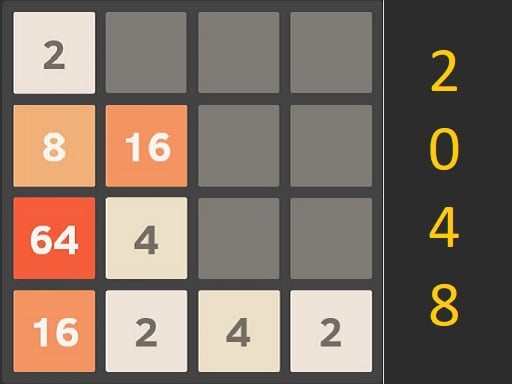
Galaxy 2048 brings classic sliding-tile arithmetic into a cosmic visual setting. Players slide tiles across the board in four directions to combine matching values, gradually building up larger numbers on their quest to reach the 2048 milestone. With approachable mechanics and thoughtful planning at its core, each move tests spatial management and concentration as available grid space shrinks.
Set against a clean galaxy-themed backdrop, Galaxy 2048 tasks players with shifting a grid of numbered blocks to create higher values. Inspired by classic sliding-tile mathematics, every swipe shifts all eligible tiles across the board simultaneously. When two tiles carrying the identical number collide along that movement path, they merge into a single piece reflecting their combined sum. The underlying loop is immediate: make a sliding motion, evaluate newly consolidated numbers, and adapt to newly placed pieces appearing on open squares.
Because every direction shift affects the entire board rather than an individual piece, steady forethought is essential. The game is designed to be easy to learn while presenting a demanding test of logic and discipline. The session continues as long as empty space remains or valid merges are possible, allowing players to work calmly toward constructing the ultimate target piece without frantic pressure.
Your goal
The primary objective in Galaxy 2048 is to reach the 2048 tile by systematically combining pairs of equal-numbered blocks. Beyond reaching that specific winning value, players aim to preserve open maneuvering room on the grid for as long as possible. Sustaining orderly tile structures and avoiding congested, mismatched clusters allows for smoother chain combinations and higher cumulative totals over extended puzzle runs.
How to play Galaxy 2048
1. Survey the starting board layout to identify where initial numbered tiles are resting.
2. Choose a directional swipe—up, down, left, or right—to slide the active tiles across the grid.
3. Collide two tiles showing identical numerical values to merge them into a single higher-value block.
4. Observe where new numbered blocks emerge across the remaining empty board positions after each movement.
5. Continue sequencing merges to steadily build up tile numbers toward the target 2048 block.
Controls and device support
Galaxy 2048 accepts directional swipe inputs in four directions: swipe up, down, left, or right to move all tiles across the board.
- Controls: See in-game controls
- Device support: Desktop + mobile
- Game frame: 800 x 600
Rules to keep in mind
- A directional swipe shifts all movable numbered blocks across the board in the chosen direction until stopped by borders or other tiles.
- Tiles bearing the exact same numerical value merge into a single tile representing their sum when pushed together.
- Combining tiles until you successfully construct a tile showing the number 2048 wins the game.
What makes the challenge interesting
The defining challenge in Galaxy 2048 is spatial conservation amidst exponential numerical growth. Every swipe that fails to create a combination typically leaves less room to maneuver on subsequent turns. A common tradeoff involves deciding between making an immediate low-value merge in the center versus positioning blocks to safeguard future combinations along an edge. Because shifting one row inevitably displaces other rows, players must anticipate secondary tile movements rather than focusing exclusively on a single match.
Maintaining a steady, deliberate rhythm yields far better outcomes than rapid sliding. Patience allows players to recognize descending numerical arrangements, ensuring that newly merged pieces can easily feed into adjacent higher-tier blocks without trapping low numbers in inaccessible corners.
Tips for Galaxy 2048
- Anchor your highest-value tile in one dedicated corner. Shifting your largest piece erratically across the board frequently traps smaller numbers behind it, breaking potential merge chains.
- Prioritize swipes along two primary directions, such as down and left, to keep the board compact. Introducing the opposite direction unnecessarily can dislodge your primary building column.
- Arrange neighboring tiles in descending numerical order along your home perimeter. This structured layout makes it easier for successive merges to cascade smoothly into higher values.
- Scan the entire grid before executing each swipe instead of snatching the first visible pair. Rushing into an obvious match often closes off valuable space needed elsewhere on the board.
Stages and progression
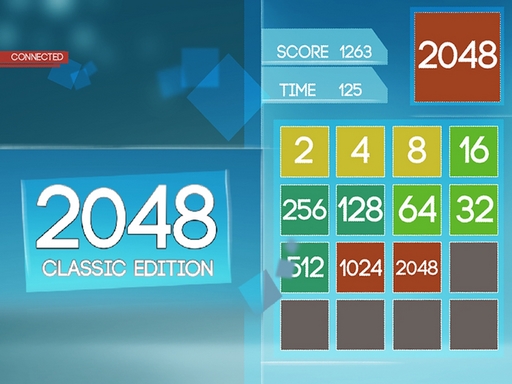
Galaxy 2048 offers an escalating curve of spatial difficulty determined by your ongoing board state rather than separate preset stages. Early in a run, abundant empty spaces make pairing starter tiles straightforward. As you advance and combine blocks into intermediate milestones like 128, 256, 512, and 1024, the grid becomes crowded with high-value obstacles that cannot easily be combined.
A good practice approach is to evaluate each run by board cleanliness rather than pure speed. Focus first on reliably securing 512 without cluttering the center, then refine your positional discipline on subsequent attempts to sustain the open lanes needed to reach 2048.
Playing on different devices
Galaxy 2048 is structured for smooth play across both desktop browsers and mobile touch screens within its standard 800 by 600 display canvas. On mobile devices, natural touchscreen swipes allow for direct tactile control over every grid slide. When playing on desktop screens, directional dragging gestures mirror the same sliding inputs cleanly. Because gameplay is purely turn-by-turn logic with no reaction-time gating, both input styles provide an equally comfortable experience.
The skills behind the game
Within the broader realm of logic and math puzzles, sliding block games occupy a distinctive niche. Unlike trivia quizzes or static pattern riddles, number-merging puzzles require dynamic foresight where every single action reshapes the entire board. Galaxy 2048 exemplifies this genre balance by pairing simple binary arithmetic with rigorous board management.
The casual nature of the experience makes it an ideal mental exercise for quick breaks or extended analytical practice. Because there is no immediate penalty timer, players can deliberate over each placement, studying grid density and refining geometric strategies that become second nature through repeated play.
Who will enjoy this game
Players searching for an engaging merge puzzle game online often seek an accessible format that exercises logic without burdensome setup. Galaxy 2048 fulfills this casual puzzle need by presenting clean number progression mechanics directly in the browser window. Whether you are revisiting sliding math puzzles or trying the format for the first time, the steady process of doubling values provides satisfying, tangible feedback.
Using the title for daily focus drills can help sharpen pattern recognition and forward-planning skills. The predictable merging rules mean any setback is understandable, encouraging players to restart with clearer boundary control and a calmer merging cadence.
Games with a similar feel
2048: Galaxy 2048 shares the core sliding-tile and number-doubling mechanic popularized by the original 2048, challenging players to merge equal numbers toward a designated target. While both center on disciplined corner management and spatial restraint, Galaxy 2048 distinguishes itself with a sleek celestial aesthetic. Players who enjoy classic 2048 math puzzles will appreciate the familiar strategic depth paired with a relaxing cosmic theme.
Frequently asked questions
How do you win a session in Galaxy 2048? You win Galaxy 2048 by repeatedly merging matching numbered tiles until you successfully produce a single tile displaying the value 2048.
What happens when two identical numbers collide? When two blocks sharing the same number are pushed together by a directional swipe, they merge into one tile representing their combined sum.
Can you play Galaxy 2048 on both mobile and desktop? Yes. Galaxy 2048 is designed to run in standard web browsers across desktop computers and mobile devices using four-way swipe inputs.
How can beginners practice building higher-value tiles? Beginners can improve by anchoring their highest tile in a single corner and practicing controlled swipes along two primary directions to avoid scattering tiles.
Something not right?
Tell us if the game does not load, the information is wrong or the content needs review.
Report a problem ›