About Finsemble
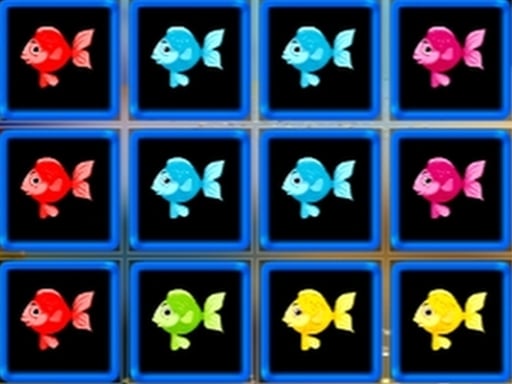
Finsemble is an underwater jigsaw puzzle game where players assemble colorful fish illustrations piece by piece. Set in a vibrant aquatic world, the game challenges you to fit scattered tiles together to reveal lively marine life, ranging from tiny reef swimmers to majestic sea creatures. Designed as a calm and satisfying experience, it invites players to explore oceanic scenes at an approachable pace.
In Finsemble, players dive into a tranquil ocean atmosphere where every level centers on reconstructing detailed artwork of marine animals. The core loop consists of examining loose jigsaw tiles, identifying where their shapes and colors belong, and dragging them into the correct slots. As each piece clicks into place, the broader illustration gradually forms, culminating in a completed aquatic tableau filled with color and motion.
The title blends the casual appeal of hypercasual mechanics with the classic satisfaction of jigsaw puzzling. Because the game emphasizes steady assembly rather than frantic action, players can focus on visual pattern recognition and careful placement. With each resolved stage, the illustrations reveal fresh sea favorites and progressively more complex board arrangements to keep puzzle solvers engaged.
Your goal
Your main objective in Finsemble is to assemble all jigsaw tiles correctly until the full fish portrait is complete. Players aim to find the perfect fit for every loose piece, transforming fragmented shapes into a cohesive ocean scene. As puzzle complexity increases across levels, the goal remains steady: observe colors, borders, and silhouettes carefully to solve each underwater stage cleanly.
How to play Finsemble
1. Inspect the game board and observe the overall outline or color patterns of the featured aquatic creature.
2. Scan the available puzzle tiles to identify distinct edge pieces, bright fin highlights, or clear texture matches.
3. Drag and place individual pieces onto the board where their contours and colors align with neighboring segments.
4. Continue assembling connected sections until the entire fish illustration is fully locked into place and the level is resolved.
Controls and device support
The game instructions state to assemble tiles well by dragging and placing pieces into their matching positions on the puzzle board.
- Controls: See in-game controls
- Device support: Browser
- Game frame: 800 x 600
Rules to keep in mind
- Tiles must be fitted correctly into their designated spaces to assemble the complete image.
- A level is successfully completed once every puzzle piece is placed and the full aquatic scene is revealed.
- Puzzle complexity increases across subsequent levels, requiring players to organize more intricate tile arrangements.
What makes the challenge interesting
Finsemble centers on visual sorting, spatial awareness, and patient deduction. Unlike time-sensitive action titles, the core appeal lies in the methodical process of turning disordered fragments into clear, vibrant imagery. Players balance broad image scanning with fine detail inspection, checking whether an isolated piece belongs to a fin, a scale pattern, or the surrounding ocean backdrop. This tactile dragging and fitting loop provides a relaxing yet intellectually stimulating rhythm suitable for casual puzzle enthusiasts.
Tips for Finsemble
- Sort distinct colors first. Grouping bright scales and tail segments separately from background water tones helps identify matching zones quickly, preventing aimless dragging across the board.
- Anchor the frame before filling the center. Fitting perimeter pieces early establishes boundaries, reducing guesswork when sorting interior body tiles.
- Look for high-contrast features like eyes and distinct fin outlines. Using prominent focal points as anchors gives you clear visual hubs to build outward from.
- Avoid forcing uncertain placements. If a piece does not snap comfortably into place, set it aside temporarily rather than cluttering active assembly zones.
Stages and progression
Progression in Finsemble is structured around advancing puzzle complexity. As players solve early boards featuring simpler fish outlines, subsequent levels introduce more intricate illustrations and segmented tiles. To keep pace with rising complexity, players can refine their personal workflow by organizing pieces methodically by color gradient and edge alignment before making placements.
The skills behind the game
Within the puzzle and hypercasual genres, jigsaw games offer a tactile, visual problem-solving experience accessible to a wide range of players. Rather than relying on rapid reflexes or intense strategic resource management, titles in this space focus on spatial alignment, shape recognition, and gradual construction. Finsemble embraces these genre strengths by framing its piece-matching challenges around colorful underwater wildlife, providing a meditative and uncluttered format for short casual sessions.
Who will enjoy this game
Players looking for a relaxing jigsaw puzzle online or a lighthearted puzzle game online often seek accessible mechanics paired with pleasant visual themes. Finsemble fits this preference by delivering straightforward drag-and-drop gameplay centered on oceanic scenes. Whether you want a quick mental break or a structured visual exercise to practice shape fitting, the game offers a clean entry point into digital jigsaw assembly without unnecessary complexity.
Frequently asked questions
What type of game is Finsemble? Finsemble is a casual underwater jigsaw puzzle game where players assemble fragmented tiles to complete vibrant illustrations of various fish and marine creatures.
How do you complete levels in Finsemble? You complete each stage by dragging and fitting all puzzle pieces into their proper spots until the full aquatic illustration is successfully assembled.
Does Finsemble get harder as you play? Yes, the game features increasing puzzle complexity across levels, providing more detailed fish illustrations and intricate piece arrangements as you advance.
Something not right?
Tell us if the game does not load, the information is wrong or the content needs review.
Report a problem ›