Official listing
Game description
This is a classic point and click hidden object game. You need to find all of the items listed in the picture on the left side of the screen. Complete the level before time runs out to get bonus points.
Puzzles game
Diving In The Pacific is a point-and-click hidden object puzzle game centered on observation and timing. Players scan detailed Pacific-themed backdrops to locate specific underwater objects displayed in a side panel. Finding every target item before the countdown finishes unlocks bonus points, rewarding sharp eyes and systematic visual searches across each illustrated scene.
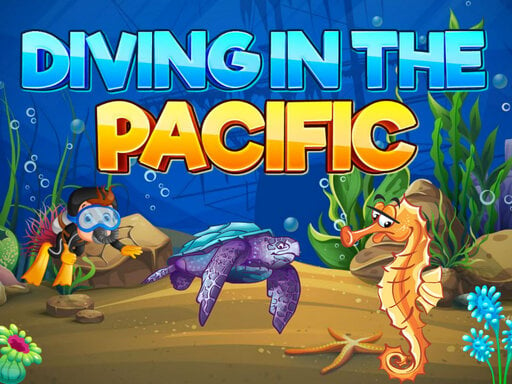
Choose Play now to load the game.
Official listing
This is a classic point and click hidden object game. You need to find all of the items listed in the picture on the left side of the screen. Complete the level before time runs out to get bonus points.
From the game listing
Use mouse or touch pad to play this game
Open this card to load the gameplay video.
Diving In The Pacific is a point-and-click hidden object puzzle game centered on observation and timing. Players scan detailed Pacific-themed backdrops to locate specific underwater objects displayed in a side panel. Finding every target item before the countdown finishes unlocks bonus points, rewarding sharp eyes and systematic visual searches across each illustrated scene.
In Diving In The Pacific, players dive into colorful aquatic environments filled with underwater artifacts, sea life, and submerged treasures. The game follows classic point-and-click hidden object mechanics, presenting a dense picture full of visual detail alongside an item reference panel positioned on the left side of the screen.
Your objective in every round is to compare the required target illustrations with the main scenery, spotting camouflaged items resting on sea floors, behind coral formations, or among aquatic flora. Because each stage includes a running timer, players must balance thorough visual scanning with quick decision-making to secure high scores before the clock runs out.
The primary goal is to find and click all the specific items listed on the left panel within the main visual area. To maximize your final score, strive to discover every listed target before the level timer expires, earning extra bonus points for rapid completion.
1. Study the list of target items displayed on the left side of your screen to memorize shapes and colors.
2. Scan the main Pacific artwork systematically, checking foreground details, textures, and background layers.
3. Use your mouse or touch pad to click directly on items when you spot them in the environment.
4. Track remaining targets in the side panel as found objects get cleared from your search list.
5. Clear all required targets before the stage clock reaches zero to secure bonus score rewards.
Use mouse or touch pad to play this game by pointing and clicking on hidden objects.
The core appeal of Diving In The Pacific rests on visual pattern recognition and speed. Hidden object titles test a player's ability to separate foreground shapes from busy, color-saturated backgrounds. Underwater themes naturally lend themselves to complex layering, where shadows, organic outlines, and maritime equipment create deceptive silhouettes.
The central tradeoff involves pacing versus precision. While rushing to click before time runs out promises bonus points, hasty skimming can cause you to overlook obvious items nestled in plain sight. Developing a calm, rhythmic scanning routine helps spot camouflaged contours without losing precious seconds.
As you complete levels in Diving In The Pacific, each stage presents fresh visual puzzles featuring different arrangements of submerged items to discover. The main challenge progression centers around managing time efficiently while adapting to new scene compositions.
To improve your overall performance across successive sessions, focus on refining your initial scan speed. Practicing consistent quadrant checking and maintaining focus under timed pressure will help you regularly capture bonus score rewards.
Diving In The Pacific supports standard mouse and touch pad inputs. On desktop monitors or laptop screens, a mouse provides precise cursor control when targeting smaller or tightly clustered visual elements.
Touch pad users should ensure smooth cursor tracking and comfortable tap sensitivity so selections register cleanly without causing accidental cursor drift during timed runs.
As part of the puzzle and hidden object genre, Diving In The Pacific emphasizes quiet observation, visual discrimination, and spatial awareness. Hidden object titles have long offered accessible entertainment across web browsers, inviting players to slow down and scrutinize rich, static illustrations.
By adding arcade-inspired timed rounds, the game creates an engaging hybrid experience. Players enjoy the relaxed aesthetic of ocean exploration while still facing the lively mental test of beating the clock for extra score bonuses.
Players looking for a relaxing yet stimulating hidden object game online will appreciate the clean mechanics and ocean setting of Diving In The Pacific. The straightforward point-and-click interface makes it simple to jump straight into a quick round during short breaks.
Whether you want casual visual puzzle practice or enjoy the satisfaction of clearing visual lists under timed conditions, this browser-friendly puzzle game offers an approachable challenge for fans of observation puzzles.
What is the primary objective in Diving In The Pacific? Your goal is to inspect the underwater scenery and find all the items shown on the left side of the screen before the stage timer runs out.
How do you earn bonus points in the game? You earn bonus points by successfully identifying and clicking every required item on your list before the countdown clock reaches zero.
What control methods are supported? You can play directly in your web browser using a standard computer mouse or a touch pad to point and click on items.
Tell us if the game does not load, the information is wrong or the content needs review.
Report a problemExplore popular games by category, shared tags and site-wide activity.