About Dice Merge
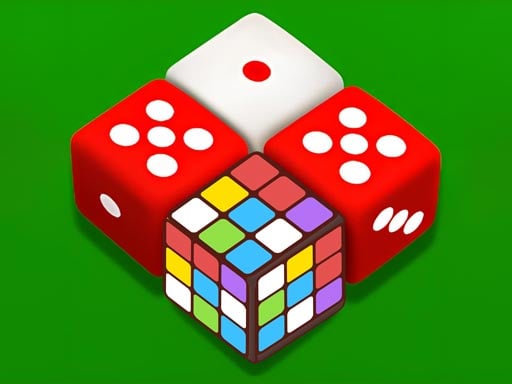
Dice Merge is a browser-based board puzzle where players position numbered dice onto a playing grid to combine identical values. Every successful match blends matching dice into higher-value pieces, helping clear space and boost your total score. Because each session grants a limited pool of moves, careful planning and deliberate piece rotation are essential to prevent the board from locking up prematurely.
Dice Merge presents a clean tabletop puzzle layout configured with a grid plate initially stocked with random numbered dice. Your role is to examine incoming pieces, adjust their orientation, and place them across the board to prompt chain combinations. Whenever dice displaying identical numbers sit adjacent in matching formations, they unite and upgrade into a single die bearing a higher number. This consolidation frees up critical real estate across the board.
The operational tension in Dice Merge stems from your limited move count. Rather than rushing placements, players must anticipate how a newly formed die will interact with surrounding values. Rotating incoming pieces enables you to line up complementary numbers with pre-existing clusters. As numbers escalate, board space becomes increasingly precious, transforming each placement into an exercise in spatial awareness and disciplined risk management.
Your goal
Your objective in Dice Merge is to assemble matching numbered dice to produce the highest possible dice values and secure top score tallies within a limited allowance of moves. Accomplishing this requires maintaining an open grid layout, preventing cluttered bottlenecks of mismatched numbers, and sustaining consecutive upgrades before remaining turns are exhausted.
How to play Dice Merge
1. Survey the starting grid plate to identify pre-existing clusters of identical numbers and open squares.
2. Inspect the active die or dice pair waiting to enter play and rotate the piece to find a compatible orientation.
3. Move your mouse cursor to position the selected die onto an advantageous square on the grid plate.
4. Align identical numbers alongside each other so they merge and upgrade into a single higher-numbered die.
5. Track your remaining move counter and plan placements that trigger compound consolidations across the board.
Controls and device support
Move the mouse to guide dice onto the grid plate. The game supports rotating dice pieces to achieve optimal positioning before committing them to the board.
- Controls: Mouse or touch
- Device support: Browser
- Game frame: 750 x 1334
Rules to keep in mind
- Merging identical numbers: Combining dice carrying the same face value upgrades them into higher-numbered dice.
- Limited moves: Players operate with a restricted number of moves, making deliberate placement necessary for high scores.
- Initial grid layout: Rounds begin with a grid populated with randomly distributed numbered dice.
- Dice rotation: Pieces can be rotated prior to grid placement to align numbers with nearby targets.
What makes the challenge interesting
The core dynamic of Dice Merge balances immediate space clearance against long-term numeric compounding. Because every merged cluster condenses into a single higher-tier die, every successful match changes the topography of your grid. Placing a die simply to clear a single duplicate can backfire if it traps an unrelated high number in a dead-end corner. Players must balance short-term relief with the discipline of building adjacent clusters that can bridge into future combinations.
With moves strictly rationed, efficiency dictates survival. Wasting placements on low-impact grid spots rapidly depletes your operational margin. The rotation feature introduces an essential tactile decision point: orienting a piece correctly often turns an otherwise awkward turn into a double merge, preserving valuable board space and moves simultaneously.
Tips for Dice Merge
- Always experiment with piece rotation before dropping dice. Failing to rotate incoming pieces often forces awkward placements that block adjacent matching opportunities on your grid plate.
- Focus on grouping matching values near the center where they have multiple neighboring squares. Isolating identical dice against outer borders makes them harder to link with incoming pieces.
- Prioritize clearing congested areas over starting distant new clusters. Keeping contiguous tiles open ensures you always have landing zones for awkward dice configurations.
- Count remaining moves continuously. Avoid spending several turns setting up speculative combos if you lack the move budget to trigger the final consolidation.
Playing on different devices
Dice Merge uses a vertical 750 by 1334 display layout, suited to portrait orientation on touchscreens and centered tall windows on desktop browsers. Desktop players interact using mouse movement to navigate the grid and position pieces, while the compact playfield keeps all active dice, move counters, and scores clearly visible without scrolling.
The skills behind the game
Positioned within the casual puzzle and board game traditions, Dice Merge appeals to players who enjoy tactical spatial reasoning and number consolidation. Unlike reflexes-driven arcade titles, matching board puzzles reward forward planning, pattern recognition, and calculated resource expenditure. The balance of random starting tiles and structured placement rules creates a thoughtful pace where each move matters.
For casual enthusiasts, the genre delivers a satisfying rhythm of tension and relief: as tiles crowd the board, finding a clever placement triggers a chain of merges that restores open space. Dice Merge highlights these classic brain-teaser elements through minimalist board mechanics, making it an approachable exercise for brief mental breaks or extended strategy sessions.
Who will enjoy this game
Players looking for an accessible dice merge game often seek titles that blend casual relaxation with meaningful strategic depth. In a merge puzzle game, satisfaction comes from observing small starting values systematically combine into substantial scores through smart grid management.
When playing a puzzle game online, having transparent rules such as limited moves and rotatable pieces allows players to measure their improvement across sessions. Practicing Dice Merge builds spatial discipline as you learn to avoid trapping high values while working within tight move constraints.
Frequently asked questions
How do dice upgrade in Dice Merge? Dice upgrade when you position pieces with matching numbers next to each other on the grid plate. Upon matching, those identical dice merge into a single die of a higher numerical value, clearing extra space on the board.
Can you rotate dice before placing them on the board? Yes. The instructions confirm that players can rotate dice to select a more suitable orientation before committing them to a square on the grid plate, making it easier to line up desired combinations.
Why does the game limit player moves? A move limit provides the core strategic challenge. Because every placement consumes one of your finite turns, you must plan ahead to create compound merges rather than relying on trial and error.
Something not right?
Tell us if the game does not load, the information is wrong or the content needs review.
Report a problem ›