About CubeCombo
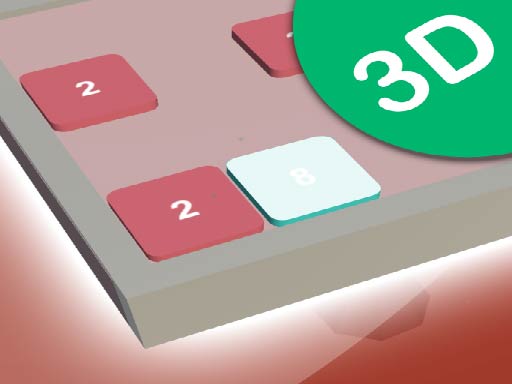
CubeCombo is a casual browser puzzle game where players move numbered blocks around a panel to combine identical values. The central challenge revolves around spatial planning and consolidation: by sliding matching cubes into one another, you merge identical numbers and gradually reduce the board until a single block remains or the designated target number is successfully synthesized.
In CubeCombo, each stage presents a grid layout filled with distinct numbered cubes. Players evaluate the positions of identical values across the board and slide them into one another to trigger merges. As identical pieces combine, they synthesize into higher values, freeing up surrounding tile space and reshaping the board layout for subsequent shifts.
The pacing is deliberate and self-directed, rewarding players who carefully visualize the consequences of each shift. Because the board simplifies only when duplicate numbers make contact, careless maneuvers can leave stray numbers isolated in distant corners. Successfully completing a layout unlocks the next puzzle stage, offering a continuous stream of single-player logic exercises.
Your goal
Your objective in each level of CubeCombo is to clear the panel down to exactly one remaining number block or successfully synthesize the designated target number block. Reaching either completion state fulfills the level requirement and opens the next challenge.
How to play CubeCombo
1. Scan the initial panel layout to locate matching numbered blocks and identify open pathways between them.
2. Slide blocks with identical numbers toward each other using mouse clicks or touch taps.
3. Combine duplicates to create new synthesized number blocks and reduce the total block count on the board.
4. Continue merging remaining pieces until you synthesize the target block or leave only a single block on the panel.
5. Advance to the newly opened level upon satisfying the victory condition.
Controls and device support
The game supports standard mouse clicks on desktop browsers and direct tap inputs on touch devices to move blocks.
- Controls: Mouse or touch
- Device support: Desktop + mobile
- Game frame: 800 x 600
Rules to keep in mind
- Only blocks displaying matching numbers can be merged together.
- Merging two identical blocks combines them into a newly synthesized number block.
- A level is officially cleared when only one number block remains on the panel or when the target number block is synthesized.
- Passing the current level immediately opens a new level for play.
What makes the challenge interesting
CubeCombo centers on route management and spatial foresight. Unlike action-oriented sliding puzzles that emphasize quick reflexes, this game emphasizes deliberate planning. Every move shifts tile positions and changes potential merger paths. The primary tradeoff lies between executing immediate, obvious pairings and preserving clear corridors for distant matching blocks. Merging two nearby tiles too early can trap an identical number on the opposite side of the grid, making subsequent consolidation much harder.
Maintaining an organized board requires thinking two or three moves ahead. By clustering similar values into common sectors of the grid before committing to final merges, players maintain flexible pathways and prevent bottlenecks as higher-tier synthesized blocks form.
Tips for CubeCombo
- Survey all identical pairs across the board before initiating your first slide. Rushing into the nearest match often walls off other matching numbers behind larger consolidated blocks.
- Work from outer edges toward the center when grouping similar values. This strategy preserves open lanes in the middle of the board for moving higher-tier synthesized numbers freely.
- Keep matching tiles in adjacent rows or columns rather than leaving them separated by mismatched numbers, preventing unnecessary maneuvering steps later in the puzzle.
- Track the level goal closely; if synthesizing a specific target block completes the stage, prioritize combining the components that build toward that target directly.
Stages and progression
Progression in CubeCombo is structured around discrete sequential levels. Completing a board by either synthesizing the target number block or condensing the entire grid down to one solitary block resolves the active stage and unlocks the next level.
As you move through successive stages, you can refine your problem-solving rhythm by practicing cleaner routing and minimizing redundant block shifts. Developing a consistent habit of surveying the full panel before moving any piece helps maintain smooth progress from one board to the next.
The skills behind the game
CubeCombo fits cleanly into the casual block puzzle genre, combining the spatial reasoning of sliding tile games with arithmetic merging mechanics. Fans of brain teasers and hypercasual logic games will appreciate how each level presents a self-contained board state requiring clear deductive deduction rather than rapid reflex inputs.
Who will enjoy this game
Players looking for a lightweight merge puzzle game or an engaging online puzzle session will find CubeCombo well-suited for brief mental warmups or extended problem-solving sessions. Because it runs directly in modern web browsers without complex setup, the game offers accessible number-combining challenges for anyone seeking quick spatial puzzles.
Frequently asked questions
How do you clear a stage in CubeCombo? A stage is completed either when you reduce the panel to a single remaining block or when you successfully synthesize the specified target number block. Achieving either condition unlocks the subsequent level.
Can any two number blocks be merged together? No. Merges only occur between blocks that share the exact same number. Combining them synthesizes a new block with an updated value.
What input methods are supported for moving blocks? CubeCombo supports simple mouse clicks on desktop web browsers as well as direct touchscreen taps on mobile devices.
Something not right?
Tell us if the game does not load, the information is wrong or the content needs review.
Report a problem ›