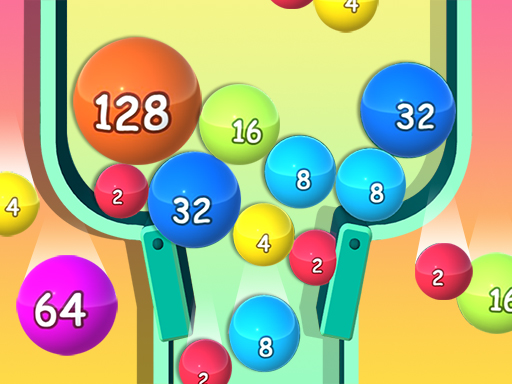
About Cube Merge Game
Cube Merge Game is an accessible browser puzzle challenge where players drop numbered blocks into columns to combine matching values. Drawing inspiration from classic number-merging formulas, the game requires careful spatial planning and forward thinking to build larger values while keeping board space open.
In Cube Merge Game, your primary activity revolves around aiming and releasing numbered cubes onto a crowded playing area. Whenever two cubes with identical numbers come into contact, they merge into a single cube bearing the next higher value. This straightforward interaction forms the backbone of a dynamic puzzle loop where every placement alters the geometry of your board.
As higher-value blocks accumulate, managing empty space becomes increasingly challenging. Success relies on anticipating how incoming cubes will interact with existing stacks, creating chain reactions that consolidate your board and elevate your running score.
Your goal
The primary objective is to reach the highest possible numerical values and achieve a top score by continuously combining matching cubes. Players must strategically position each drop to maintain open space and avoid letting the board overflow.
How to play Cube Merge Game
1. Inspect the value of the upcoming numbered cube positioned at the top of the playfield.
2. Drag or tap across the screen to align the cube over your desired drop column.
3. Release or tap to drop the block down toward the resting cubes below.
4. Land matching numbers adjacent to one another to trigger an immediate merge into a larger value.
5. Continue merging systematically to free up vertical space and raise your overall score.
Controls and device support
Use tap or drag inputs to position and drop numbered cubes across the board.
- Controls: Mouse or touch
- Device support: Desktop + mobile
- Game frame: 800 x 600
Rules to keep in mind
- Cubes displaying identical numbers merge into a single cube of greater value upon contact.
- New blocks are delivered one at a time from the top of the board.
- Running out of available board space prevents further valid moves.
What makes the challenge interesting
The core gameplay tension centers on balancing short-term merges against long-term board structure. Dropping a cube for an instant low-level combination might seem advantageous, but doing so without considering adjacent column heights can bury valuable high-tier cubes underneath smaller blocks. Players must cultivate the discipline to arrange numbers in orderly descending sequences across neighboring columns.
Because each drop permanently occupies board area until merged, foresight is vital. High-scoring sessions require players to visualize multi-stage cascading merges, where one drop sets off a sequence of automated combinations that clears substantial room across the grid.
Tips for Cube Merge Game
- Keep your highest numbers concentrated along one outer edge or corner. This prevents large, immovable cubes from splitting the board into disconnected sections.
- Build descending value gradients across adjacent columns. Setting values like 16, 8, and 4 side-by-side enables smooth cascading merges when a new low number drops.
- Avoid letting a single column grow too close to the top boundary. Keep column heights relatively even so you always have flexible placement options.
- Do not rush your drops. Take time to survey the entire grid to see whether an alternate column sets up a better multi-cube chain reaction.
Stages and progression
Progression in Cube Merge Game is driven by numerical scale and spatial density rather than static linear levels. As your session extends, the numbers on your board double upward into larger milestones, demanding tighter spatial efficiency.
Players measure personal improvement through higher end-of-round scores and cleaner board management. Developing a consistent practice routine focusing on deliberate column organization allows you to survive longer under denser board conditions.
Playing on different devices
Cube Merge Game runs directly in standard web browsers with responsive tap and drag support. On desktop screens, mouse dragging provides steady precision when lining up drops over narrow columns. On mobile devices, direct touch controls allow for quick, intuitive sliding and releasing across the 800x600 canvas layout.
The skills behind the game
Cube Merge Game sits squarely within the casual math and number puzzle genres. These titles combine elementary arithmetic logic with pattern recognition and spatial sorting. Rather than requiring rapid reflexes, the genre appeals to players who enjoy steady, thoughtful problem-solving and the tactile satisfaction of watching disorganized boards collapse into tidy, high-value combinations.
Who will enjoy this game
Players looking for an engaging merge puzzle game online will appreciate how quickly Cube Merge Game loads and gets straight to the action. Its straightforward mechanics make it suitable for brief casual breaks as well as extended high-score practice sessions. The clean drop-and-combine rhythm offers a relaxing yet intellectually engaging puzzle experience.
Games with a similar feel
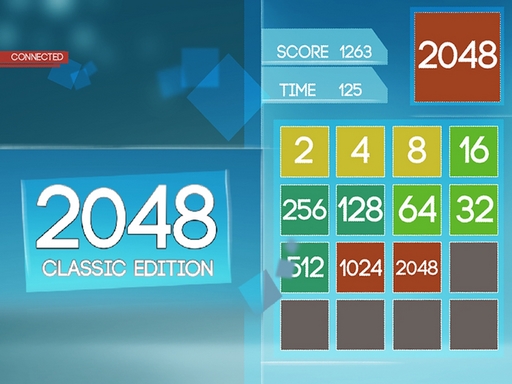
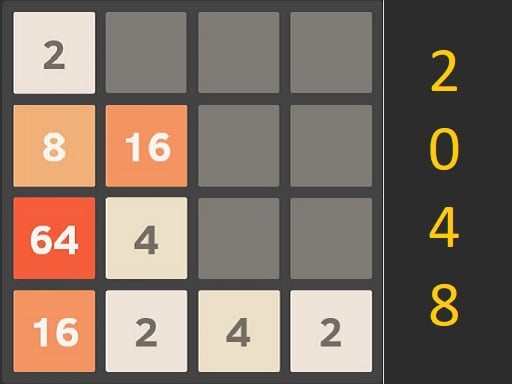
2048: While 2048 challenges players to slide all tiles simultaneously across a closed two-dimensional grid, Cube Merge Game introduces a top-down dropping mechanic where blocks fall into individual columns. Both games reward building exponential number sequences and managing tight board space, but Cube Merge Game gives you direct control over where each individual block lands, appealing to players who prefer column-based spatial strategy over whole-board shifts.
Frequently asked questions
How do blocks combine in Cube Merge Game? When two cubes sharing the exact same number make contact, they automatically merge into a single cube displaying the next higher value in the progression.
What causes a game over? A round concludes when the playing area becomes entirely full and no additional cubes can be dropped into the columns.
Do I need advanced math skills to play? No advanced math is required. The gameplay focuses on recognizing matching numbers and planning spatial layouts to merge identical values effectively.
Something not right?
Tell us if the game does not load, the information is wrong or the content needs review.
Report a problem ›