About Brainstorming 2D
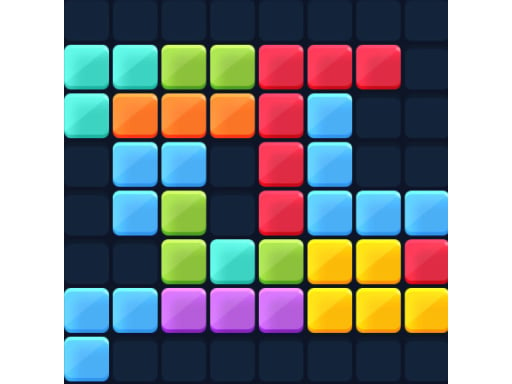
Brainstorming 2D is a web-based slider puzzle game focused on clearing enclosed pieces from a bounded board. Each board presents a grid bordered by colored edges and populated by matching colored squares. Players slide the interior blocks across the board to release them through the corresponding borders, working methodically to empty the grid.
In Brainstorming 2D, players engage with structured 2D slider puzzles built around color coordination and spatial planning. Every puzzle layout displays a grid with colored outer edges and squares placed within those boundaries. The pieces inside share the same colors as the exterior edges, establishing clear visual targets across the playing surface. Depending on the setup, the number of active colors can vary from one puzzle to another.
The core loop involves analyzing the grid layout, identifying which blocks can move freely, and sliding pieces toward their designated border zones. Because blocks can occupy shared paths within the grid edges, players must carefully plan the sequence of movements so pieces do not trap one another before reaching their exits.
Your goal
The central objective in Brainstorming 2D is to get rid of all blocks locked within the edges of the grid. Success requires systematically moving every colored square until the entire grid is empty.
How to play Brainstorming 2D
1. Inspect the initial puzzle layout to identify the colors on the grid edges and the positions of the inner colored squares.
2. Examine the pathways between the colored squares and the matching colored borders around the perimeter.
3. Slide individual squares along available grid lanes to navigate them toward the corresponding colored edges.
4. Adjust the order of your moves when necessary to prevent interior blocks from obstructing other active squares.
5. Continue sliding and releasing blocks until all squares within the borders have been cleared from the board.
Controls and device support
The game uses a single slide-to-move input method. Drag or swipe pieces across the grid to shift their position.
- Controls: See in-game controls
- Device support: Browser
- Game frame: 720 x 1280
Rules to keep in mind
- The playing area consists of a grid enclosed by colored perimeter edges.
- Movable squares inside the grid share the colors found on the outer grid edges.
- Different puzzle configurations may include a varying number of distinct colors.
- A puzzle is solved when all blocks locked inside the borders are successfully removed.
What makes the challenge interesting
The primary appeal of Brainstorming 2D rests on spatial visualization and sequencing. Because pieces share the same grid space, solving each layout is not merely about identifying color matches, but also about determining which piece must slide first. Moving a square prematurely can close off open lanes required by another block.
Players must weigh quick short-term moves against overall board clearance. Puzzles with multiple distinct colors demand greater discipline, as separate color routes can easily intersect and create bottlenecks across the inner grid.
Tips for Brainstorming 2D
- Survey all matching border edges before sliding any pieces. Rushing the first visible move often blocks secondary squares that need the same transit lane.
- Work from the outside inward by clearing pieces closest to their matching exits first. This opens up room for deeply trapped squares to maneuver.
- Group your focus by color when multiple tones are present on the board. Tracing one color set at a time helps prevent accidental lane blockages.
- Double-check intersecting paths where different colors cross each other. Planning crossing points in advance prevents unexpected grid deadlocks.
Stages and progression
Progression in Brainstorming 2D is driven by layout variation. While initial boards may present simpler arrangements with fewer hues, other puzzles incorporate a varying number of colors and more intricate block placements within the grid edges.
As layouts change, players can adapt their practice routine by spending extra time reading the entire grid before executing slides, building a more reliable problem-solving rhythm across diverse puzzle boards.
Playing on different devices
Built as an HTML5 title with a portrait display resolution of 720 x 1280, Brainstorming 2D adapts cleanly to standard web browsers on both mobile and desktop screens. The touch-friendly slide controls make swiping intuitive on handheld devices, while mouse drag inputs offer precise piece navigation on desktop setups.
The skills behind the game
Brainstorming 2D belongs to the puzzle and matching genre, focusing on clear logic and pattern coordination rather than fast-paced action. In digital matching and slider games, players typically navigate constrained boards where every action affects surrounding pieces.
With its simple visual design and HTML5 foundation, the title offers an accessible brain teaser suitable for players of all ages who enjoy systematic spatial puzzles in a quick browser format.
Who will enjoy this game
Players looking for a lightweight puzzle game online often seek straightforward mechanics paired with engaging spatial logic. Brainstorming 2D provides this balance by combining sliding piece navigation with clear color-matching goals across varying board configurations.
Whether playing a quick brainstorming 2d game session during a break or settling in to solve several grid layouts sequentially, the title serves as an enjoyable mental warmup for fans of tidy logic challenges.
Frequently asked questions
What is the main goal in Brainstorming 2D? The main goal is to clear all colored blocks locked inside the grid edges by sliding each piece toward its matching colored boundary.
How do controls work in the game? The game uses a slide mechanic. You can click and drag with a mouse on desktop or swipe across the screen on mobile devices to move blocks.
Do all puzzle layouts use the same number of colors? No. The game notes that the number of colors can vary depending on the specific slider puzzle board.
What is the best way to approach a crowded grid? Examine where each color exit sits along the outer edge and look for unblocked pieces nearest their goals. Clearing those first creates room to shift deeper blocks.
Something not right?
Tell us if the game does not load, the information is wrong or the content needs review.
Report a problem ›