About Block Tree
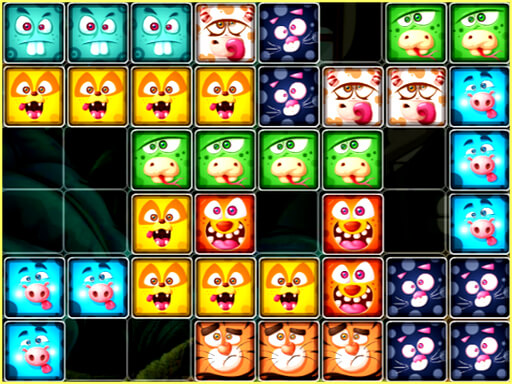
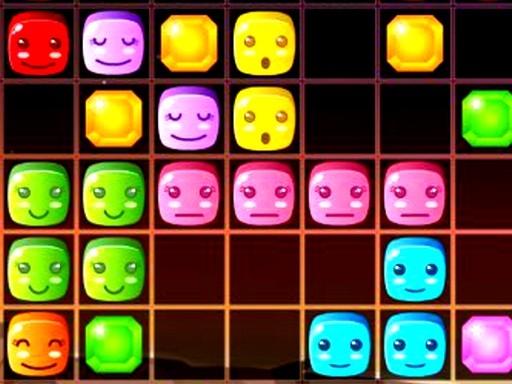
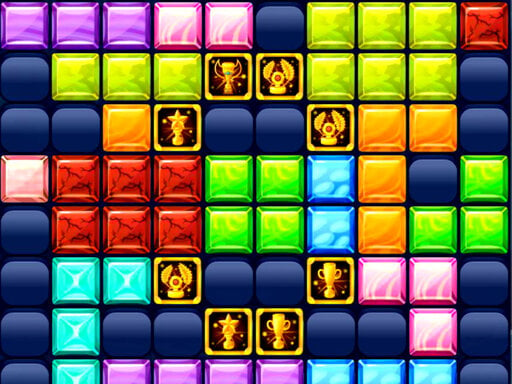
Block Tree is a grid-based puzzle game that challenges your spatial logic and forward planning. Players position distinct block shapes across the playing area to complete unbroken horizontal rows or vertical columns. Each fully occupied line blasts away with a visual effect, freeing up valuable board space and rewarding you with points as you work to keep the board open.
At its core, Block Tree offers an accessible yet mentally stimulating block-placement loop. You are presented with a board and various geometric shapes that must be carefully arranged across the grid. Instead of letting pieces pile up randomly, success depends on deliberate placement that sets up complete lines.
Whenever you manage to fill a complete horizontal row or vertical column, that entire line clears from the board with a visual blast. This line-clearing action awards points and instantly restores open space on the grid, allowing you to fit subsequent block shapes. Managing your available tiles while balancing both horizontal and vertical clearing opportunities forms the central rhythm of each session.
Your goal
The primary objective in Block Tree is to maximize your score by placing shapes strategically to clear as many complete rows and columns as possible. Your overarching goal is to maintain sufficient open space across the grid so that incoming block shapes can always be placed without running out of room.
How to play Block Tree
1. Inspect the available block shapes and examine the open spaces across the playing board.
2. Select a block shape and position it onto an unoccupied section of the grid using mouse click or screen tap.
3. Arrange pieces deliberately to fill every tile along a single horizontal row or vertical column.
4. Watch the completed line blast clear to collect points and open up fresh space for upcoming shapes.
5. Continue placing blocks and clearing lines systematically to sustain your board space and build a higher score.
Controls and device support
Use mouse click or touch tap to select and place block shapes onto the game board.
- Controls: Mouse or touch
- Device support: Desktop + mobile
- Game frame: 800 x 600
Rules to keep in mind
- Block shapes must be placed onto open board tiles to form complete lines.
- A horizontal row or vertical column is cleared when every tile in that line is completely filled.
- Clearing a completed line removes those blocks from the board and awards points.
What makes the challenge interesting
The defining mechanical challenge of Block Tree lies in balancing immediate space relief against long-term board structure. Because both horizontal rows and vertical columns can be completed, every placement offers dual utility. Placing a piece solely to help one horizontal row might accidentally block two potential vertical columns, creating awkward pockets.
Developing a steady spatial rhythm involves evaluating how multiple shapes interact before committing to a tile. Skilled play focuses on keeping open, contiguous zones across the grid rather than creating isolated single-tile gaps that are difficult to fill with irregular block shapes.
Tips for Block Tree
- Build toward simultaneous dual-axis clears by placing blocks where horizontal and vertical lines intersect, maximizing board opening while avoiding scattered single blocks.
- Prioritize keeping open central real estate rather than filling edges haphazardly, preventing awkward shapes from being left without valid placement zones.
- Avoid leaving single-cell isolated voids surrounded by occupied tiles, as waiting for exact single blocks can quickly bottleneck your remaining space.
- Examine all available shapes before placing your first tile each turn to confirm every piece has an intended home on the grid.
Playing on different devices
Block Tree runs within a standard 800 by 600 display resolution and supports both desktop and mobile environments. On desktop computers, precise mouse clicks allow deliberate tile positioning. On touchscreen devices, tap inputs offer direct, responsive placement across the board.
The skills behind the game
As part of the puzzle and block game genres, Block Tree emphasizes clean geometry, pattern recognition, and calm analytical decision-making. Puzzle titles of this style remove high-pressure reflexes, giving players space to evaluate tile layouts and think several moves ahead. The satisfying loop of arranging disparate shapes into harmonious, cleared lines appeals to fans of spatial reasoning and casual mental workouts.
Who will enjoy this game
Players looking for an engaging block tree game or a relaxing puzzle game online will find a focused, accessible experience here. The clean structure makes it an ideal choice for quick daily brain-training breaks or extended puzzle sessions where you can practice spatial optimization at your own pace.
Games with a similar feel
Tetris: Tetris popularized line-clearing spatial puzzles through falling tetrominoes that must be rotated and positioned before reaching the stack. Block Tree shares the core objective of completing solid lines to clear space and score points, but it allows players to place shapes onto a static board across both horizontal and vertical axes without the continuous gravity of falling pieces. Players who enjoy careful grid planning without falling-block urgency will appreciate this deliberate approach.
Frequently asked questions
How do you clear blocks from the board in Block Tree? You clear blocks by fully filling any horizontal row or vertical column with block shapes. Once a line is completely packed, it automatically blasts away, freeing board space and earning points.
Can you clear both horizontal rows and vertical columns? Yes. Block Tree allows line clears in both orientations. Completing either a horizontal row or a vertical column will clear that line and award points.
What controls are used to place blocks? The game uses straightforward click or tap controls. You can click with your mouse on desktop or tap directly on the screen on mobile devices to place shapes onto the grid.
Something not right?
Tell us if the game does not load, the information is wrong or the content needs review.
Report a problem ›