About Block Number Puzzle
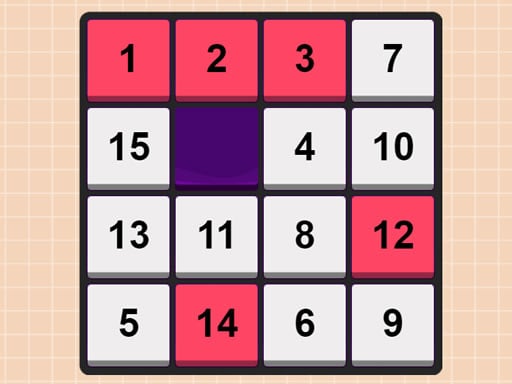
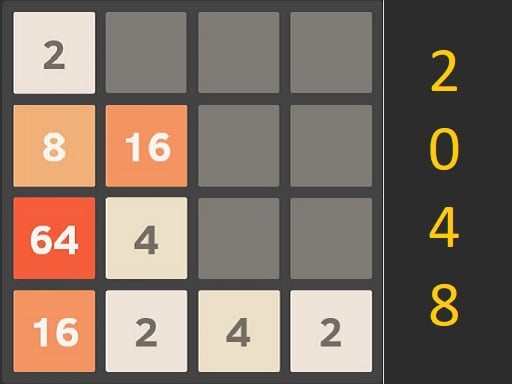
Block Number Puzzle is a sliding grid game where you organize jumbled numerical tiles into an orderly sequence. By shifting individual blocks into adjacent open space across the board, you work through spatial bottlenecks to reconstruct target number patterns. The experience focuses on methodical planning and logical reasoning, inviting players to complete each board configuration with deliberate, minimal moves.
In Block Number Puzzle, each puzzle board presents an assortment of numbered blocks positioned on a structured grid. Because movement depends on navigating into open space, every tile shift alters the surrounding pathways and changes the options available for neighboring pieces. Success relies on viewing the grid as an interconnected system rather than moving numbers in isolation.
The session loop revolves around analyzing the starting layout, identifying where each number belongs, and sliding adjacent blocks step by step to build rows or columns. As you clear stages and move into larger grid formats, the puzzle demands deeper forward thinking to keep previous solutions intact while manipulating the remaining pieces.
Your goal
Your main goal is to shift the scrambled blocks across the board until all numbers align in their designated numerical sequence or required layout pattern. Beyond simply reaching the solved state, the game encourages you to plan your routes carefully, solving each level using the fewest possible moves through disciplined spatial positioning.
How to play Block Number Puzzle
1. Examine the scrambled grid layout to identify which numbers are already in place and where empty spaces are located.
2. Slide an adjacent numbered block into the open space on the board to clear room for neighboring tiles.
3. Maneuver priority numbers toward their target positions along the top rows or outer edges first.
4. Rotate trailing numbers through available slots to complete the final rows without displacing settled tiles.
5. Confirm that all blocks match the intended sequential order to finish the stage and advance.
Controls and device support
Slide across the game screen to shift numbered blocks into adjacent open spaces.
- Controls: See in-game controls
- Device support: Browser
- Game frame: 720 x 1280
Rules to keep in mind
- Blocks move by sliding into neighboring open grid spaces.
- Each puzzle requires arranging all numbers into the correct sequence or specified pattern.
- Levels are evaluated on your ability to reach the solved layout with minimal total moves.
- Advancing through the game introduces larger board dimensions with higher block quantities.
What makes the challenge interesting
The core discipline of Block Number Puzzle lies in spatial foresight and path conservation. Because sliding one tile directly reshapes the movement options for every adjacent piece, impulsive moves frequently create bottlenecks that require extensive backtracking to fix. Players must balance short-term progress with long-term board mobility.
A satisfying session comes from recognizing movement cycles, such as rotating a corner cluster of numbers into place without disrupting solved rows above them. Cultivating this rhythm allows you to handle complex numerical arrangements systematically rather than through trial and error.
Tips for Block Number Puzzle
- Work from the top row downward. Locking early numbers into their final slots simplifies the active problem space for remaining tiles.
- Pair the last two numbers of a row before placing them. Sliding them into a corner together prevents you from trapping the final tile behind its neighbor.
- Keep open spaces near the active cluster. Shifting the vacancy close to the piece you want to move cuts down on redundant repositioning moves.
- Avoid random sliding when stuck. Pause to trace the clockwise or counterclockwise loop needed to cycle pieces without disturbing completed sections.
Stages and progression
Progression in Block Number Puzzle introduces expanding grid dimensions that feature larger sets of numbers to sort. As the board expands from compact starter boards into wider layouts, the number of interdependent pathways increases, requiring broader spatial planning to avoid congestion.
To handle this escalating complexity, approach each new grid size by establishing consistent corner-solving routines. Practicing disciplined move counts on early boards builds the spatial awareness needed to keep expansive, multi-row configurations manageable.
Playing on different devices
Designed in a vertical 720 by 1280 layout, the game is naturally suited for portrait screens and mobile touch displays where sliding gestures feel direct and responsive. Desktop browser users can navigate the boards using smooth mouse drag motions across the game area.
The skills behind the game
Number and sliding puzzle games occupy a beloved space in casual logic gaming, appealing to players who enjoy structured problem-solving without high-pressure reflexes. By combining pure spatial reasoning with clean mathematical sequences, these titles offer relaxing yet intellectually stimulating mental workouts.
Because success depends on careful planning rather than speed, sliding number puzzles are accessible to both newcomers practicing basic grid manipulation and seasoned puzzle fans seeking efficient routing techniques.
Who will enjoy this game
Players looking for a classic block number puzzle game experience will appreciate the clean mechanics and focus on logical ordering. The format provides straightforward browser-based puzzle sessions that work well for short brain-training breaks throughout the day.
Whether you are practicing spatial coordination or refining move efficiency on a casual puzzle game online, sliding numbered tiles into harmony delivers steady, satisfying progression at an unhurried pace.
Frequently asked questions
What is the primary objective in Block Number Puzzle? Your objective is to slide scrambled numerical tiles across the grid until they rest in the correct sequential order, completing each board in the fewest moves possible.
How do blocks move across the puzzle board? Tiles slide directly into adjacent vacant spaces when you drag or swipe on screen, allowing you to gradually shuffle numbers into their target positions.
How does the challenge change as you complete levels? Later stages feature larger grid sizes with higher quantities of numbers, creating more intricate spatial arrangements that demand deeper planning.
What is the best way to approach a scrambled board? Focus on solving the puzzle row by row from top to bottom, keeping open space nearby so you can rotate remaining numbers without disturbing finished sections.
Something not right?
Tell us if the game does not load, the information is wrong or the content needs review.
Report a problem ›