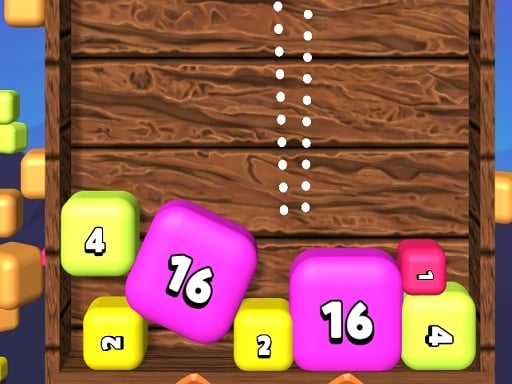
About Ball Jumping
Ball Jumping is a vertical platforming title where players steer an ascending ball from the base of the stage toward higher ground. By utilizing wall rebounds that naturally redirect the ball's angle of travel, you navigate around platforms, collect rewards, and work through consecutive levels designed to test timing, awareness, and quick reactions.
Drawing inspiration from classic mobile bouncing ball experiences, Ball Jumping puts straightforward movement physics at the heart of its gameplay loop. Each level positions your ball at the bottom of an ascending platform layout. Your fundamental mission is to climb upward through the course, adjusting your path as obstacles and open spaces present themselves.
The primary mechanical twist revolves around wall collisions. Whenever the ball strikes a vertical boundary, it pushes off and changes its horizontal heading. Mastering how these rebounds alter your trajectory allows you to slip through tight gaps, reach elevated ledges, and steadily gather stage rewards while climbing toward the top of every course.
Your goal
The core goal in Ball Jumping is to ascend cleanly from the bottom of each level to the upper finish area. Along the path upward, players aim to collect available stage rewards, avoid mistimed rebounds, and complete levels smoothly to train quick reactions and spatial navigation.
How to play Ball Jumping
1. Begin each round with your ball positioned at the base of the vertical level.
2. Guide the ball upward toward higher platforms across the stage.
3. Make contact with side walls to push off and change your ball's movement direction.
4. Steer through available platform openings and collect visible rewards on your route.
5. Reach the upper boundary of the level layout to successfully complete the stage.
Controls and device support
Direct the ball to ascend and strike walls to trigger direction changes throughout each stage layout.
- Controls: See in-game controls
- Device support: Desktop + mobile
- Game frame: 800 x 600
Rules to keep in mind
- Every stage starts from the bottom of the screen with the primary task of ascending upward.
- Colliding with a wall causes the ball to push off and switch its travel direction.
- Completing a level requires reaching the top of the course while collecting stage rewards along the path.
What makes the challenge interesting
The primary skill in Ball Jumping is anticipating wall angles and maintaining upward momentum. Because the ball automatically changes direction when pushing off surfaces, players cannot rely on brute force navigation. Instead, success depends on reading two or three bounces ahead, identifying which side walls offer a clean ramp to the next platform.
This creates an engaging rhythm of reaction and trajectory control. Players must balance the desire to quickly grab out-of-the-way rewards with the need to stay aligned with ascending paths. Rushing into an uncontrolled bounce risks losing elevation or missing narrow passages, making patient angle management essential.
Tips for Ball Jumping
- Plan your rebound path before launching into side walls. Anticipating where the reversed angle will send the ball prevents accidental overshoots above narrow platform openings.
- Collect rewards only when your current bounce trajectory naturally aligns with them. Chasing stray items at awkward angles often leads to losing your vertical rhythm.
- Use wall bounces as directional resets when approaching tight vertical corridors. Hitting the wall squarely helps establish a predictable diagonal climb.
- Maintain focus on the space above your ball rather than only watching the floor below. Tracking upcoming platform gaps gives you more time to adjust your reaction.
Stages and progression
Ball Jumping structures player advancement across a series of ascending levels. As you complete each stage and collect rewards, you encounter fresh platform layouts that require sharper reaction timing and more deliberate rebound planning.
A reliable practice routine involves treating earlier courses as timing warmups. Focus on executing clean, single-bounce transitions between walls rather than erratic multiple rebounds, establishing a steady ascending rhythm before tackling more intricate upper stages.
Playing on different devices
With an 800 by 600 display format and mobile support, the game provides a clear view of vertical stage columns. On desktop browsers, keyboard or mouse inputs deliver steady timing control, while mobile screens offer straightforward touch navigation for on-the-go bounce coordination.
The skills behind the game
Belonging to the hypercasual and platform genre, Ball Jumping centers on immediate accessibility paired with rapid reaction loops. Hypercasual platformers strip away elaborate menus and complex controls in favor of an instant, bite-sized loop where one or two core physical interactions define the entire experience.
In vertical bounce games, players enjoy quick feedback loops where every wall contact immediately influences the next move. This makes the title easy to pick up for quick casual sessions while still demanding careful attention to bounce trajectories.
Who will enjoy this game
Players searching for a casual ball jumping title or an accessible ball jumping game usually look for physics-based challenges with clear ascending goals. These experiences offer quick, engaging breaks that test timing without requiring extensive rulebooks.
Whether you want a casual reflex workout between tasks or a structured platform climb, focusing on clean angle management and steady upward climbs provides a satisfying rhythm for players of all skill levels.
Frequently asked questions
How do you change direction in Ball Jumping? The ball changes its horizontal direction automatically whenever it pushes off a side wall or vertical boundary during its climb.
What is the main goal in each level? Your primary objective is to start from the bottom of the course and navigate all the way up to the finish area while gathering stage rewards.
What skills does Ball Jumping help train? The platforming loop emphasizes spatial anticipation, reaction speed, and timing your rebounds to navigate tight upward passages.
Something not right?
Tell us if the game does not load, the information is wrong or the content needs review.
Report a problem ›